
There isn’t a single way of looking at sustainability. Sustainable travel in tourist-concentrated arenas of India does require a split from the fast flash of tourists munching around. In 2022 alone, Rajasthan had received 100 million admirers from around the globe. The ecological impact, local nurturing, and leftover carbon footprints need representation; a compendium of reasonable thinking dots to make a montage of immersive experiences, inclusivity and exclusivity, and moments that keep your travels periodically apart.
Rajasthan, with its deep historical roots and culturally curious folk art, colourful turbans, and desert landscape, will always welcome tourists. This Indian State has 3 National Parks, 3 Tiger Reserves, 27 Wildlife Sanctuaries, 2 Ramsar Sites, and 14 Conservation Reserves, covering approximately 10% of the total geographical area of India! Read more about Rajasthan in our travel guide to India.
But how can a tourist’s choices make the stream sustainable without thumping a hammer on the natural resources? Today, we will take a look at Rajasthan and the sustainable travel practices that can open local doors to a traveler.
Table of Contents
How Can You Travel across Rajasthan Sustainably
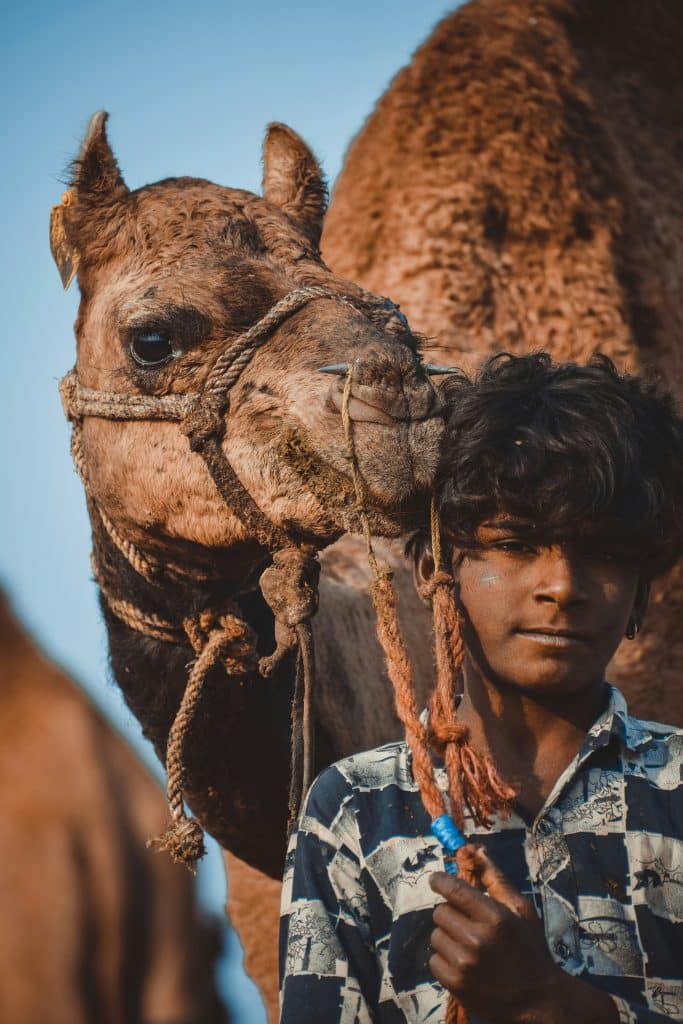
Say ‘No’ to Riding Camels in Jaisalmer And Pushkar
The Raika Community from the Thar Desert were always the ‘camel caretakers’. The traditional camel-human relationship, based on the harsh dry climate of Thar, involved using camels as vehicles, which became almost null with the advent of roads and convenience.
Rapid industrialization and fretful pressure on agricultural land have resulted in slobbering camel grazing grounds known as Oran. Desert-grown trees like kyari, Kumut, khejari, rohida, jal and bordi, which naturally provided food to the camels, have been uprooted for commercial projects. Over the last four livestock censuses (2003-2019), the camel population in Rajasthan has faced a rapid declining trend from 8 lakh to 2.5 lakh.
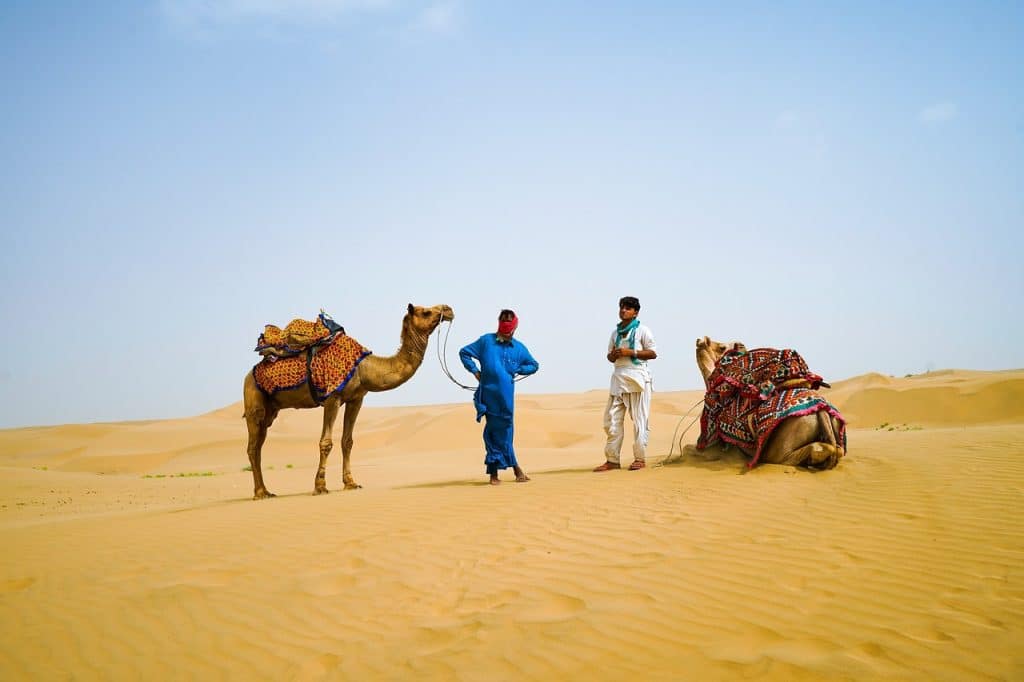
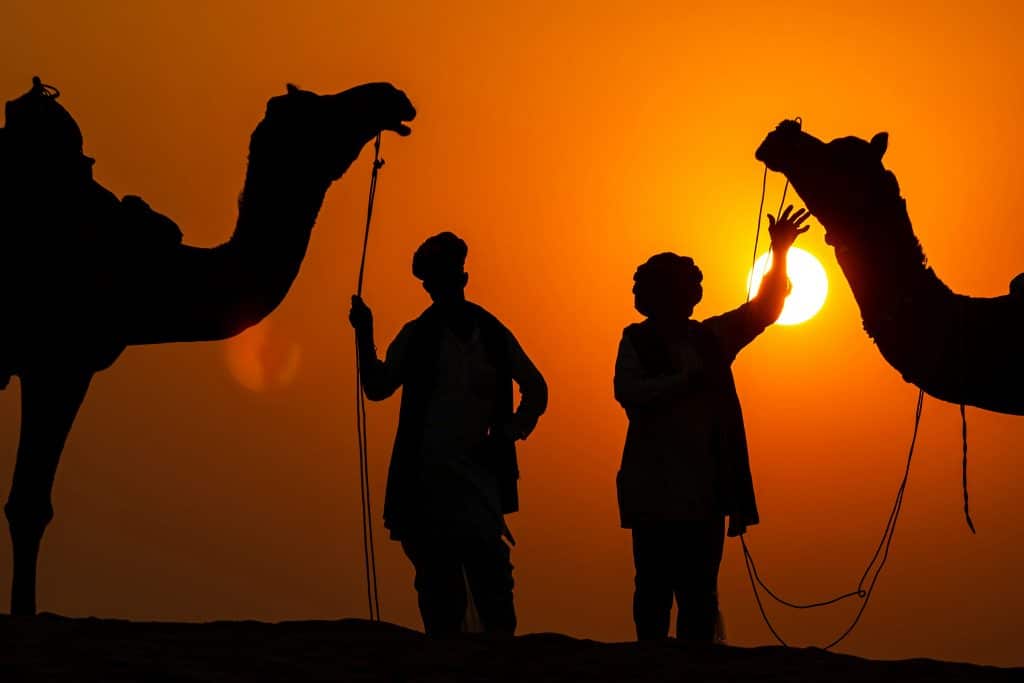
In the periphery of Governmental Acts and local contradictions around the trading of camels, the chosen few are mostly ‘commoditized’ into grinding tourism. Riding a camel or any animal for commercial or ‘fun’ purposes is unethical, and as a responsible tourist, denying to take part in animal tourism, either camel-riding in Jaisalmer or elephant-riding in Ranthambore National Park (the activity has been stopped now) would be a sound discourager to the animal-bearers.
Meet the Locals Preserving 400 Camels near Jaisalmer
“We live in an animal kingdom. Camels, cows, sheep, goats – they are all parts of the family. Ghee, yogurt, milk, butter – we consume everything in the beauty of nature. Our ancestors used to keep camels and so do we! 5000 camels from the nearby villages are dependent on this Oran. This is the only place in Hindustan where 5000 camels are preserved within 20 km”, said Sumer Singh Bhati, the preserver and caretaker of 400 camels in Samvata Village, 40 km from Jaisalmer.
The 610-year-old Oran is on the brink of extinction. Orans, as conduced to the breeding customs of the desert, prohibit cutting desert plants that provide fodder and leaves for the camels.
Local Rajasthani men gather around with slightly-warm camel milk, which the nomads believe has the power to cure any disease. The villagers of Samvata worship their own camel-Gods colloquially. The religious necklaces dangle neck-down in thick threads.
Practical information: Samvata Village is 40 km away from Jaisalmer. You can easily drive to this village or hire a cab. There is no accommodation available in this village since this is an absolutely non-touristy place.
Volunteer in Local Rajasthani Communities or Schools
Bishnois, Bhils, Raikas, Jats, Meghwals… Rajasthan piles up in its fragmented local communities, some still living the red-hot-sand life inside the Thar Desert at 55 degrees in summer, some wheeled to the neighboring villages around. Knowing Rajasthan as a reflection of these tribal communities would be an experiential chapter in your travels to Rajasthan. Beyond the hurried Jaipur, Jodhpur, Udaipur and Pushkar, the pulse of Rajasthan lives with the traditional communities and the pervading customs of child marriage still existing in the 21st century.

10 km from the drop-dead beautiful Jaisalmer Fort, lies Darbari, a village inhabited by the ‘untouchable’ Bhil tribe. The cornerstone of this Adivasi ethnic group is endogamy. Education in such villages hardly takes off, especially since sending girl-children to schools obfuscates the long Rajasthani tradition of marrying them off as early as 9 or 10 years old. Darbari Waldorf School, in such a stratified framework, runs a community-based school providing sustainable learning to those who were refused education by birth. They accept volunteers who can teach any skill to these kids and contribute to building a wholesome learning setting.
Practical information: Apart from them, there are way too many volunteering opportunities all over Rajasthan. You can find them on Workaway.
Ethical Open Camping in the Thar Desert
The nomads have lived in the Thar Desert for ages, prompted by water scarcity and adapted huts and johads (traditional water storage ponds). The desert extends all the way from India to Pakistan, barred by the barbed wires. As your body smushes against the strokes of sand on a cool night, your sleepy eyes will open to a sleek line dividing the yellow from a sky of spectacular spectacles.
In an open Safari in the Thar Desert, you sleep on the sand without a tent, out open, preferably with a blanket, as a local man cooks food in a chula. Meteor Shower, a frequent gamut of Shooting Stars and the vibrated silence of the desert, the experience is indescribable. As a responsible traveler, it’s important to remember not to burst the sanctity of the desert, respect the natives, bring back all the plastic packets (and everything else), and not misalign with the local’s ways.
As you lay on those grounded sand dunes, think about how your presence there, in that very moment, is taking shape within you, the people who live there, and the myriad ecological systems that govern the region.
Practical information: Desert Safari and open Camping in the sand dunes are arranged by a local man Talab from Wonbin Safari Jaisalmer. He is your go-to man for immersive desert experiences in Rajasthan.
Rajasthan’s Artistic Culture Produces Its Handicrafts
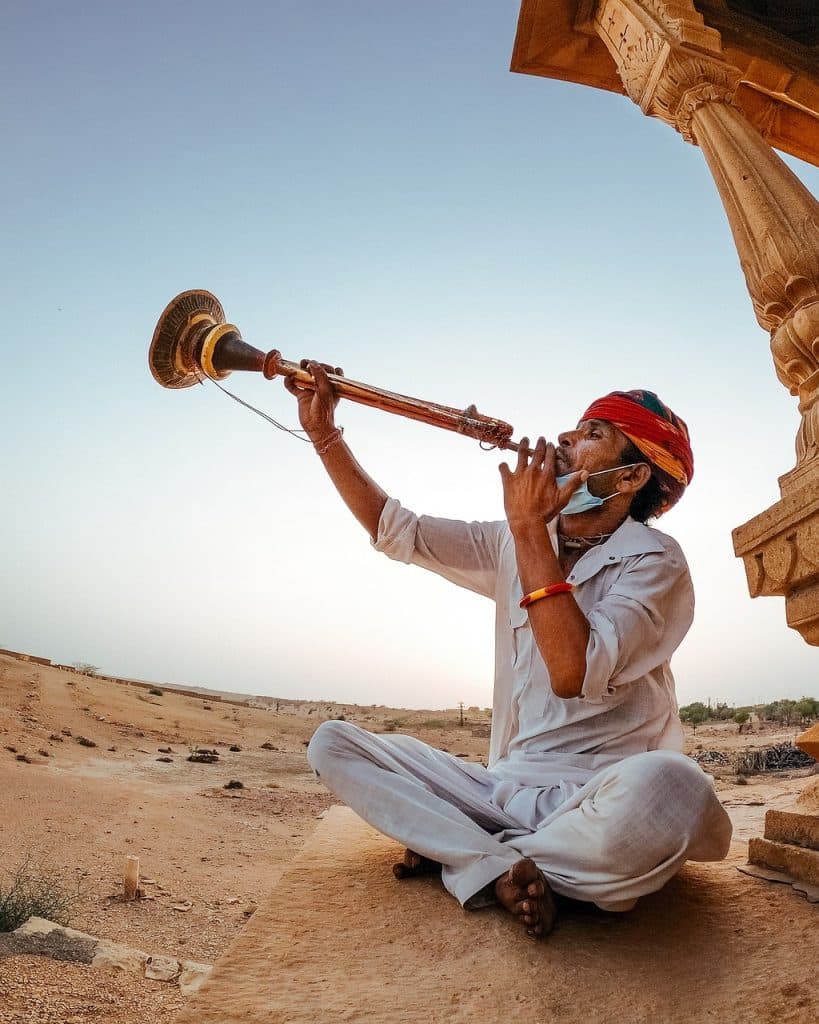
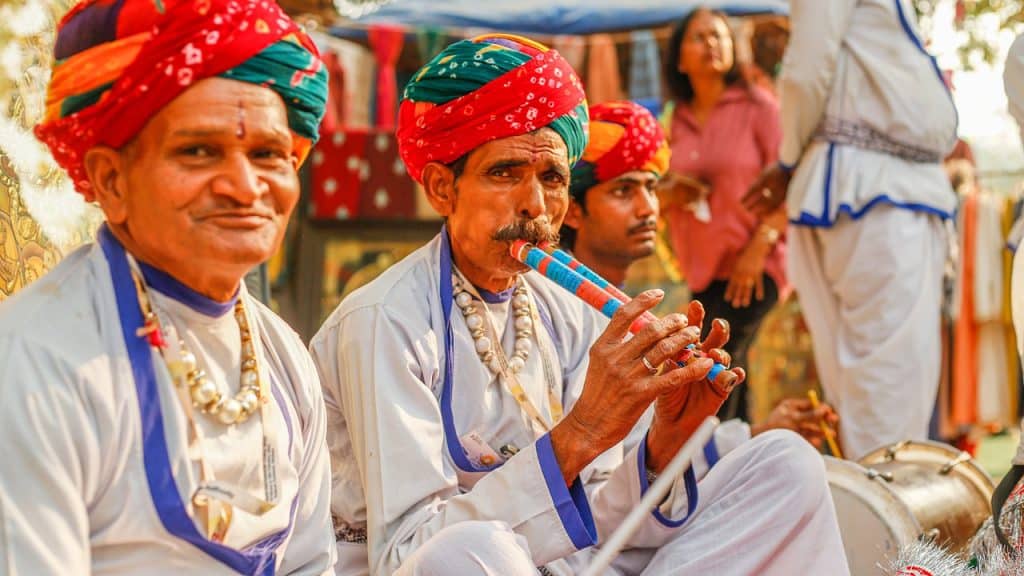
Rajasthani folk music and dance is India’s braced-up treasure. Rajasthan is woven with its own distinctive cultural woos tied with its handicrafts. Bhavai Folk Dance of Kalbelia, Bhil or Kumhar communities involves balancing nine brass pitchers or earthen pots. The Gujjar ethnic group represents Chari Folk Dance, telling the tales of everyday lives with a brass pot on their heads. Chakri dance with fast spins, Fire Folk Dance with fire tricks and drum beats, Gair Folk Dance with striking sticks moving in circles, and of course, the black-clothed Kalbelia dance – they complement Rajasthan’s classical music and influence local handicrafts.
In the old bazaars of Rajasthan, you will find Blue Pottery, Jaipur carpet, Meenakari jewelry, terracotta, Mojari, and many handicrafts. Buy local souvenirs directly from the artisans or the local markets. Here is where you will find the best handicrafts in Rajasthan.
- Meenakari in Jaipur
- Lac Bangles in Jaipur and Jodhpur
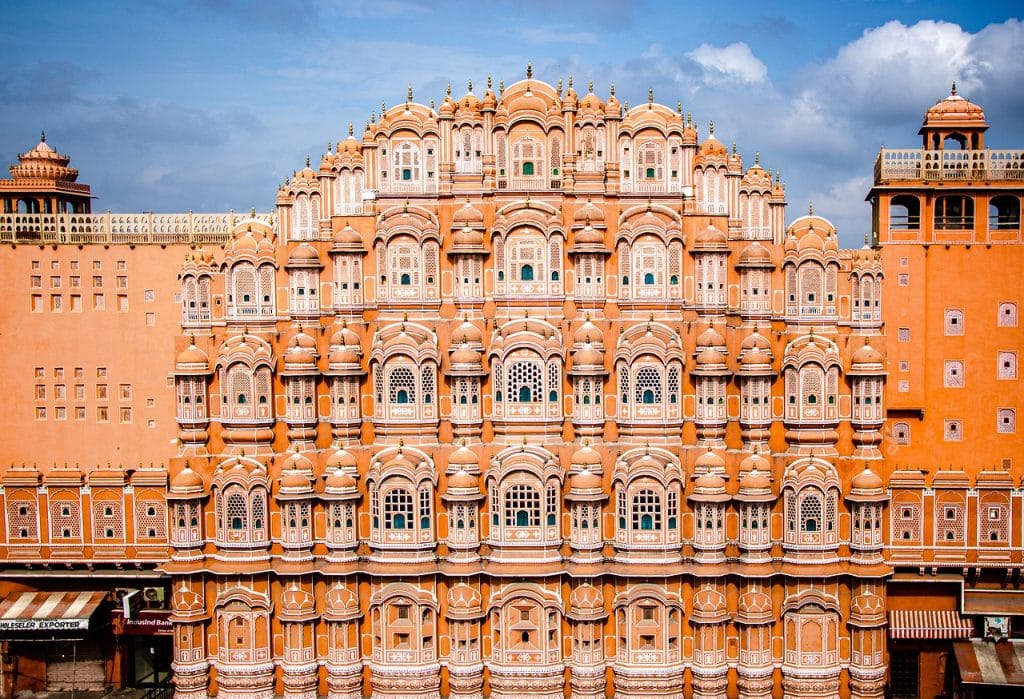
- Mojari in the market near Hawa Mahal in Jaipur
- Kagzi Pottery in Alwar district
- Bikaner Pottery in Nohar region of Bikaner
- Thewa Kala in Pratapgarh district
- Terracotta in Molela village of Rajasamand district
- Carpets in Salvas village in Jodhpur
What Else Should You Keep in Mind for Traveling Sustainably in Rajasthan?
- Another meaningful way of connecting with the locals of Rajasthan is through Couchsurfing, a community-platform that connects travellers with locals. Raju Meena in Jaipur, Vikram Parashar in Pushkar, and Shivraj Singh in Jodhpur are wonderful local hosts in Rajasthan.
- Rajasthani Thali is as famous as it gets. Dal-Bati-Churma, Ker Sangri, Ghewar, and tall glasses of Lassi – for the most authentic Rajasthani taste, choose local eateries or locally-run homestays.
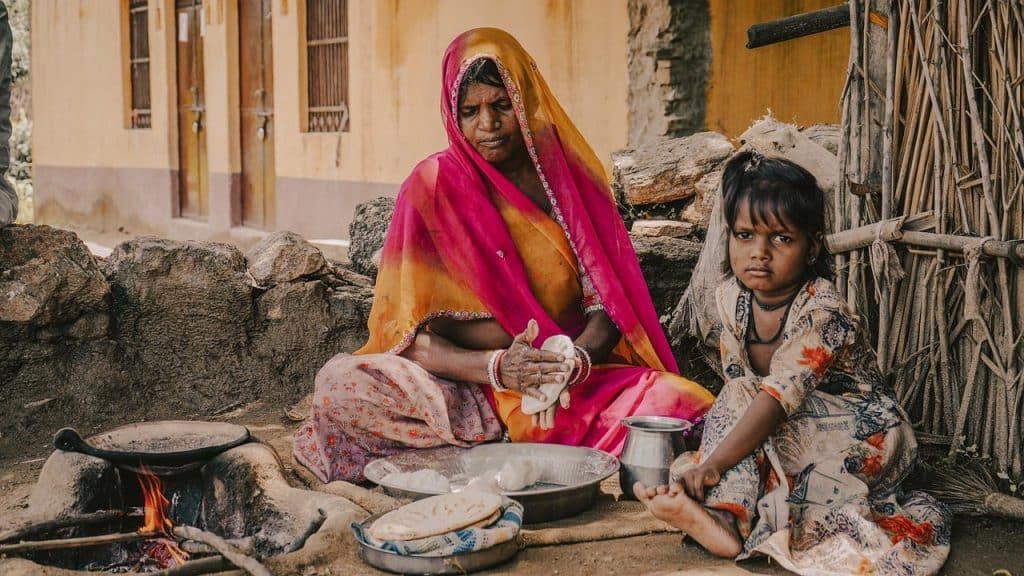
- Contribute to local revenue stream by choosing homestays over hotels. This way your money rightfully goes to the local tourism supply chain. Not only that, you get to know a real Rajasthani household and their lifestyle.
- The glowing showcasing of camels in tourism often leads to facades like camel races, and camel beauty contests involving piercing the camel, shaving or dying their fur into intricate designs. At the famous Pushkar Fair, they let the camels carry as many people as possible to see which camel can carry the most. Refrain from promoting and participating in such activities.
Sustainable Homestays in Rajasthan
HACRA Dhani Osian: A unique Rural homestay in Osian desert near Jodhpur where you can live in jhumpa (traditional style of desert huts). They are also an eco-tour operator leading sustainable tours around Rajasthan.
Chhotaram Prajapat Homestay in Salawas Village of Jodhpur is where you stay in Rajasthani mudhouses and eat authentic local food. This homestay is run by a family of Durrie weavers.
Anandmai Heritage Homestay in Jaipur is a sustainable and quaint living space.
With that, let’s focus on bringing the three pillars of sustainability development – economy, society, and environment closer to our travels. We have to keep in mind that our sustainable travel choices make an impact on the local lives. We have to choose it.