
Table of Contents
Bolivia’s Top Travel Experiences
Safe, inexpensive, and fascinating, the South American nation of Bolivia offers spectacular landscapes, cultural richness, and freedom from overdevelopment. It’s an overlooked destination overflowing with roads less traveled. The following are places to go, activities to explore, and providers to contact for Bolivia’s top travel experiences.

The Oruro Carnaval
Bolivia’s major Carnaval is a thrilling ten-day explosion of creativity and color that culminates on the final, frenetic weekend. The Oruro Carnival occurs in February and/or March (based on the lunar calendar). Dates in 2025 are February 24 – March 5 (2026: Feb 9-18). A tribute to mining, it appropriately takes place in the mining city and department of Oruro in the Altiplano. With over 28,000 dancers and 10,000 musicians (according to UNESCO), the celebration melds and expresses Bolivia’s indigenous and colonial traditions and beliefs.
Not many foreigners have discovered the Oruro Carnaval, and Bolivians don’t seem to notice those who attend. This combined with the porous barriers between participants and observers enables visitors to fully immerse themselves in the festivities. They can, for example, march alongside characters in elaborate costumes representing devils, bears, and satyrs. Participants’ masks contort into grimaces and elaborate headdresses often rise several feet high. The music and dancing is non-stop, synchronized and mesmerizing.
El Tio
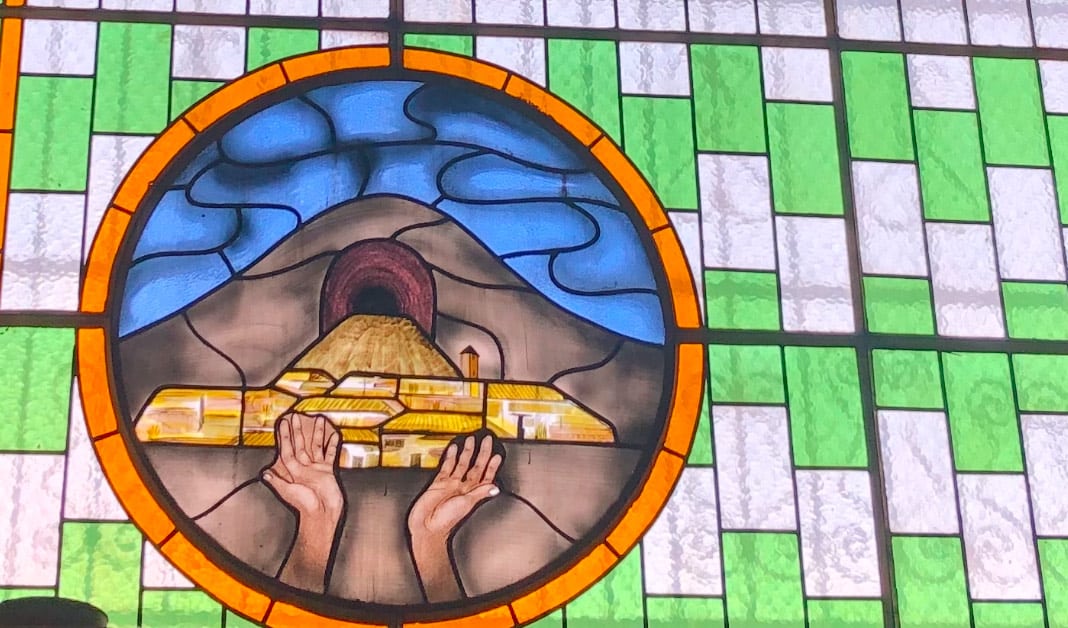
If you make it to the Oruro Carnaval, be sure to visit “El Tio,” – an uncle to miners, the God of Mining and the Devil during Carnaval. He resides in the mines accessed through the Socavon Sanctuary in the aptly named Folklore Plaza. Part of the church contains a mining museum displaying artifacts of both the industry and Carnaval. It’s a perfect bridge to the world on the other side of the door on a wall of the museum, which opens into a dark, dank mine.
Follow the guide to come face to face with arguably Bolivia’s most important Tio. Big and brawny, he sticks out his tongue and wears mining boots. Carnaval ribbons and offerings of cigarettes, coca leaves, alcohol, and coins surround and partially cover him. El Tio holds the power to protect or destroy the mines, miners believe, which is why they and worshippers keep him happy with offerings. Miners discuss their problems with El Tio and ask him for help. Visitors who venture to El Tio will feel they are in a sacred space.
For an insider’s perspective of the Carnaval, contact guide Jahel Amaru (see contact section), who knows the event well and can help you navigate the crowds while giving compelling context.
La Paz
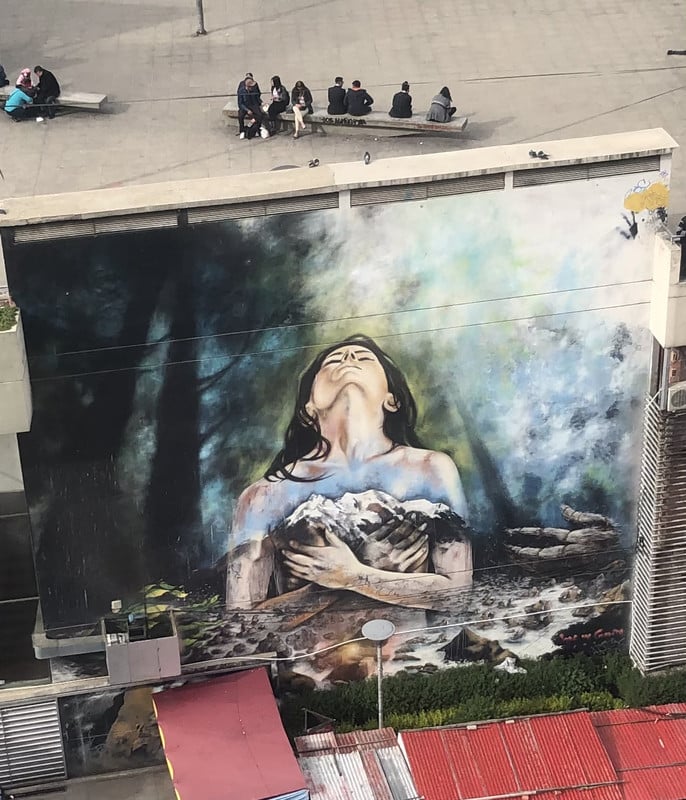
Set in a deep canyon and flanked by the Andes, Bolivia’s capital La Paz is bustling and bursting with color. Bright traditional clothing hangs in store windows and massive street murals depict indigenous life and resistance. Enjoy walking through steep corridors past interior courtyards, pleasant plazas, government centers and historic buildings. Cobblestone Jaen Street boasts colonial architecture and several art galleries, including that of beloved painter Roberto Mamani Mamani. His exuberant work presents subjects and themes from his Aymara culture. In the witches’ market, stores display potions, amulettes, and items for offerings like sugar figurines and embalmed llama fetuses.
Take advantage of the city’s pristine, smooth-running cable-car system, “Mi Teleferico,” to get around. It feels like a tourist attraction due to the sweeping views, but was developed for and is predominantly used by residents. Mi Teleferico is the longest aerial cable car system in the world, and La Paz is the first city to use this mode of transportation as the backbone of its mass transit system.

El Alto
Use Mi Teleferico to get to and glide over the sprawling, fast-growing city of El Alto (The Heights). It’s adjacent to and perched above La Paz. With about a million residents, El Alto is both Bolivia’s second largest city and also part of metropolitan La Paz. A lookout point right by the El Alto cable car station gives visitors an unparalleled view of the Capital. Additionally, at this station, “chamanes” (shamans) in small shacks are ready to read coca leaves to tell fortunes.
From the cable car, you can observe what our guide described as “neo-indigenous” architectural developments like “cholets.” They are multi-storied structures resembling townhouses with indigenous designs in bold strokes. Bolivia’s popular “cholitas” – Quechua or Aymara female fighters who wear traditional garb in matches – have been building and buying cholets over the last decade. They’ve taken over entire neighborhoods and have become an important part of the “indigenous nouveau riche.” The flipping of gendered breadwinning roles and the social mobility cholets and cholitas represent are striking.
Tiwanaku
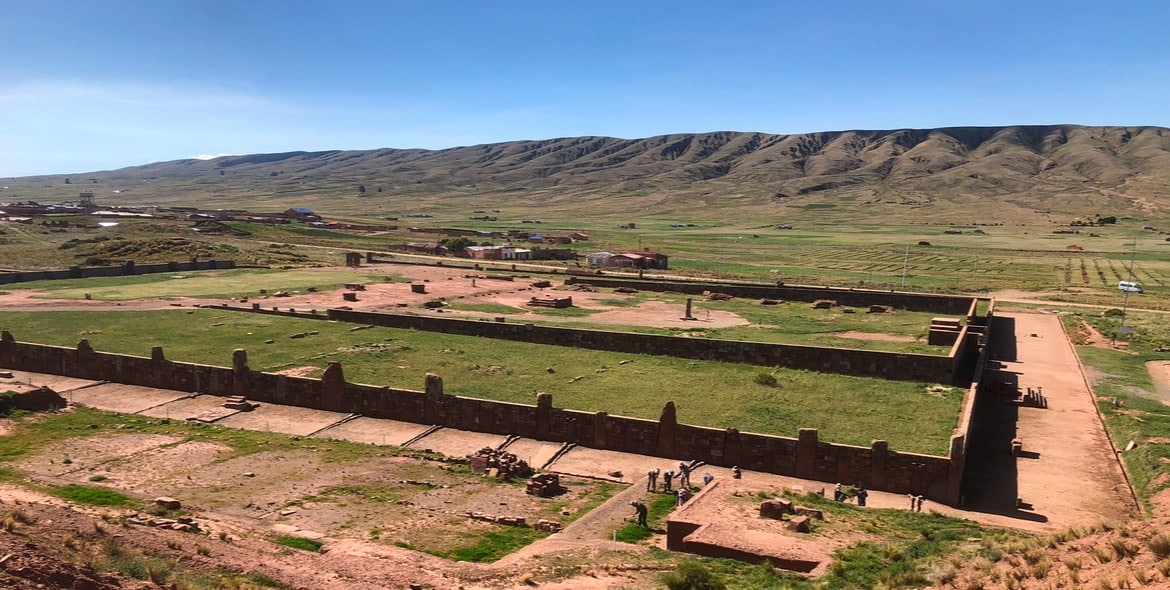
Two hours from La Paz, you can visit Tiwanaku, capital of an empire that thrived between 300 and 1000 AD. It played a pivotal role in the cultural and archeological development of the Andes, including Inca civilization. Due to lack of resources, archeologists haven’t excavated or reconstructed the site to the extent of those in other Latin American countries. Think low walls and mostly buried structures, which can consequently result in disappointment. However, learning about Tiwanaku history and cosmology combined with the site’s proximity to both La Paz and Lake Titicaca make the visit worthwhile.
Steps from the ruins, the Templo del Retiro Espiritual Cruz Andina (Andean Cross Spiritual Retreat Center) is the brainchild of owner Rosse Mary Vargas Vilela (see contact section). A Bolivian who has traveled the world, she is a spiritual/cultural guide and healer who emanates both intensity and calm. Filled with cats, crystals and plants, the center is comfortable with spacious bedrooms. Two shy brothers prepare delicious vegetarian meals and paint life-size figures from mythology and pop culture. The house features a sunken wood spiral of meditation perches and a rooftop deck to take in unobstructed views of Tiwanaku.

Lake Titicaca
Considered sacred by Bolivians, Lake Titicaca is the largest lake in South America. Close to 12,000 feet above sea level, it’s so vast (over 3,000 square miles) that it seems more like an ocean. Incans believed the lake was the birthplace of humanity.
A good place to start your Lake Titicaca leg is the scenic town of Copacabana. It has beautiful sunsets, a bay dotted with small boats, an array of quaint restaurants, and nice hikes. Copacabana also has charming accommodations (check out the gorgeous “cabins” of Hostal Las Olas). At the lakeside Boca Del Sapo (Frog’s Mouth), a 30-minute walk from town, you can make wishes while spraying champagne onto a rock that resembles a giant frog, Bolivia’s good luck symbol.

Islands of the Moon and Sun
Exploring Lake Titicaca requires extensive boat travel. You can tour several islands in the lake, including the eerily peaceful Isla De La Luna (Moon Island). This island is home of the Palace of the Virgins of the Sun, which has well-preserved ruins. Young girls who lived here during the Inca Empire learned Incan arts before being sacrificed as teenagers at rituals. Walls of many rooms shared by the virgins are partially intact, helping you imagine what life was like there hundreds of years ago.
The magic of Lake Titicaca pervades Isla Del Sol (Island of the Sun), believed by Bolivians to be the birthplace of Inca civilization. Ascend steep green terraces past Incan sites to the charming mountaintop cluster of hotels, alpacas, bodegas, donkeys, and restaurants that awaits you in the village of Yumani.
Don’t expect to swim in Lake Titicaca. The water is quite cold and locals may tell you to get out if you venture in depending on the time of year and how that aligns with local religious cycles and beliefs (swimming at certain times is deemed sacrilegious).
Cordillera Real
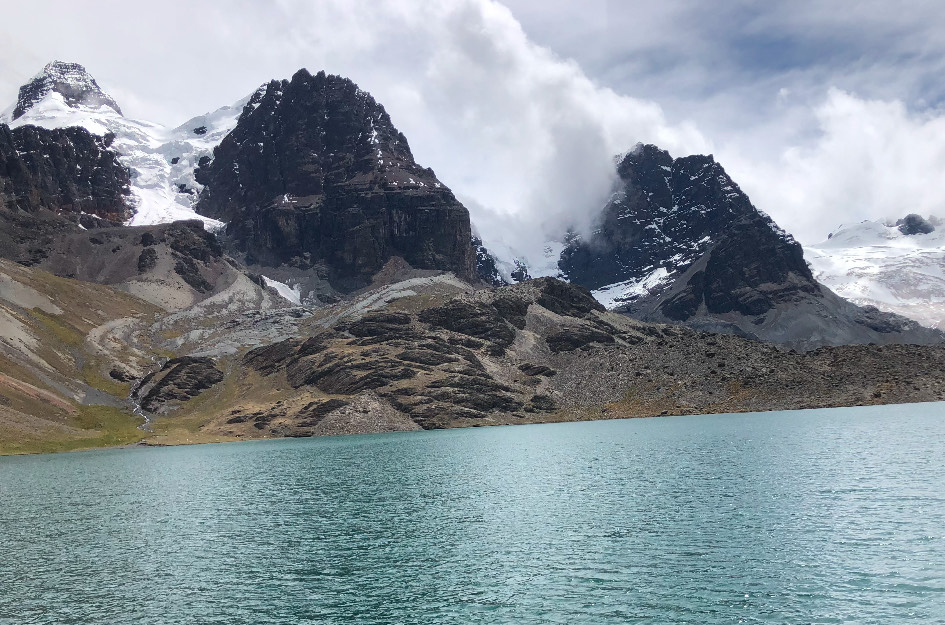
Bolivia’s majestic Cordillera Real (Central Andean range), less than 40 miles from La Paz, is a land of jagged snow-capped peaks, waterfalls, and shimmering lakes. Appreciate both the nature and culture of the region by staying near the town of Tuni with the multi-generational Quispe family (see contact section). Family members share with guests Aymara traditions like placing fishing nets, spinning yarn and making quinoa flour. They also teach you to use a “huatia” – an earthen oven buried under dirt. You can get up close and personal with the extended family’s hundreds of alpacas and llamas – moving with them as a pack, holding babies and shearing the fleece of adults.
Travelers can also stay next door at the ecotourism center, which was developed in large part by gregarious and charismatic Quispe family patriarch, Jaime. A certified mountain guide, Jaime also works as a driver and regular tour guide (see contact section). You can go on a trek of the stunning Tuni Conforiri mountains with Jaime or his adult son Denys, also a certified mountain guide. Both have expertise leading hikers of different ages and abilities.

Potosi – Cerro Rico Mines
Visiting the Cerro Rico Mines in the city of Potosi is an immersion into the socio-economic aspects of Bolivia’s southeastern region. With the right guide, like Marlene Quispe (see contact section), it also provides meaningful personal connection. After donning protective gear (overalls, jackets, boots, helmets and masks), visitors creep through winding tunnels. The Cerro Rico mines are the world’s most significant source of silver. They supplied 80% of the metal in the 16th-18th centuries but are now almost depleted. Around 15,000 Bolivians still mine – mainly tin and zinc – in Cerro Rico.
The air thins as you walk deeper into the earth. You learn how miners develop individual pits; follow veins; and extract, transport and sell the minerals. Labor intensive and physically demanding, mining usually produces just enough money to survive. The guide leads you to one of the mines’ “tios,”, gives him an offering, and invites you to sit down with him. If you go with Marlene, she shares her family’s mining links. Both her parents, all her male siblings and her husband worked at Cerro Rico. She herself has worked there when tourism revenue has ebbed. While mining has kept the family afloat, it has also taken its toll: two brothers died from silicosis, a lung disease that comes from breathing in silica dust.
A member of the Unified Pailaviri Mining Cooperative, Marlene can explain how these self-managed associations function. Today cooperatives run most mines (Cerro Rico has over 100); there are also state and private owners. All have their own workers. Cooperative and state miners have had frequent and bloody clashes, which don’t threaten tourists.
Community Tourism in Cabanias
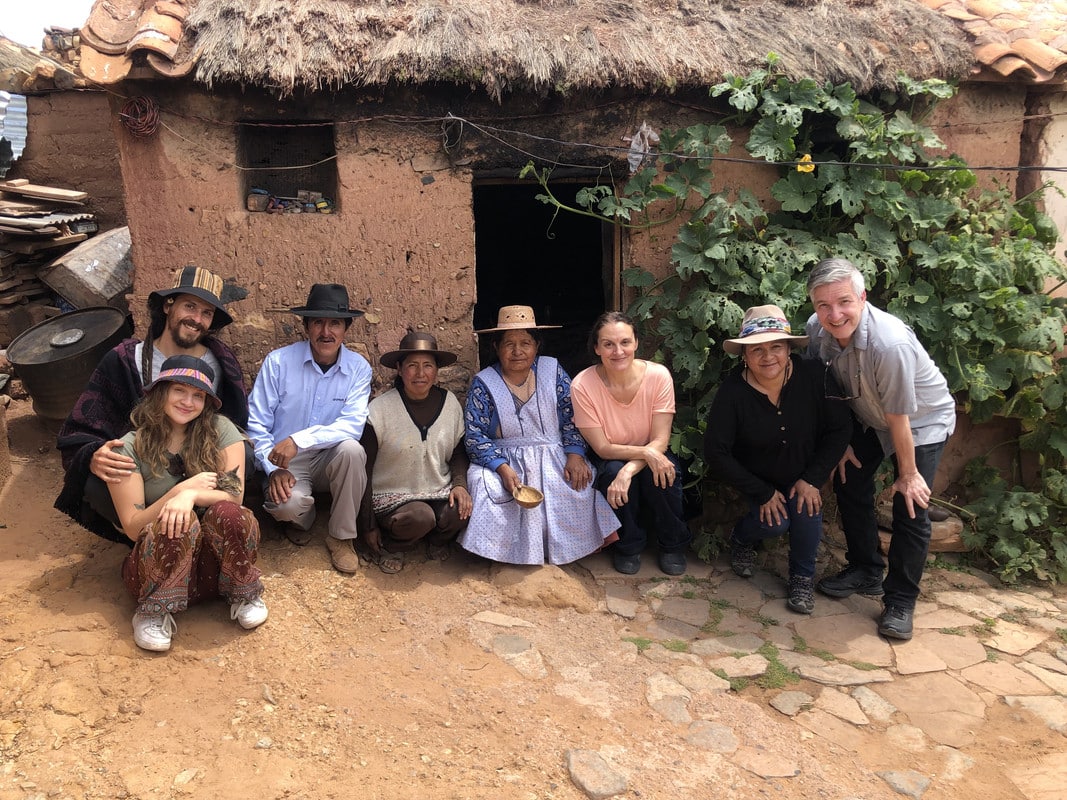
Marlene and other guides can take you to settlements scattered across the mountains in Potosi’s rural Cabanias district. Most of the roads connecting the communities to the city and each other are less than a decade old. The newfound accessibility led to the development of “community tourism” run by cooperatives. One of several Quechua communities that welcomes tourists for lunch is Phutu Phutu.
Travelers visit a family who gives a tour of their home (usually several adobe structures), gardens and items representing their culture. Enter smoky cooking huts where the family matriarch describes what is in each steaming pot, which you later eat for lunch together. There are dishes like “kalapurca” (a thick soup made mainly of yellow corn flour and potatoes) and “chuñu futi” (dehydrated potatoes with sheep meat).
Near Phutu Phutu, hike with your guide to “la ventana” (the window), where you can make an offering to Pacha Mama (Mother Earth). Participants ignite a flame on a pile of tinder, miniature sugar dollars, dry grass, and sugar blocks with etchings of hearts for love and frogs for luck. Take turns directing the smoke towards the sun, requesting positive energy from it, the universe, and Pacha Mama.
Southwestern Bolivia
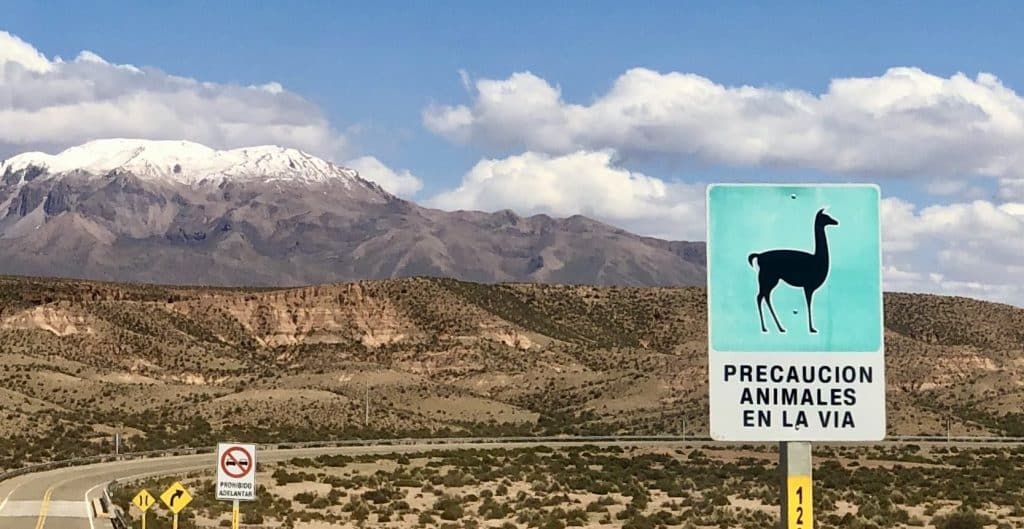
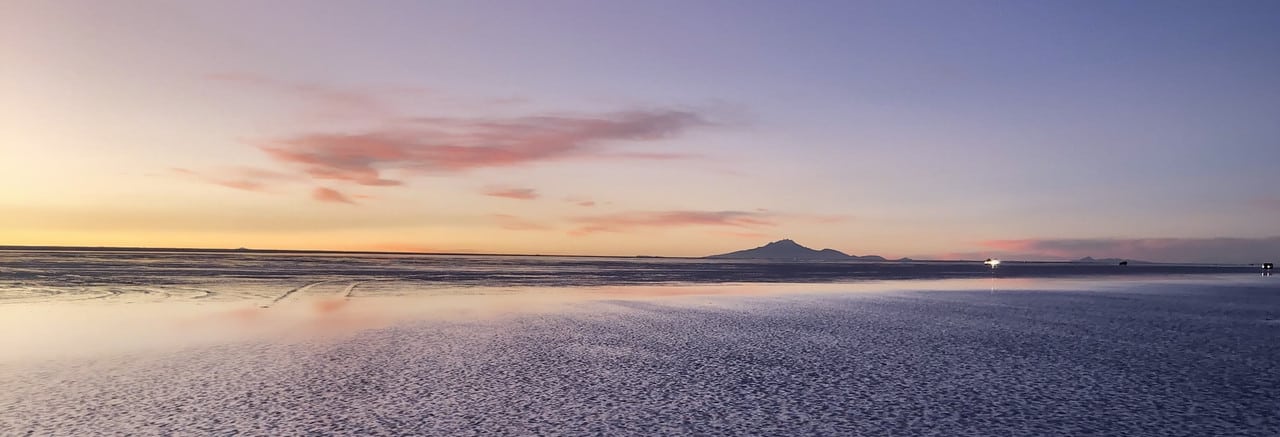
Southwestern Bolivia has numerous attractions, starting with the Uyuni Salt Flats. The largest in the world, the flats seem like bright white sand or the freshest layer of snow. Once you have driven far enough, the light-reflecting salt stretches beyond where the eye can see on all sides. You feel like you are alone in an other-worldly desert until you catch a glimpse of another vehicle or arrive at a field of structures on which fellow travelers pose. A sprinkle of restaurants and hotels are in the flats; many more are in the pleasant town of Uyuni. Several hotels and hostels are made from and fully carpeted with salt (e.g. La Nueva Cabaña de Sal). Attempting to navigate the salt flats on your own is risky – go with an experienced driver to avoid getting lost or stuck.
Near Uyuni is the creepy abandoned mine and town of Pulacayo. Rumor has it that Butch Cassidy and the Sundance Kid were attacked here. Another odd attraction in this area is a railroad graveyard now used for climbing and selfies.
Heading South from Uyuni, you arrive at an area of breathtaking beauty: Sur Lipez. Explore lunar-like landscapes, geysers, thermal springs, and trails shared with llamas. Walk alongside strikingly colored (from different mineral deposits), frequently flamengo-lined lakes throughout the region. Climb improbable rock formations in the Siloli Desert. Accommodations here can also be unusual – like Hotel Tayka del Desierto in the middle of a wind-blown expanse. It’s an “eco hotel” owned and run by a coop of fifteen families. They use water from a desert spring, solar energy, and a biodegradable sanitation system).
Local Sporting Events
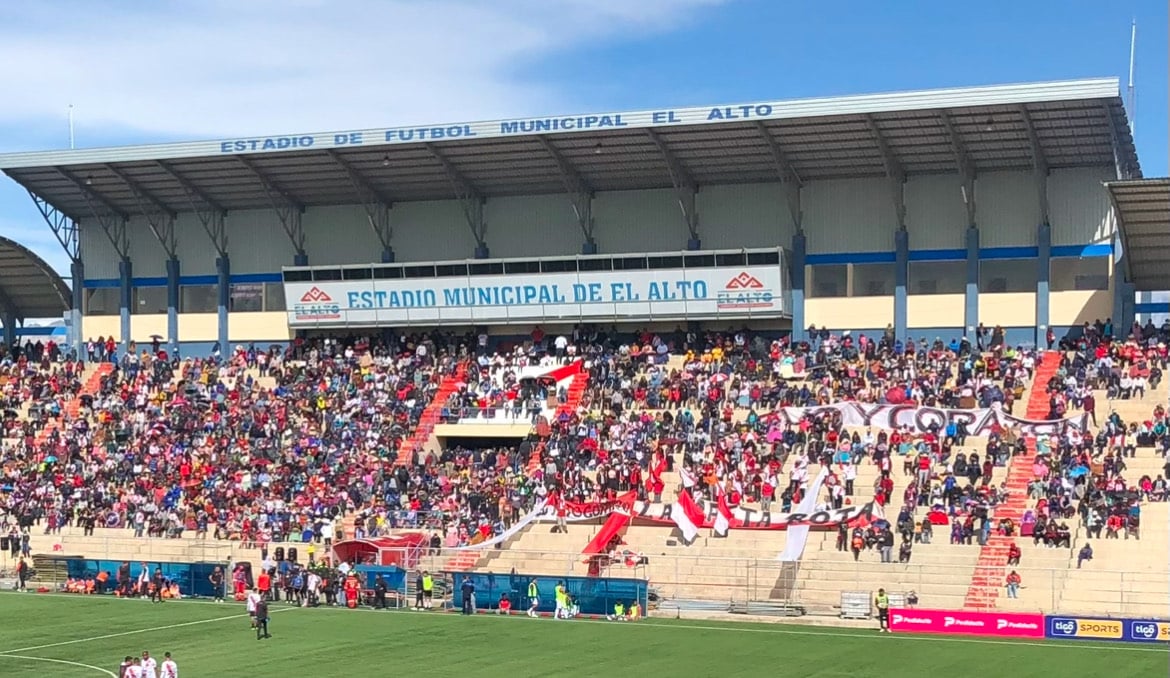
Live like a local by going to soccer games and wrestling matches! Few if any tourists attend soccer games, which feature the deafening boos and cheers of opposing teams (who sit in separate sections). Foreigners sit apart and make up about half of the audience at the fights. Cholitas (female fighters of indigenous heritage wearing traditional clothing) exhibit the confidence, drama and antics of WWE fighters as they pound their chests, dive off of the ropes onto their rivals, and display sexual bravado, especially to male tourists.
Bolivia’s Social, Political and Economic System
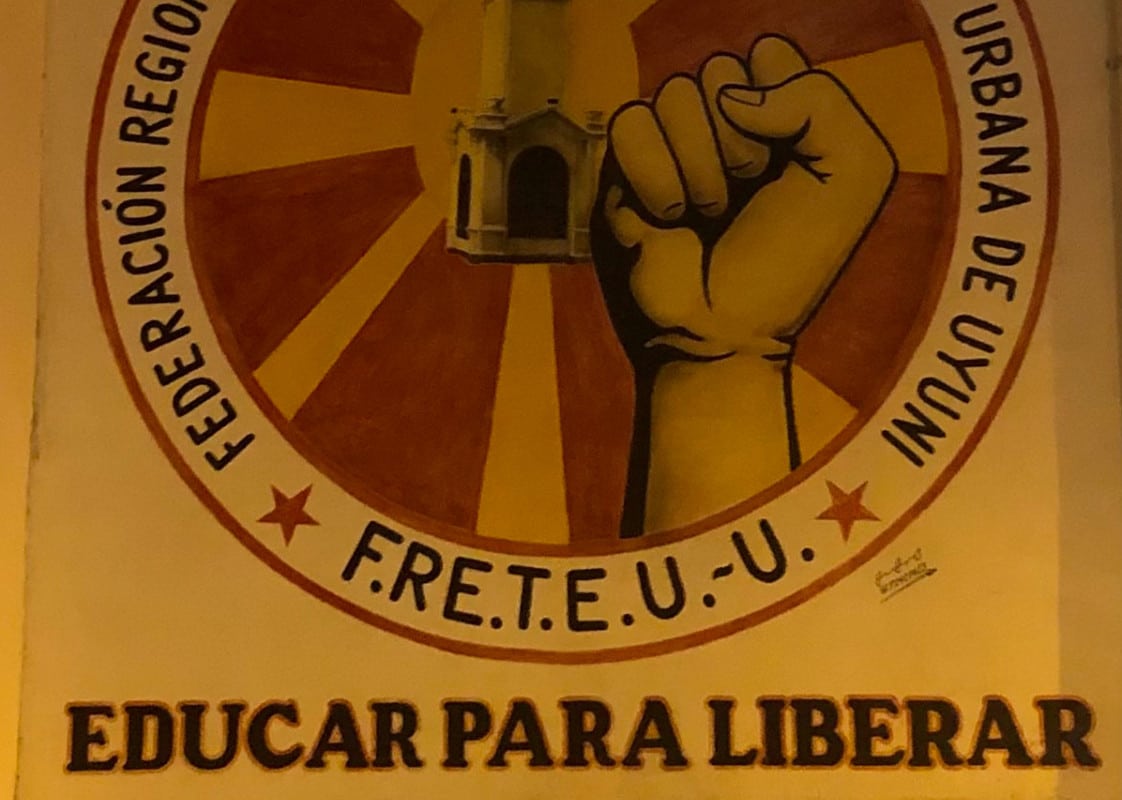
Visiting Bolivia exposes you to democratic socialism in action. Evo Morales, the country’s first indigenous president, implemented it here during his 2006-2019 tenure. Luis Arce, current president and Morales’ former mentee and minister, has maintained it. You feel it in the abundance of cooperatives; controlled inflation (Bolivian currency is tied to the U.S. dollar); and the redesigned and ubiquitously displayed multicolored Bolivian flag. It announces that Bolivia is a “plurinational state.” These words, now an official part of the country’s name, emphasize the inclusion of marginalized groups like indigenous populations and LGBTQ individuals. Bolivians speak openly and without fear about what they like and dislike in their communities and country.
In the fall of 2024, Bolivians for and against Morales returning to power as the head of MAS (the ruling Movement for Socialism party) began protesting in what is being called the “Morales-Arce crisis.” These are continuing as of January 2025, resulting in potential travel complications, but not expected to be dangerous to tourists.
Contact Information
Guide Jahel Amaru (speaks English; has a degree in Bolivian history). Contact her for tours of the Oruro Carnaval, La Paz, El Alto, Tiwanaku, the islands and coast of Lake Titicaca, and more. Contact: [email protected], WhatsApp (591)(7) 193-5311, or request her (at a higher price) through the company Terra Bolivia.
Guide and Proprietor Rosse Mary, (speaks English). She offers accommodations, vegetarian meals, and healing services in her Templo del Retiro Espiritual Cruz Andina (the Andean Cross Spiritual Retreat Center) in Tiwanaku. She also organizes tours with a spiritual focus throughout Bolivia. Contact: [email protected], WhatsApp (591)(7) 190-3332. Book a stay by contacting her directly or through Terra Bolivia.
Guide Jaime Quispe (speaks English). An expert in the Cordillera Central region, Jaime provides community tourism experiences including lodging, leads mountain treks of all levels, and handles travel logistics for Lake Titicaca. Contact: [email protected]; WhatsApp or telephone (591)(7) 197-4227. You can also access these opportunities through Terra Bolivia.
Guide Marlene Quispe (no relation to Jaime, speaks English). She leads mine tours in and around Potosi, and can organize and accompany you on community tourism encounters. Contact: [email protected], WhatsApp (591)(7) 243-0740, or request her through Terra Bolivia.
Terra Bolivia The tour operator Terra Bolivia, a division of France-based Terra Andina, can facilitate your Bolivia immersion. It has deep roots in its destinations, with staff members setting up bases and forging alliances with local providers. The company emphasizes connections between hosts and visitors. If Terra isn’t in your budget, you can reach out directly to the individuals listed above.



This: “Not many foreigners have discovered the Oruro Carnaval, and Bolivians don’t seem to notice those who attend. This combined with the porous barriers between participants and observers enables visitors to fully immerse themselves in the festivities.” I am so intrigued. This article is fantastic. I cannot wait to visit all the places this author so wonderfully depicted for me. Thank you!! The photos and the painting of the woman are so evocative as well. This is so comprehensive. I can’t wait to go….
Such a deep and profound description of this beautiful place. Can’t wait to experience this!!! Congratulations to the author!!!!
what a vivid piece which brings bolivia and these destinations to life. great to have these details and guides as well. makes it all seem doable. hadn’t thought to travel there but know i will!
This article introduced me to Bolivia with not only descriptions of places but gave me an understanding of the historical and current context of place. The pictures and personal experiences of the writer have whet my appetite to visit Bolivia, giving me confidence that there are resources to support and enhance my experience. As presented, a trip to Bolivia will not be an ordinary travel experience— but a potentially life-enhancing journey. Thanks to Gomad Nomad.
There are so many intriguing and informative details here about the natural beauty and cultural richness of Bolivia here. Thank you for including contact information for the local guides. What a terrific way to really get to know the country and people.
This article has opened up my interest in traveling to Bolivia. The “plurinational” theme of the country is well represented in the places and people and events described. I am also keenly interested in the institution of cooperatives that she mentions. I hope to visit–taking Andi’s description as my guide!