The Maritime Silk Route gets strategically cross-bedded at the passaged-shores of Southeast Asia, East Asia, the Indian subcontinent, the Arabian Peninsula, Eastern Africa, and Europe at the dawn of the 2nd century BCE. And with those cultural mismatches, the Dutch cuisine crashed against the demure Indonesian delicacies, while the Arab merchants doled out herbs and spices to the Malay navigators. This cultivated multi-pierced bowl of togetherness took a nosedive into what soon fostered the ‘Sri Lankan Cuisine’ nonetheless, with the injected array of cinnamon, black pepper, pandan leaf and goraka (a fruit shaped as a small pumpkin) from Ceylon itself.
Table of Contents
Vegetarian Dishes to Try in Sri Lanka
In this article, we will explore the vegetarian Sri Lankan dishes that you must try out on your upcoming trip to the ‘Teardrop of India’, Sri Lanka’s much-adored moniker for its geographic structural outlines bowing to South India.
How Different Cultures Have Affected Sri Lankan Cuisine
The Dutch Influence: The island’s dominance in cinnamon cultivation and worldwide export-spirit is periodically reverberated through the thick curtains of the past; the ancient spice inventory-exchanges with the Romans, Arabs, and the Western World. The cinnamon production exponentially trickled alongside other spice supplies of pepper, cloves, nutmeg and mace – between 7500 to 10000 tons per year; supplying 90% of the world’s cinnamon at one point.
And during the 17th-century Dutch rule, cinnamon harvested in Ceylon apexed at its ‘golden spice’ refinery, even marked the ‘more valuable than gold’ stature. Not only the refinement of spices in the existing Sinhalese Curries, the Dutch also introduced lamprais ‘the lump-rice’, a lumped-up banana-leaf hotchpotch of rice, Curry, Sambol and boiled egg steamed in Indonesian cooking spaciousness.
The British Influence: The Sinhalese Independence in 1948 from the British colonies culminated in the decision to morph its colonial name of Ceylon into Sri Lanka. But Ceylon Tea remained.
The fate of Sri Lanka initially adopted the strategy of ‘a major coffee-producing colony’ but a fungal disease called Hemileia Vastatrix (Coffee Rust) wiped out the coffee plantations, spacing out the newly-created space scrambling for a new cash crop. James Taylor, a Scottish planter, gawked at the industrial opportunity, and dashed out tea to the Sri Lankan landscape. In today’s times, Ceylon Tea is a key export.
The Indian Influence: South Indians, the migrant Tamil workers to be precise, also migrated curry leaves, tamarind and fermented rice-bread food in their packs. In the aftermath, Sinhalese and Tamil kingdoms in Jaffna concocted pioneering agricultural practices that attest to rice cultivation as the staple grain, while sustaining lentils, coconut, and spices.
Other Influences: Alongside the Dutch, British and Indian influences, the Portuguese acquainted the local ways with the pastry cake ‘bolo fiado’, the Malay community introduced fragrant dishes like Sambol and Malay Pickle, and Sri Lanka‘s own indigenous and regional culinary highlights elongated from the North to South wielded the wholesome ‘Sri Lankan Cuisine’.
10 Best Vegetarian Sri Lankan Dishes to Try
Rice and Curry, the country’s staple-duo, even embody an internal culture-specific adherence drawing from the island’s ethnic communities of Sinhalese, Tamil, Muslim, and Burgher. The Curry-specific variations balance on flavor, ingredients, and moreover, the health quotient, making the cuisine highly vegetarian-friendly.
Let’s peek at 10 Sri Lankan dishes you must steal a taste of, especially if you are a vegetarian.
Hoppers
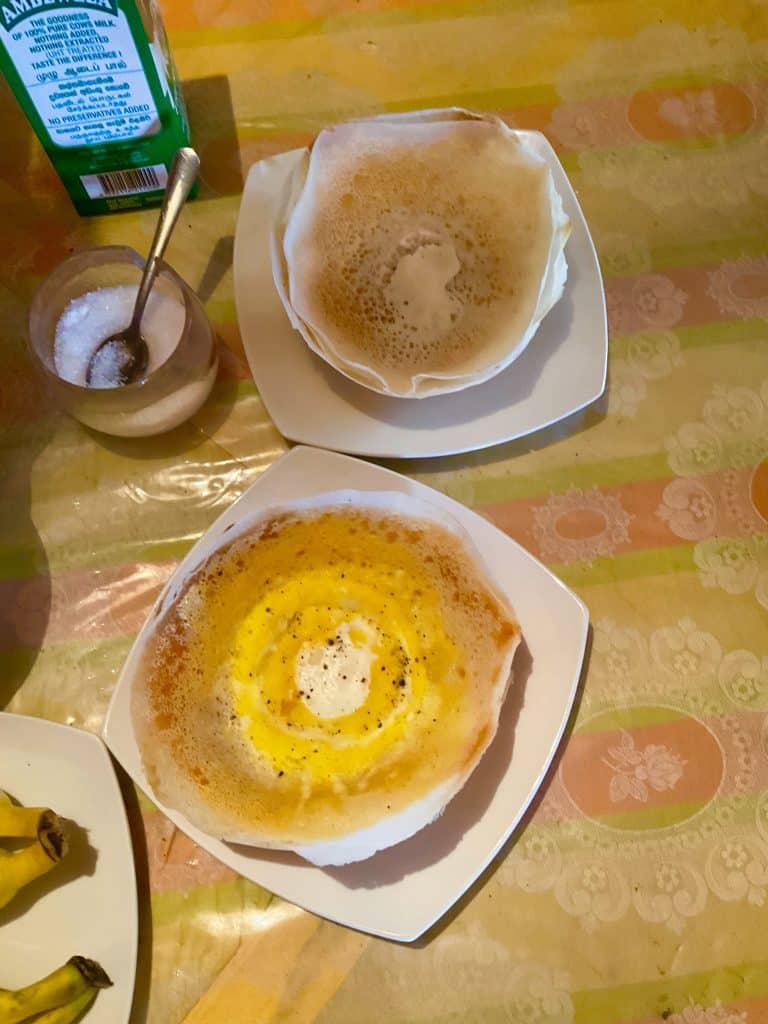
Egg Hoppers, String Hoppers or Coconut Honey Hoppers – this Sri Lankan breakfast dish is a palatable fermented delicacy. Rice flour, coconut milk, and yeast are mixed just to leave the batter on their own for one hour. The puffed-bellied batter is then swirled and tossed on the whirling pan, until a crumpet-like pancake-shaped upheld sharp-edged crispness crisps out.
Pol Sambol

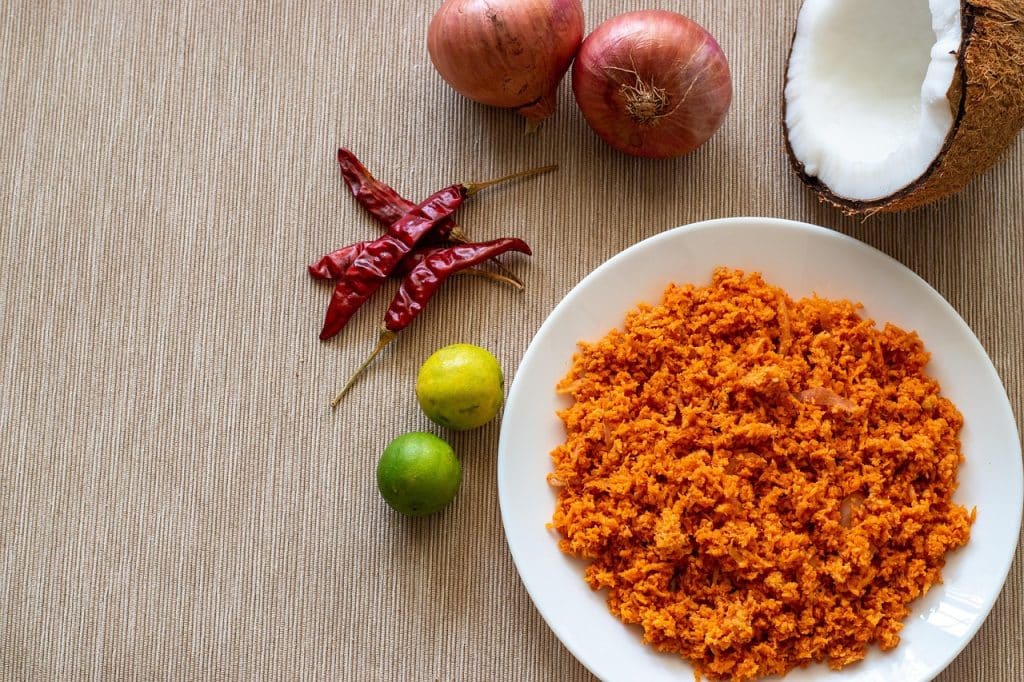
‘Pol’ translates to coconut, and the orange King Coconuts never run out of its power-packed Vitamin B & C, electrolytes, potassium, calcium and magnesium. Coconut’s ubiquitousness gave birth to the exquisite Pol Sambol, a shredded coconut ensemble that mashes grated coconut with salt, lime, chili powder, and lime juice. Sambol often accompanies Hoppers, Pol Roti, Rice and Curry, and pretty much every other Sri Lankan dish.
Kottu Roti

Imagine slicing up the flaky roti-breads and throwing them onto a flat hot griddle as fiery spices, fried eggs and vegetables like cabbage, carrots or leeks whizz over the hot pan. This ‘mix’ is what the Sri Lankans serve as ‘Kottu Roti’ with a spicy (obviously) tomato-dipping sauce.
Kiribath
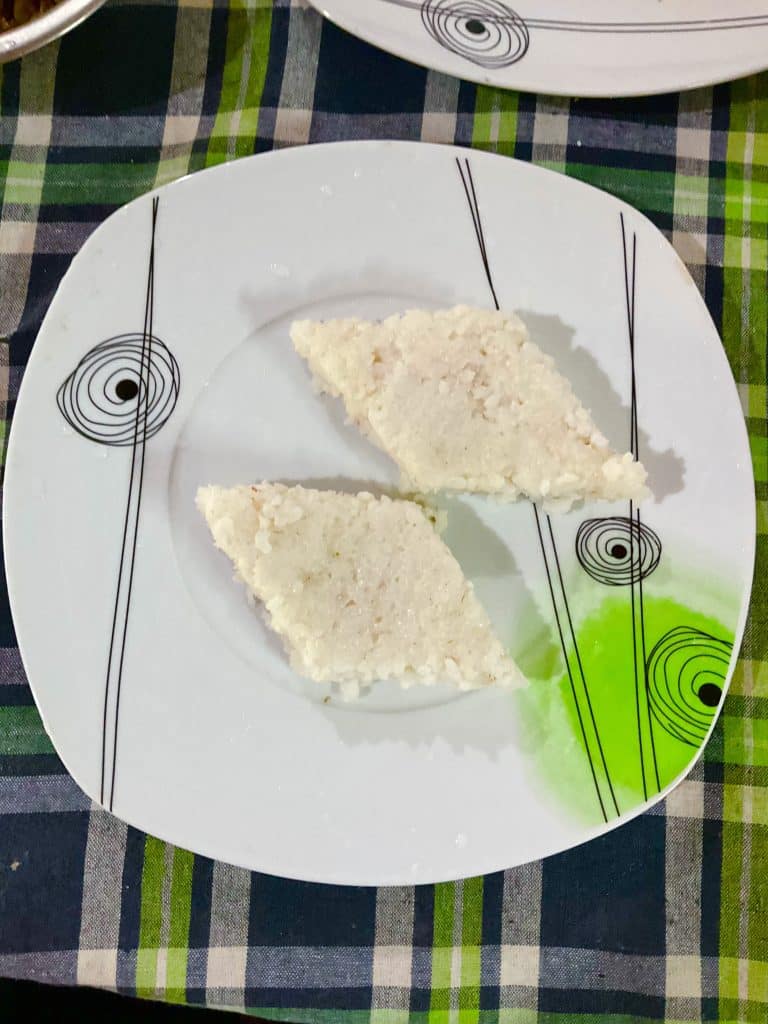
Symbolic of the Sri Lankan representation of prosperity and new beginnings, Kiribath is a diamond-patterned traditional Sri Lankan dish that mixes rice (bath) with coconut milk (kiri); a creamy-textured rice that simmers down to a thickened and sticky mixture. Reverting back to its symbolism, in special occasions like New Year, weddings or birthdays, Kiribath is served either with a Sambol or jaggery-slash-sugar.
Pittu
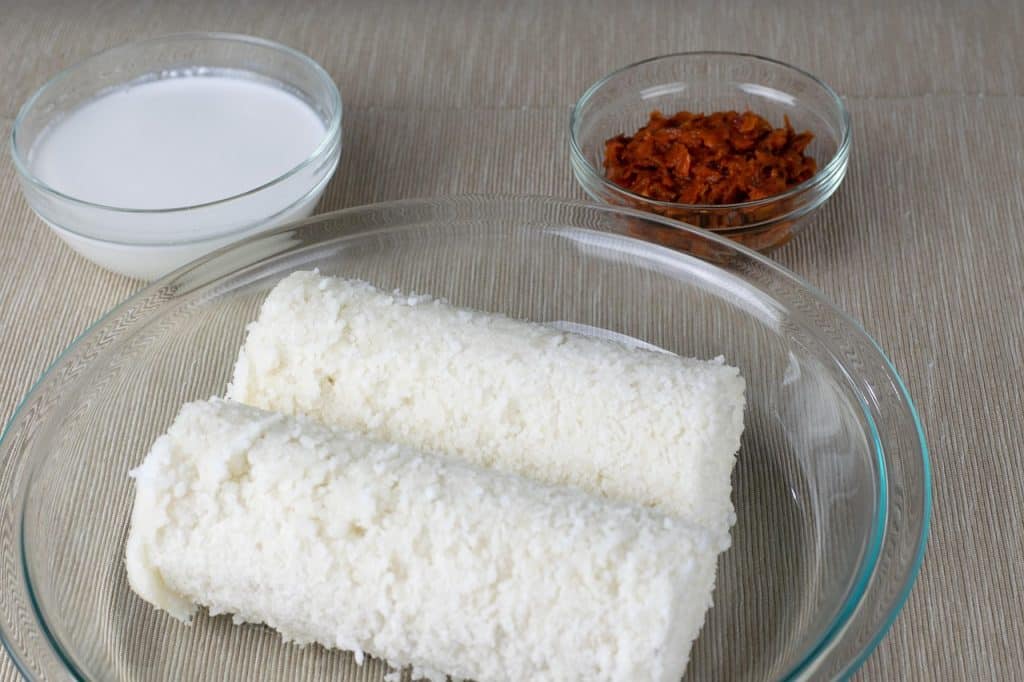
More grounded in South Indian origin, Pittu is moulded into cylindrical molds using a metal or bamboo tube to engineer a crumbly texture with steamed rice flour and freshly-grated coconut. The dough takes long shapes and gets pressed into a ‘Pittu steamer’ (Pittu bambuwa) for almost 7 minutes. Another variation of Pittu is a blend of grated coconut and red rice flour for a nuttier taste (or coconut treacle for a sweeter taste).
Parippu (Dhal Curry)

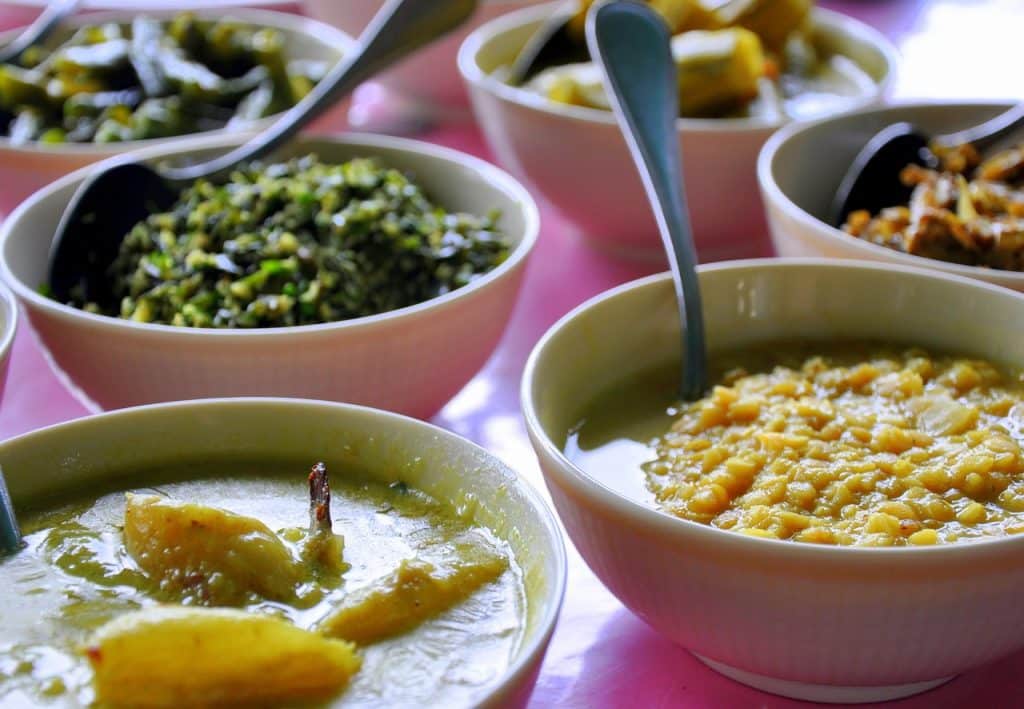
This could be the sweet beginning of the chock-full of Sri Lankan Curries that are synonymously healthy and exceptionally tasty. The ‘Curry’ in the famous ‘Rice and Curry’ begins with Parippu, the lentil-curry, flavoured with coconut milk, curry leaves, mustard seeds, turmeric, onions and garlic. The creaminess of Dhal Curry whiffs homemade coconut milk. Parippu is a daily accompaniment with rice.
Thel Dala (Beetroot Curry)
Beetroot is high in potassium, iron, Vitamin C and fibre, and Beetroot Curry’s slightly sweet and inconspicuously spiced-up incentives find a home in its natural sweetness. Thinly striped or cubically fashioned beetroots are cooked with spices and coconut milk. The Thel Dala style tends to be more dry-fried.
Polos (Jackfruit Curry)
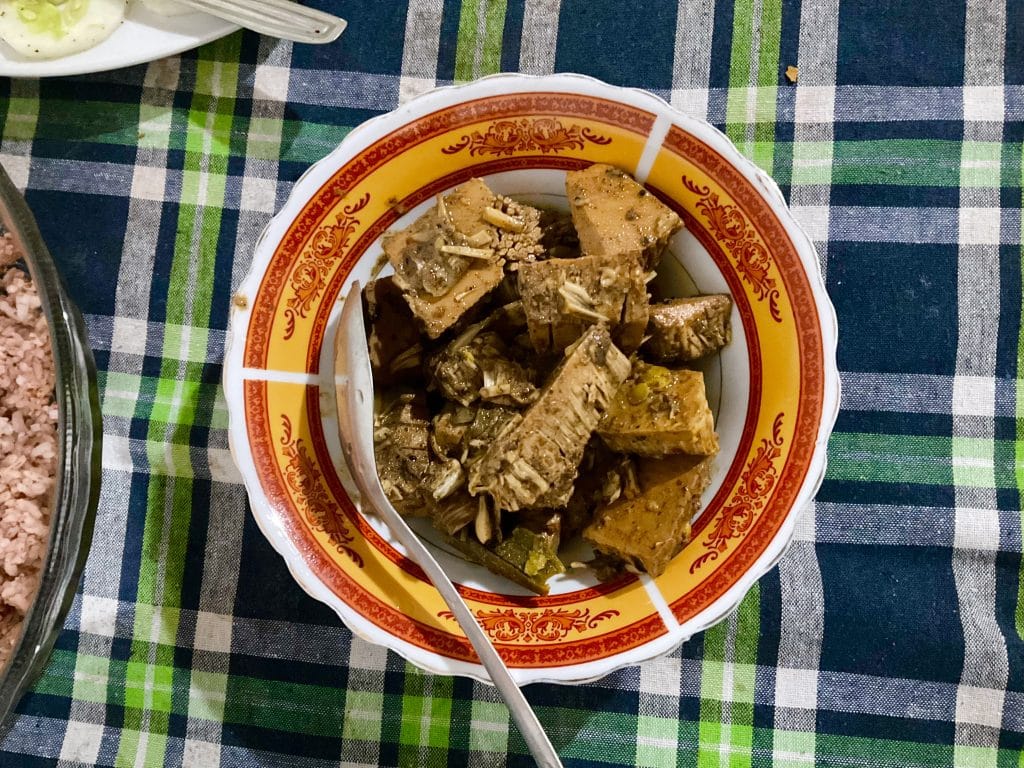
Did you know that King Parakramabahu the Great in the 12th century pressed the planting of jackfruit trees to ensure food security? And history posed vile and tiring times when the Sinhalese people had to rely heavily on jackfruit as a subsistence crop when circumstances toppled down all cultivation of rice and other grains through a scarcity due to colonial policies.
Roasted and slow-cooked, preparing Polos or Jackfruit Curry would demand marinated jackfruit dipped in turmeric, tamarind juice, roasted curry powder and the usual Sinhalese spices. And Jackfruit Curry is the tastiest of them all!
Thakkali (Tomato Curry)
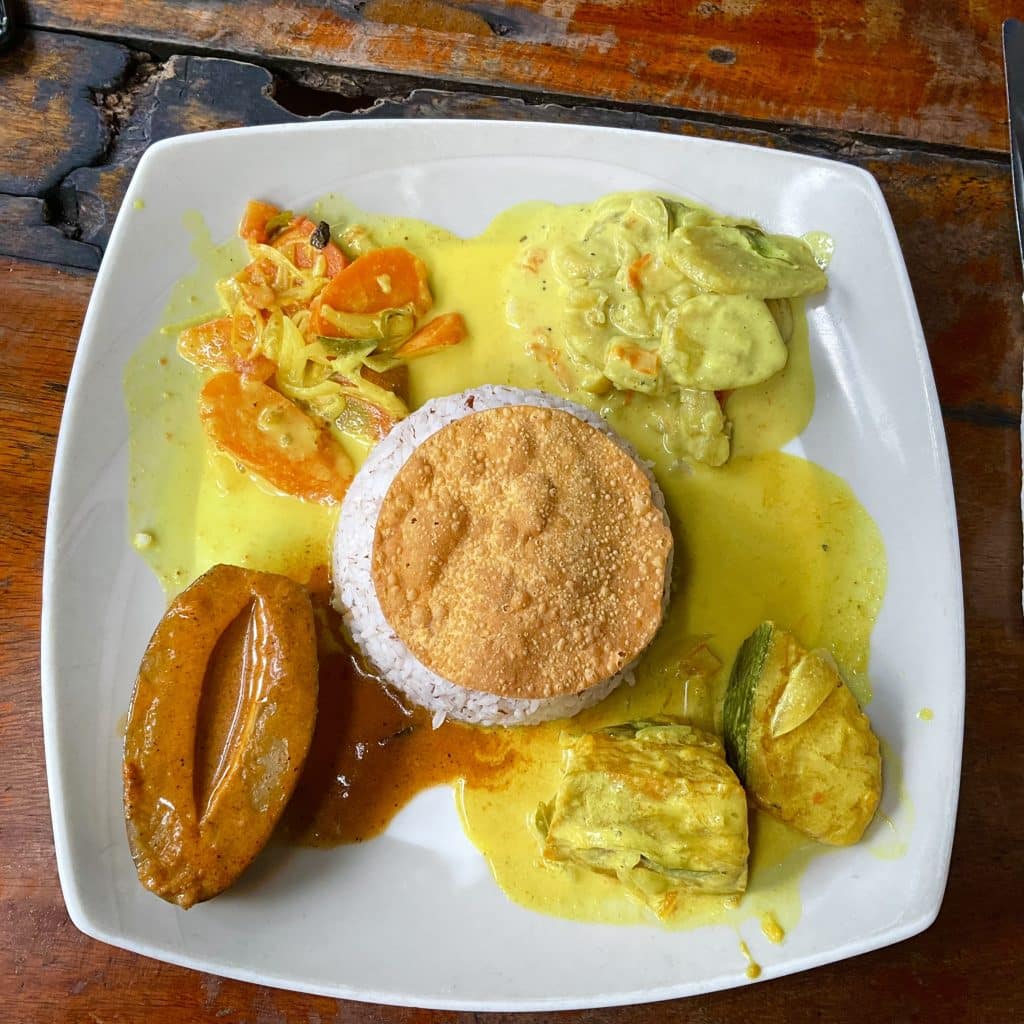
3-4 ripe chopped tomatoes, 1 sliced onion, 2-3 chopped garlic cloves… The recipe could travel all the way to our main ingredient in every Sri Lankan dish, coconut milk. Aromatic spices mingle with tomatoes to cook up a tangy and creamy texture we call Thakkali Curry.
Wambatu Moju (Eggplant Pickle)

Deep-frying eggplants sizzle in a golden-brown light around the edges. In a different pan, popping and dancing oil poured with our usual spices creates a ‘spice-mix’ that sticks to the already-fried eggplants. In half an hour of blended flavours, the caramazied Eggplant Pickle awaits Dhal and Rice on the plate.
Beverages to Drink in Sri Lanka (Alcoholic & Non-Alcoholic)
Sri Lankan Tea is World-Famous
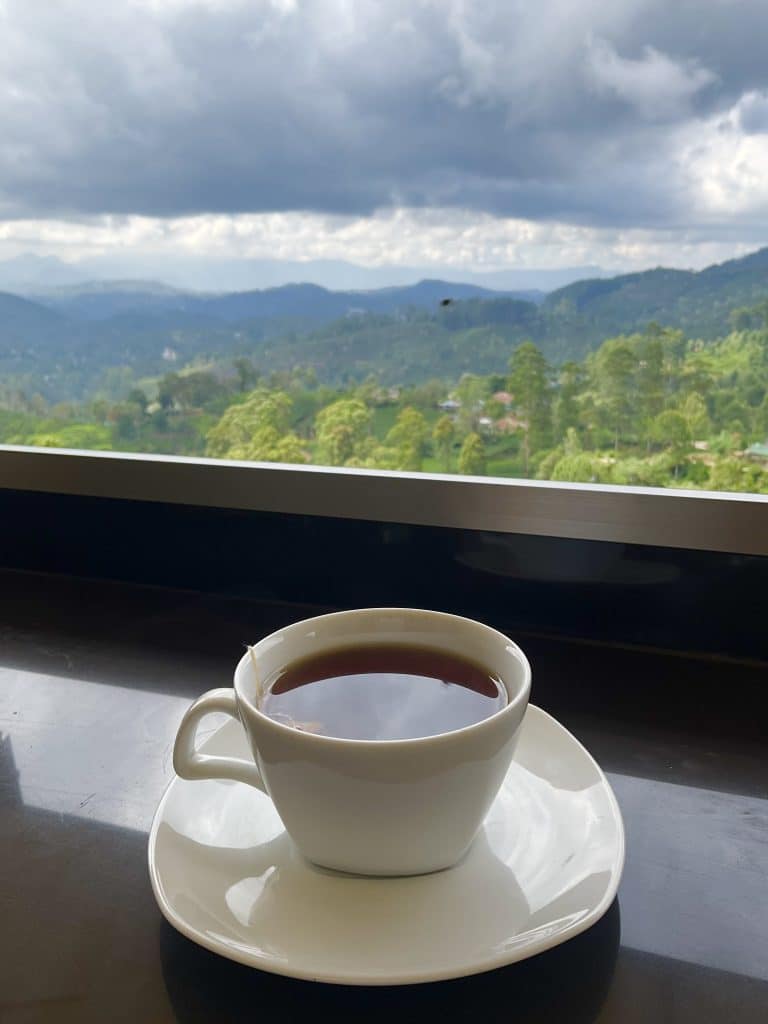
The ideal fluctuations from lowlands to high-altitude plantations over 2000m contribute to Ceylon Tea’s current flavour-profile. Carrying 150 years of heritage in deep-stored tea expertise, the Sri Lankan tea enforces righteous standards with its briskness, full-boiled taste and solid colour.
Tea leaves from a high-grown region like Nuwara Eliya are floral and light, whereas malty and dark leaves are often more synchronous with low-grown places like Ruhuna. For tea tastings and plantation visits, the Central Highlands opens meaningful passageways to the easy-going tea-drinking culture of Sri Lanka. Quintessentially, the Tamil tea-pickers have been hand-picking tea leaves in large tea estates around Ella and Haputale, bolting the legacy of the Sri Lankan Tea to the pedestal of ‘one of the world’s finest’.
Lion And Arrack Are the Go-To Local Drinks

Strength, bravery and the Sinhalese ethnicity – the angry yellow lion on the National Flag that was adopted as a royal emblem by Sinhalese kings is the country’s torchbearer in ancient coins and royal banners. And in its local beer ‘Lion’ as well, produced by Lion Brewery (Ceylon) PLC since 1860, an ode to Sir Samual Baker.
Now deadlier is Arrack, a distilled liquor made from sugarcane or the fermented sap of coconut flowers. Oftentimes, Arrack is aged in wooden casks over a period to defuse a more complex and rich flavour akin to whiskey or rum.
Pol Ra Or Coconut Toddy is More Inconspicuous
It’s highly unlikely that toddy would be stacked in liquor stores or restaurants, for this cultural drink is more fenced within local thresholds. From tapping the sap from the unopened coconut flower buds to letting the sap sugars convert into alcohol through fermentation, Pol Ra is undoubtedly a ‘Toddy Tapper’s’ groundwork for preserving traditional methods of production.