
Cairo (and Egypt in general) is home to one of the world’s most underrated cuisines. You’ll encounter many dishes influenced by Mediterranean, North African, and Middle Eastern elements.
While you’re probably familiar with some equivalents from nearby countries like Lebanon, Türkiye, and Greece, many of these dishes are not as famous internationally. Moreover, some dishes have traditions dating back to the pharaohs!
Read on as we virtually explore the top 11 must-try dishes when you visit Cairo, Egypt!
Try some of these on your Walking Tour of Historic Cairo Beyond the Pyramids. Besides eating here’s What To Do in Two Days in Cairo, Egypt.
Table of Contents
The Top 11 Must-Try Dishes in Cairo, Egypt
Kushari

Egypt’s iconic national dish is also a beloved street food. While it can be elevated to a fancier dish at hip and pricy restaurants, kushari- a mix of noodles, rice, black lentils, chickpeas, and fried onions topped with a tangy tomato sauce- is best enjoyed in local neighborhood establishments.
Kushari dates to the nineteenth century and blends Egyptian, Italian, and Indian cuisines. Although stalls and restaurants sell kushari all over Cairo, arguably the most well-known is Abu Tarek.
Pharaohs built pyramids to leave their mark on history. Abu Tarek built his legacy in this neon palace of kushari. Indeed, what began as a humble street cart operation in the 1950s is now a multi-story restaurant.
While you can take your kushari to go, I recommend eating inside to get the complete experience.
Ta’ammiya
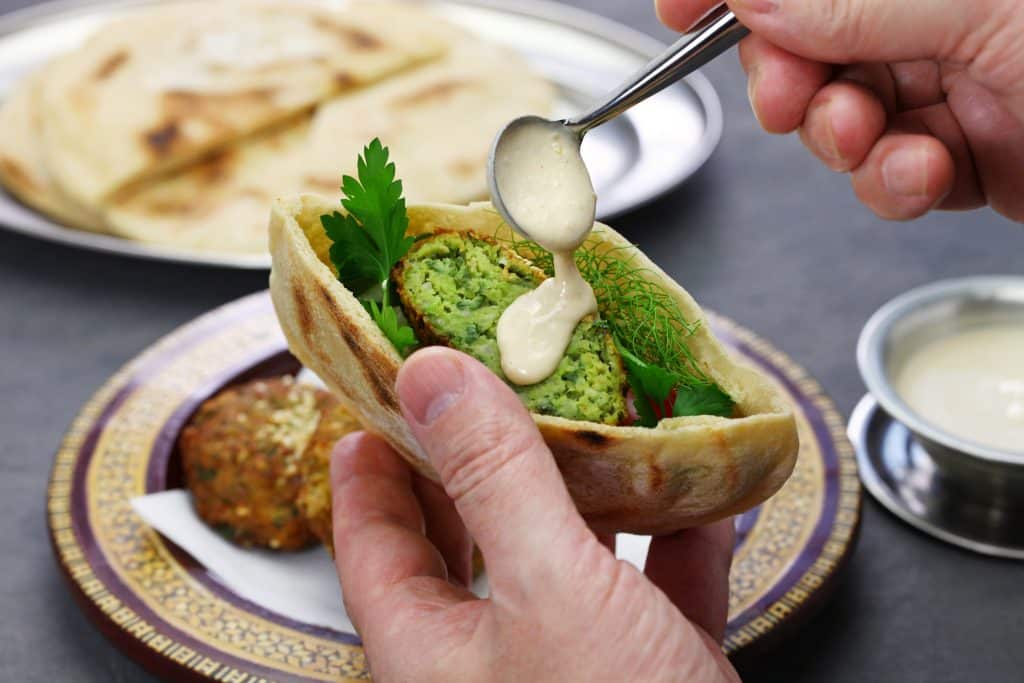
Next, we’re moving on to Egypt’s variation of falafel, ta’ammiya. A key difference between Egyptian falafel and other variants is the use of fava beans instead of chickpeas.
Egyptologists suggest that ancient Egyptians prepared falafel much the same way as it appears today in Cairo.
Ta’ammiya is one of Cairo’s primary street food staples, along with kushari and some of our other entries below. It is a perfect street food option for a quick, satisfying meal or snack!
Shawarma
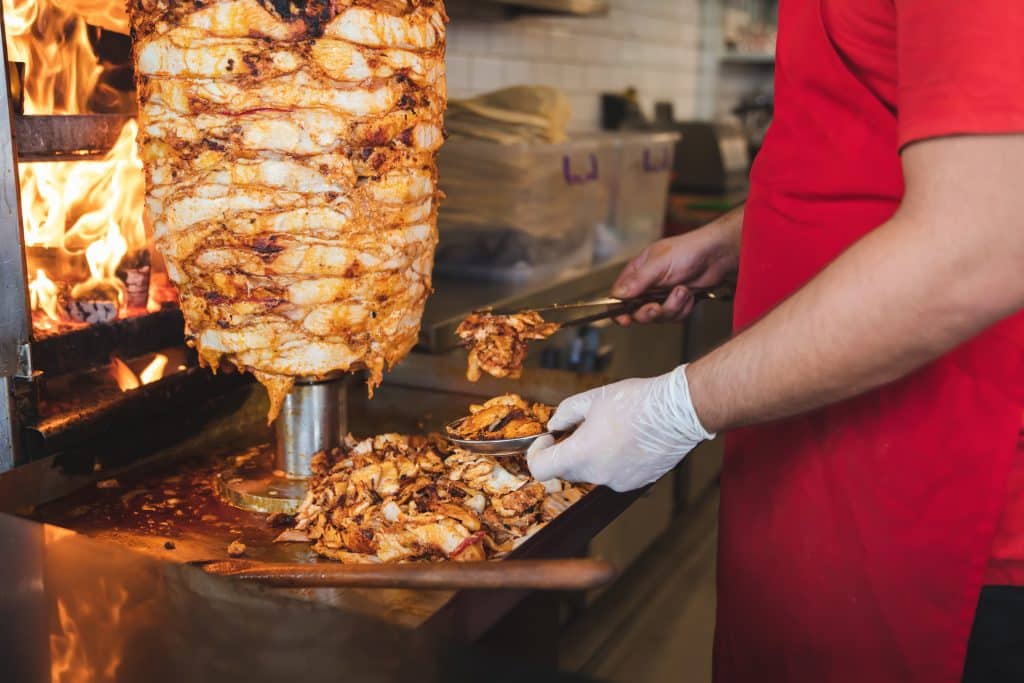
You are likely most familiar with our next entry, shawarma. This famous sandwich has cousins across the region, including the Turkish Döner kebab or the Greek gyro.
Shawarma consists of grilled meat slices (usually chicken or lamb) wrapped in a pita-like bread and served with vegetables and various sauces.
This is a good place to mention the importance of bread and types of sandwiches in the typical Cairene diet. A’aish (bread) is the lifeblood of the Egyptian diet. While there are many variations, the most common are a’aish baladi (used to scoop up dips or wrap pieces of meat) and shammy (used for shawarma and ta’ammiya).
Other meat-based sandwiches include liver (kebda) and hawashi (minced beef patties).

Fiteer
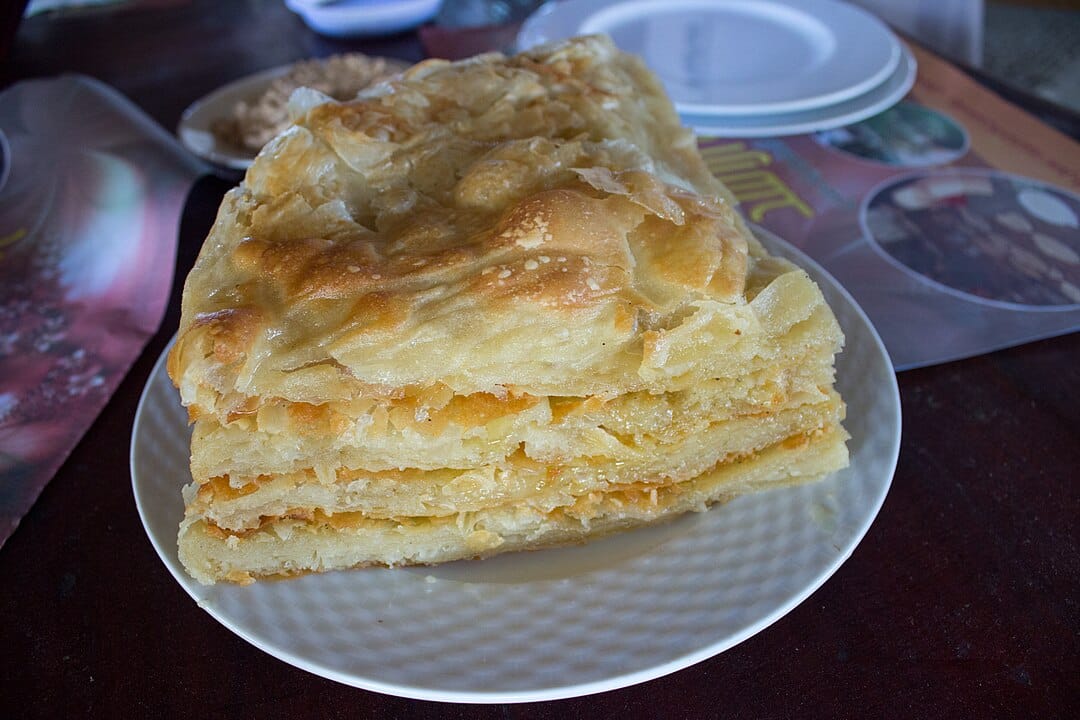
Fiteer or fetter meshaltet is a mix of flour, ghee, and other ingredients baked together in the oven to form a layered pie topped with savory or sweet toppings.
Often called Egyptian pizza, fiteer makes a great meal or snack. You’ll find fiteer chefs’ dough stretching techniques to be as impressive as any pizza maker. It is one of the foods on our list with roots in ancient Egypt.
Fuul
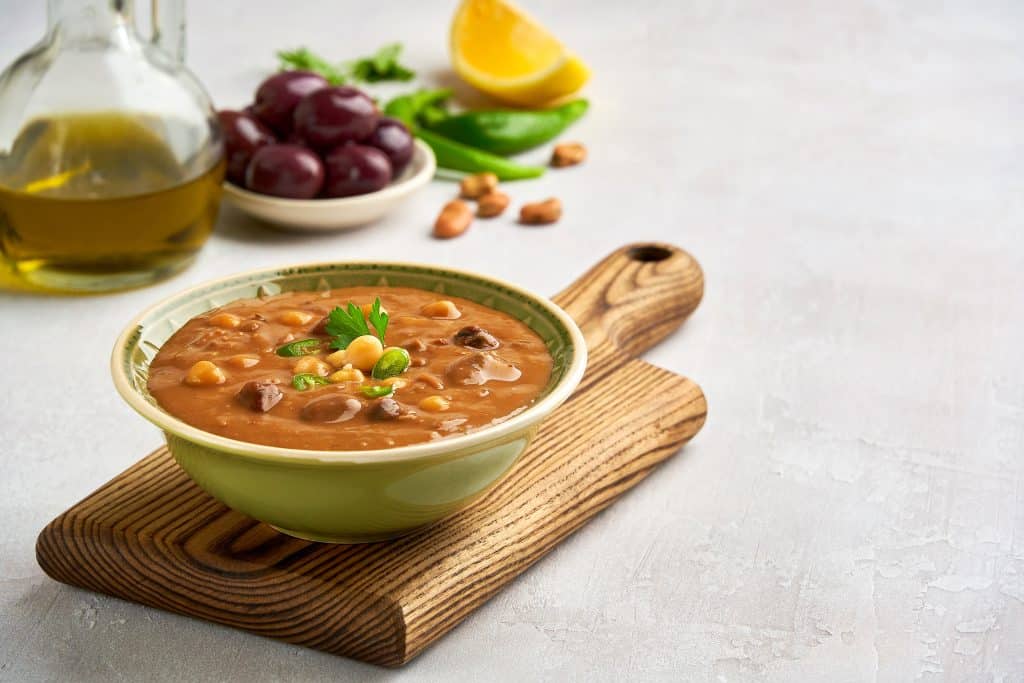
Fuul (fava bean paste) is an iconic staple of Egyptian cuisine. While typically enjoyed for breakfast, there is never a wrong time to eat it. Fuul is generally consumed in sandwich form, especially at breakfast.
However, follow the lead of locals eating at the benches or tables of a fuul cart and order a plate. You’ll typically get huge portions of fuul served with salad and potato chips. In other words, this can definitely be a lunch or dinner option.
Makaroneh bi Lahm

Many places specializing in kushari also prepare Makaroneh bi Lahm, a baked pasta and lamb casserole. It is also called macarona or macaroni bechamel.
Typically, it consists of layers of penne pasta, spiced meat, tomato sauce, and bechamel. Makaroneh bi Lahm might remind you of lasagna or the Greek dish pastitsio.
Molokhiyya
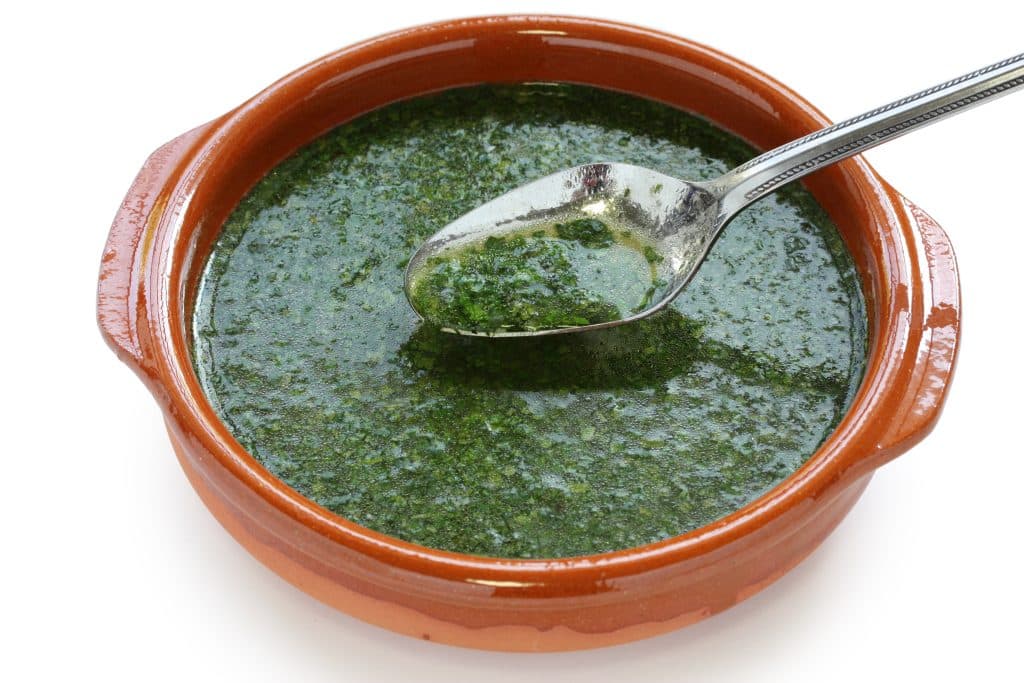
Once you’ve tried our next dish, you’ll have something in common with ancient Egypt’s pharaohs. Molokhiyya is a hearty and savory soup made with jute leaves, garlic, coriander, and chicken or beef broth. It is typically served with rabbit, beef, or chicken and rice.
Indeed, records show that molokhiyya was part of a pharaoh’s diet.
Mezze
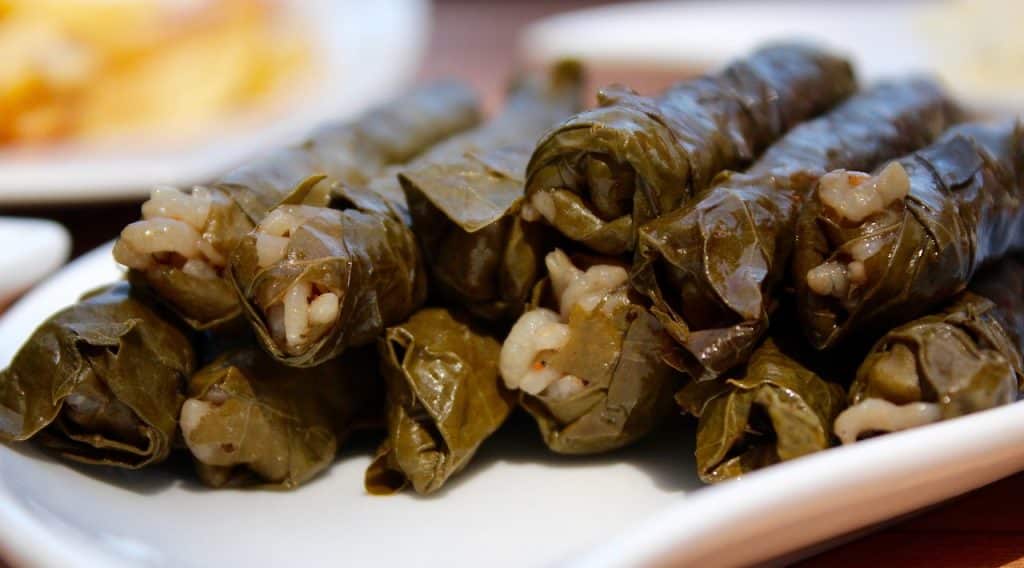
This selection of hot and cold starters shares many characteristics with familiar appetizers from the Middle East, Mediterranean, and North Africa. For example, you will typically find hummus, baba ganoush, and tahini.
Wara ainab is the rice and meat-stuffed vine leaves like Middle Eastern and Turkish dolma and Greek dolmades. The cheese or meat-filled mini pies called sambusas are my personal favorite mezze.
In Cairo, don’t miss torshi (pickled vegetables). Torshi is also a great accompaniment to sandwiches like shawarma and hawashi.
Hamam Mahshi
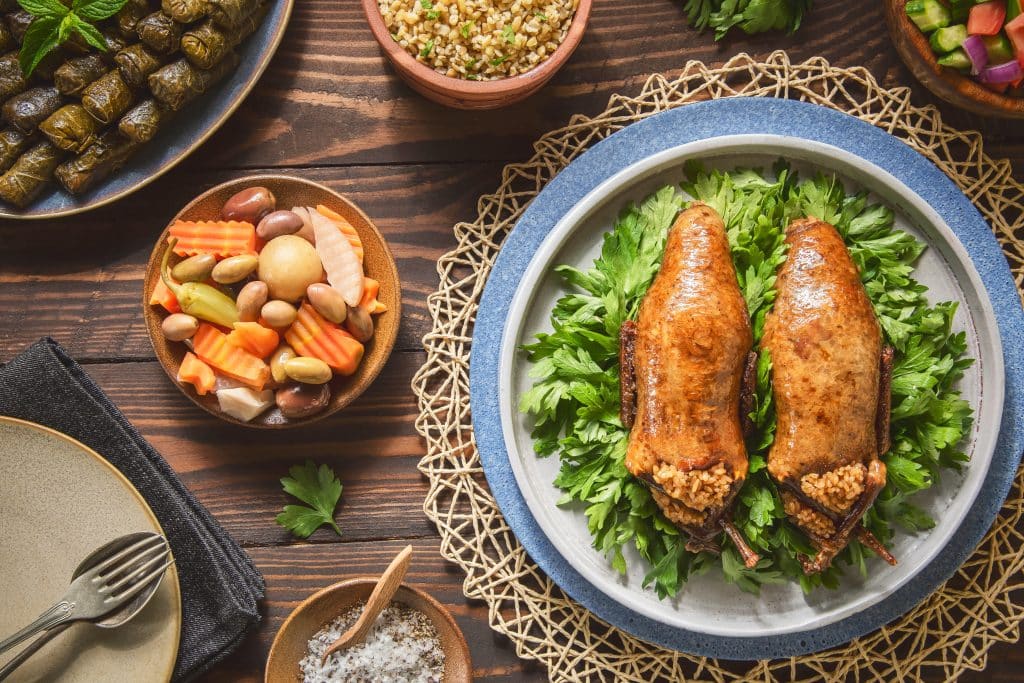
You’re probably more familiar with seeing pigeons walking around a city block or park. But stuffed pigeon (hamam mahshi) is a traditional delicacy in Egypt.
Hamam mahshi is a roast pigeon stuffed with cracked wheat and rice. The many tiny bones make this dish tricky to eat.
You’ll likely see the word “mahshi” often on a menu. Mahshi means stuffed. In addition to stuffed pigeons, you’ll see mahshi (rice-stuffed vegetables).
Fatta

Many Egyptian dishes are filling and heavy. Fatta is perhaps the best example. Fatta is a hearty mix of layers of rice and bread in a garlic-vinegar sauce with lamb, beef, or chicken. It is prepared in a tagen or clay pot.
This variation of fatta is typically Egyptian. For example, fatta (fattah) is prepared in Lebanon with yogurt and garbanzo beans. However, in Egypt, you won’t find either of these ingredients.
Omm Ali
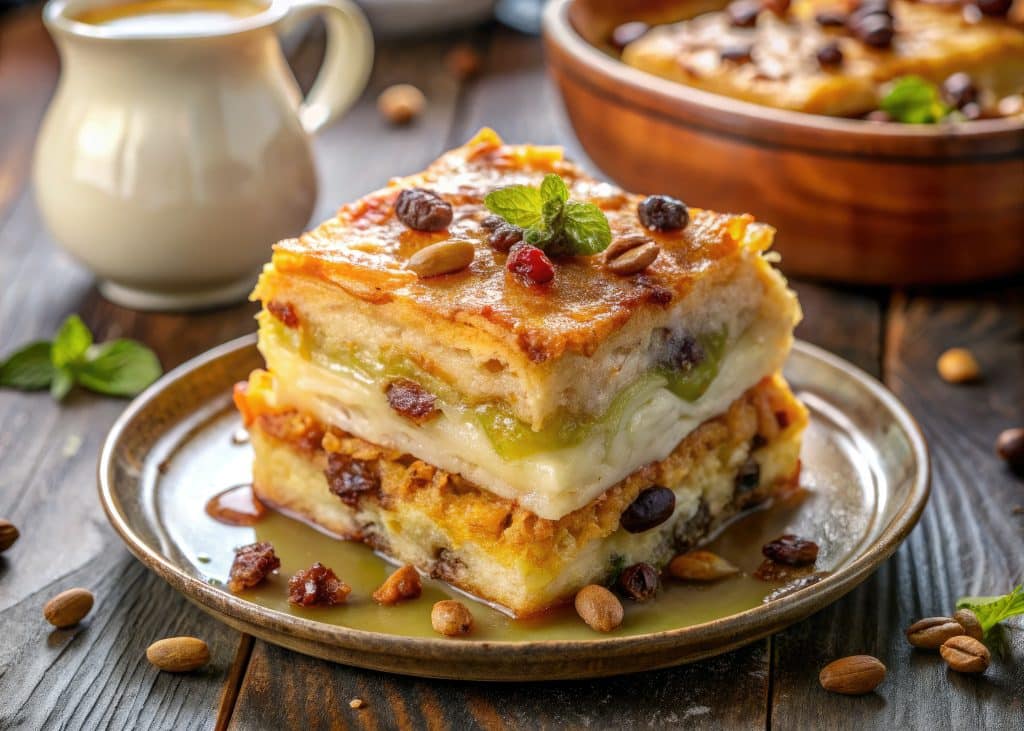
Flaky phyllo layered with sweet milk, sugar, and raisins, soaked in sticky syrup, a rich and indulgent dessert from Egypt.
I hope you’ve saved room for dessert! Cairenes love sweets, and Omm Ali does not disappoint. Omm Ali is a bread pudding-like dessert made with layers of bread, nuts, and raisins, topped with cream, and often served warm.
The dish has several fascinating origin stories. For instance, one tradition says Omm Ali arrived in Egypt via the Irish mistress of nineteenth-century ruler Khedive Ismail. On the other hand, another story places Omm Ali as a dessert as far back as the thirteenth century. In this instance, the dish involved the murder of an Egyptian sultan’s wife by her rival.
Omm Ali (Mother of Ali) is an iconic Egyptian dessert regardless of its origins.
Other great sweet treats include basbousa, a sweet semolina cake topped with almonds and drizzled with sugar syrup. Puddings such as ruz bi laban (rice pudding) and mahallabiye are also prominent.
There’s also kunafah, which is made of shredded phyllo dough, filled with cheese and/or nuts, and soaked in sweet syrup. Finally, enjoy your dessert with Turkish coffee or mint tea!
Must-Try Dishes in Cairo
Taste these must-try dishes in Cairo on your next trip to Egypt!




I clicked on this thinking “I SWEAR TO GOD IF THE FIRST DISH IS NOT KOSHARY” and was not disappointed.