
Table of Contents
Thinking about traveling to Iran? Here’s a Complete Itinerary for first-time travelers to Iran
At the time of writing, Iran has 28 UNESCO World Heritage sites and a hundred more that are not yet on the list. Being an ancient, vast, four-seasoned country, Iran has so much to offer that it leaves you wondering how to plan your trip to see the best of the country. In this guide, I’ve saved you from the headache of going through it all by yourself.
I’ve picked the best sights to see, the best restaurants to taste Iranian food, and the best hotels to spend the night at. In this 10-day Iran itinerary, I will cover the four top tourist destinations from the four top tourist provinces of Iran. These provinces include Isfahan, Tehran, Shiraz, and Gilan. I have included some of the most luxurious hotels and restaurants in Iran in this post, but don’t worry; because of the low value of Iran’s currency, you can easily afford them all. We start our trip by landing in Tehran, the capital of Iran.

Tehran
Tehran is situated at the foot of the Alborz Mountain range and has a population of about 15 million, making it the most populous province of Iran. At first glance, you’d be surprised by the modern look of the city, and later by the traffic jam that reminds you of Egyptian streets. Tehran is very culturally different from the rest of the country, and you’ll notice it as you continue your trip across Iran.
Here are the top 4 must-see sites in Tehran
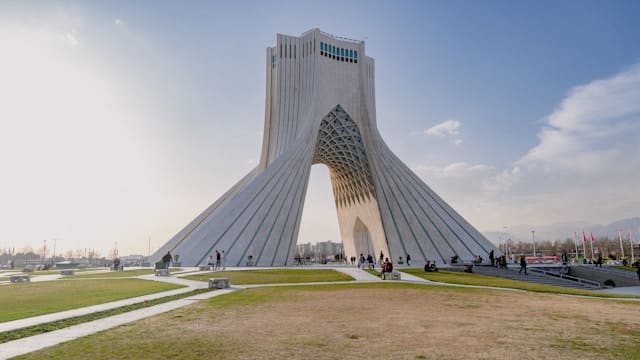
Azadi Tower (Freedom Tower)
The Azadi Tower, formerly known as the Shahyad Tower, is a monument in the center of Azadi Square, on the western entrance to the city. It is part of the Azadi Cultural Complex, which also includes an underground museum. This monument stands tall at 45 meters and was constructed during the Pahlavi dynasty (1925 -1979). King Mohamad Reza Pahlavi changed its name to Azadi after the white revolution he started himself. This revolution was a series of reforms resulting in rapid modernization and economic growth.
This landmark has a unique architecture that is a mixture of both classic and post-modern eras. Just like the Eiffel Tower, which is the symbol of Paris, the Azadi Tower is the symbol of Tehran. This landmark was constructed to mark the 2500-year celebration of the Persian empire and also served as the country’s kilometer zero. The 2500-year celebrations were a series of festivals sought in honor of the Achaemenid empire founded by Cyrus the Great. Many of the prominent politicians of the world were invited to celebrate this event.
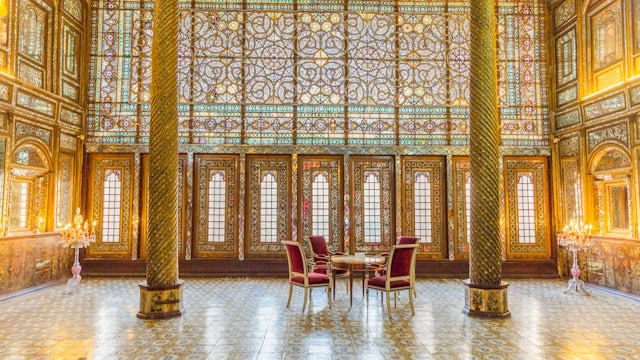
Golestan Palace
Vast Golestan Palace is a masterpiece that traces back to 1400. It is a complex that consists of 17 structures, including palaces, museums, and halls, most of which were built during the 131 years of rule of the Qajar dynasty. After Qajar, the Pahlavi kings added more structures to this complex. In 2013, this royal complex was inscribed as a World Heritage UNESCO site. Salam Hall (Iran’s first museum), the Mirror Hall, and Shams Ol Emareh (Edifice of the Sun) are some of the main parts of this palace.
This lavish palace is one of the marvels of Iranian architecture. It has everything to captivate the eyes, from stunning mirror work and vivid paintings to its famous marble throne and towers that overlook the city. This palace has witnessed significant political events in Iran’s history: ascension to the throne of 9 kings and constitutional revolution are some of them. You’ll need 2-3 hours to explore this beautiful palace.
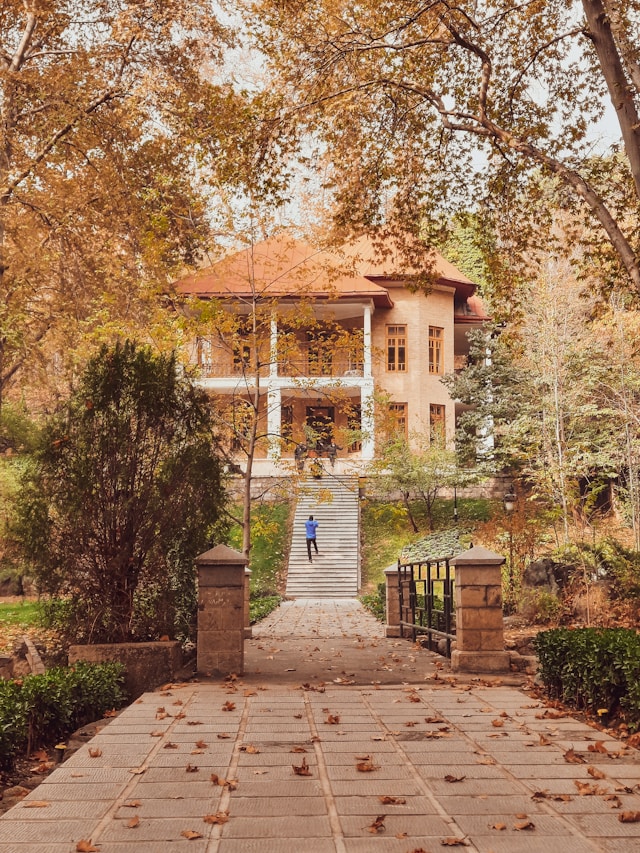
Sa’dabad Palais
Sa’dabad Palais is a 300-hectare complex built by the Qajar and Pahlavi dynasties. This complex includes some of the natural forests, museums, mansions, and qanats. Members of the royal family lived in each mansion of this complex before the Islamic Revolution. Some parts of this complex currently serve as museums, while others are used as the office of the president of the Islamic Republic. Some of the main parts of this Palace include the white palace, the Green Palace, and the black palace.
The white palace was the summer residence of Mohammad Reza Pahlavi, which is the largest building in the complex. Beautiful Persian rugs, European chandeliers and sconces, and large oil paintings have added to the beauty of this Palace. The green palace that was the residence of King Reza Shah is famous for its facade that has unique green stones in it. The black house, known for its dark marble cladding, served as the residence of the prime minister and is now inaugurated as the Museum of Fine Arts.
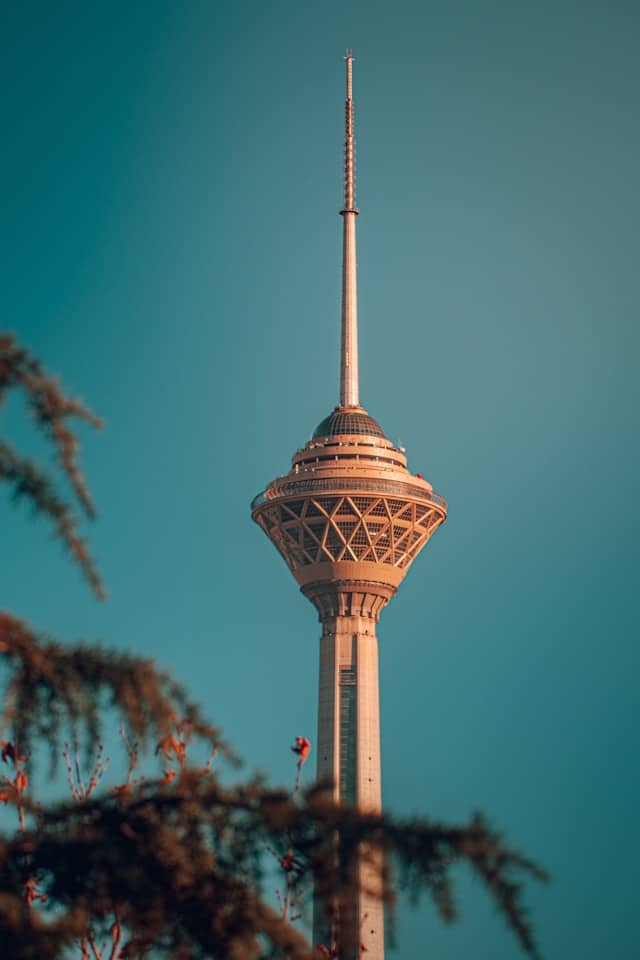
Milad tower
Milad Tower, built in 2007, is the sixth tallest tower in the world. It includes diverse facilities like a 5-star hotel, exhibition spaces, an international trade center, and galleries. Once in Milad Tower, you can enjoy the breathtaking view of Tehran in observation decks or dine at “Tehran 360 Restaurant,” which is located on the sixth floor of the tower’s crown and gives a panoramic view of Tehran with its slow rotation.
Where to Stay, Eat, and Shop in Tehran
Once in Tehran, you can stay at Espinas Hotel, which is super luxurious and has an iconic view over Tehran city. You can eat out at Evan restaurant and cafe. It might not have the traditional look of most Iranian cafes, but it is well worth it. The ambiance and the view are gorgeous. And you can shop at Iran Mall, which is the biggest mall in the world.
Isfahan

Naqsh-e Jahan Square
Naqsh-e Jahan, or Shah Square, is the second largest square in the world and is situated at the center of Isfahan. This UNESCO world heritage site was constructed 400 years ago, during the Safavid era when Isfahan was the capital of the country. You can visit 4 UNESCO sites walking in this square. As you enter the square, you’ll be amazed by the stunning look of it. Nothing interrupts the skyline. On the western side of the square, you can see the Ali Qapu, the palace of the king that stands tall at 48 meters high and looks like it has 2 floors from the front and 5 from the back, although it has 6 floors!
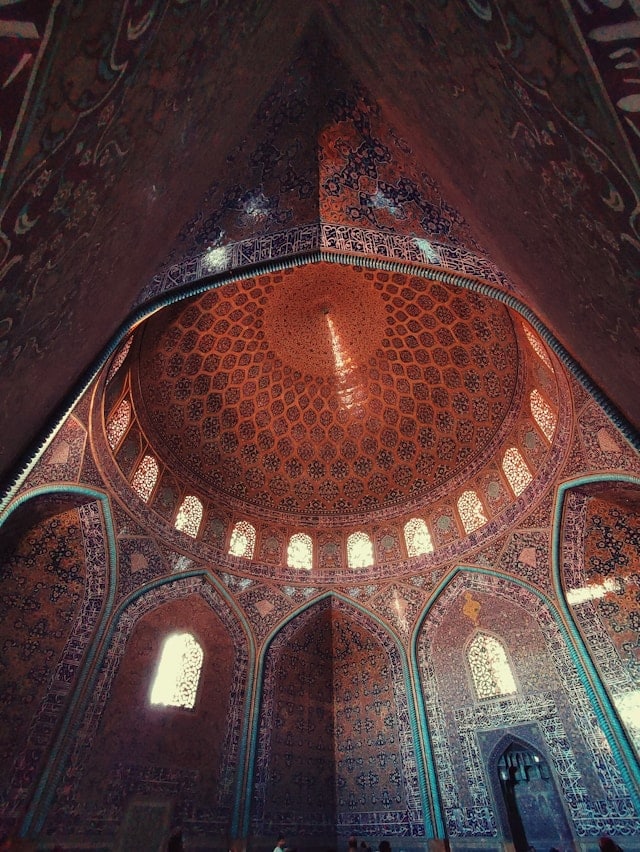
On the eastern side, you’ll see Sheikh Lotfollah Mosque, which is famous for its colorful tile work, and the “peacock” at the center of the interior side of the dome. If you stand at the entrance gate of the inner hall and look at the center of the dome, a peacock, whose tail in the sunrays can be seen.
On the southern side of the square, you can see the Shah Mosque. The echo is one of the characteristics of this mosque that makes it unique in the whole world. When you stand on a marked stone right beneath the center of the dome and sing or talk, you hear your voice amplified in a radius of about forty meters; this characteristic allowed the muezzins to make their voice heard without a loudspeaker to all worshipers throughout the courtyard. The whole square is surrounded by the traditional Grand Bazaar. Walking and shopping in the turbulent ancient atmosphere of this bazaar, with handicrafts that shine on every corner, is a great experience.
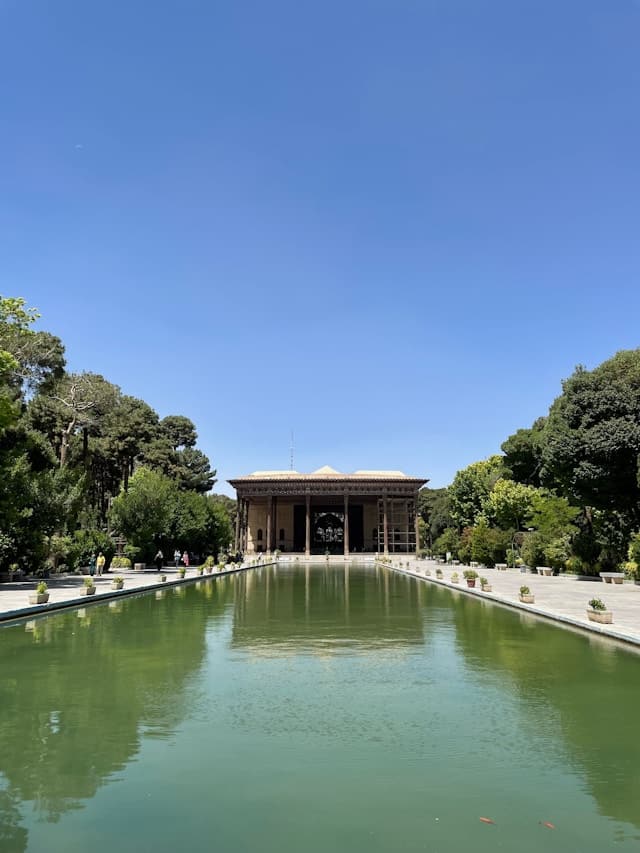
Chehel Sotoun
Chehel Sotoun is an ancient pavilion constructed by Shah Abbas Safavi for the reception of ambassadors and kings. The interior and the ceiling of this marvelous monument are covered with frescos and paintings on ceramic that depict specific historical scenes like the battles between Iran and other countries. Like most other monuments and pavilions, Chehel Sotune is surrounded by a beautiful garden. Although this pavilion has only 20 columns, we call it Chehel Sotune, which means forty columns, which refers to the reflection of the columns in the long pool in front of the building.
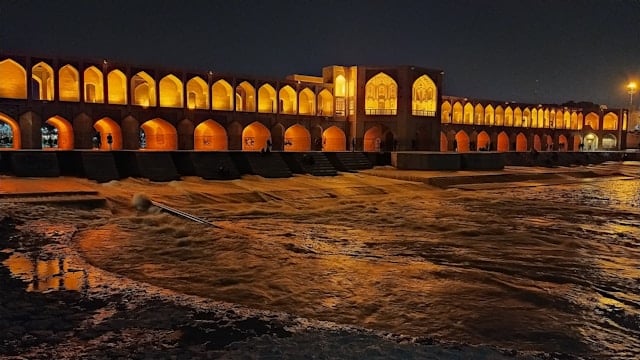
Khaju Bridge
Khaju Bridge is one of the most famous bridges in Iran. It was built around 1650, under the reign of Shah Abbas II, the seventh Safavid king, on the foundations of an older bridge. It is famous for its stunning architectural design, featuring intricate tile work, decorative elements, and overall aesthetic appeal. This bridge is 11 meters high and has 23 arches.
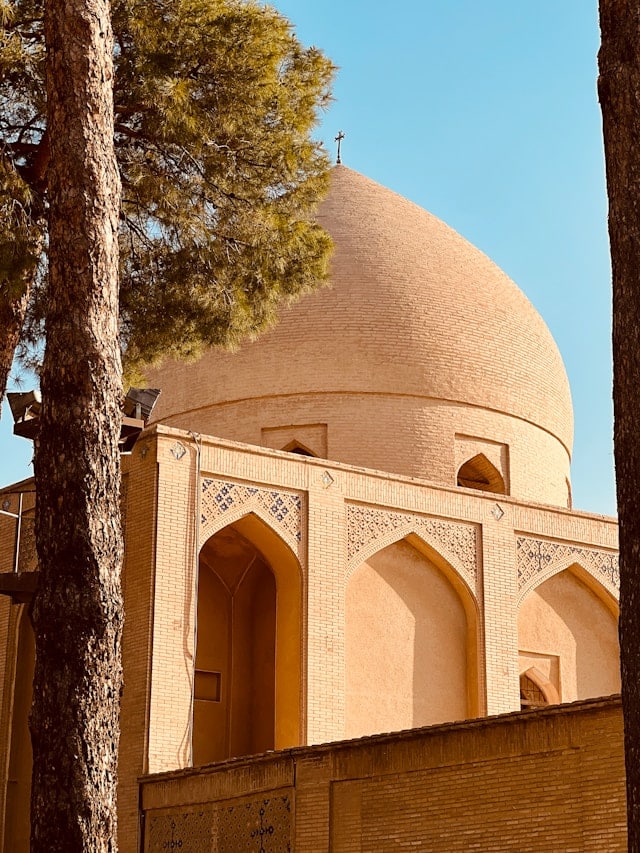
Vank Cathedral
Like other Isfahan landmarks mentioned above, Vank Cathedral was constructed 400 years ago under the reign of Shah Abbas Safavi as a way of making the capital more glorious. This cathedral is located in Julfa, an Armenian quarter of Isfahan. The paintings on the interior walls and the ceiling of this mosque that depict the stories of the bible set this cathedral apart from any other one in Iran. Some of these paintings include the stories of the creation of the world and man’s expulsion from Eden, some of the events from the life of Jesus, and tortures inflicted upon Armenian martyrs.

Where to Stay, Eat, and Shop in Isfahan
To spend the night, you can stay at Hotel Abbasi, one of the world’s most luxurious hotels. To grab a taste of Isfahan cuisine and culture, you can eat at Haj Mirza Chah or Namakdun Cafe. To buy handicrafts, check out Isfahan Grand Bazaar, which is filled with Iranian art.
Shiraz

Nasir-ol-Molk Mosque
This mosque is also known as the pink mosque and is famous for its stained glass and pink tiles. The intricate use of calligraphy has also added to its beauty. The peaceful environment and the colorful sight of this mosque have made it a great place for tourists and travelers. This mosque should be the first on your list to visit in Shiraz. It’s best to see it early in the morning when the mosque opens. Because of the oblique sunlight that shines through the stained glass, it is best to view the mosque before 10 AM. The latter half of the year offers a more attractive light angle in this mosque.
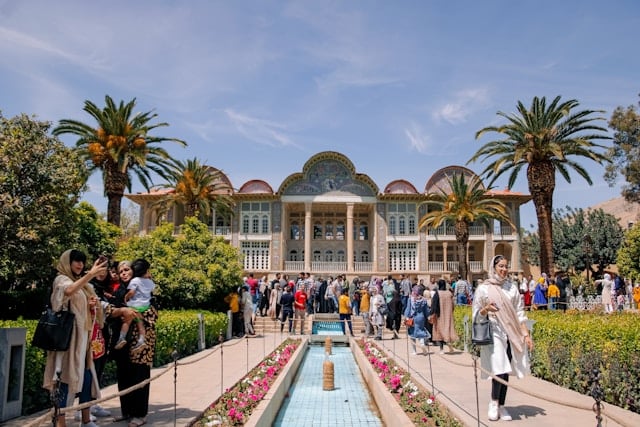
Eram Garden
This one is my favorite. This gorgeous garden was built during the 16th and 17th centuries and is inscribed as a UNESCO World Heritage Site. Eram Garden is like a miniaturized version of heaven, just like the name refers to. This garden is filled with diverse types of flowers and trees to the point it looks like a flower exhibition. The seas of roses and elegant cedars and the palms that circle the central pool have added to the beauty of this place. The architecture of this mansion is influenced by the Achaemenid, Safavid, and Qajar dynasties. This garden has been a source of inspiration to many poets, including the famous poet Hafiz, whose poems, including the poem below, are imprinted on the tiles of this mansion.
“We are people who need to love because love is the soul’s life, love is simply creation’s greatest joy.” – Hafiz
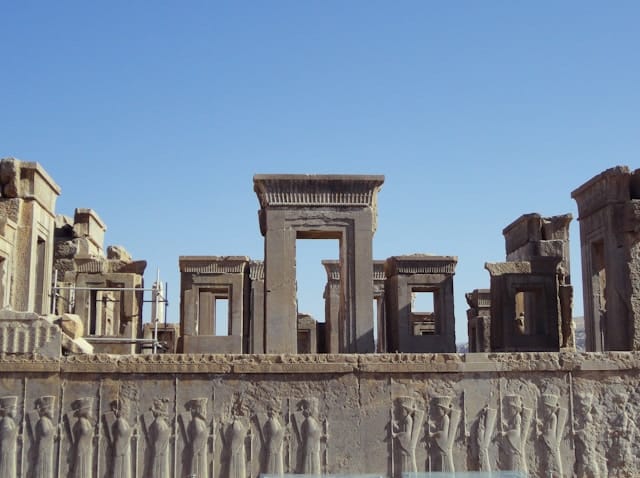
Persepolis (Parse)
Iranians are rightly proud of their national heritage. We are proud of our ancients, especially our Achaemenian ancestors who launched the world’s largest empire by their time. Cyrus the Great, the first Achaemenid monarch ruled over a vast empire that covered most of Asia, parts of Europe and parts of Africa. As a legacy, he left us Parse, Nash Rostam, the first charter of human rights, etc. Parse in Persian or Persepolis in Greek means the city of the Persians. Many Persians wrongly call parse, Takhte Jamshid (Jamshid’s throne). Because medieval Persians believed Persepolis belonged to the legendary Iranian king, Jamshid.
Persepolis is an ancient complex designed both as the center for receptions and festivals and as proof of the glory of the Persian empire. The Achaemenid kings ruled over 36 states (or as they called it, Satrapies) for more than 200 hundred years. They used the world’s best artists to construct Persepolis. Some main parts of this complex include the Apadana Palace, the Throne Hall, the Gate of All Nations, the Hall of a Hundred Columns, the Tripylon Hall and the Tachara, the Hadish Palace, and the Imperial Treasury. After the invasion of Alexander, the whole palace was set on fire, and the treasury and all the jewels and gold were robbed. Persepolis treasury tablets are the only things that they left in the treasury hall. These tablets describe the workers’ payments.
One example:
To Shaka the treasurer, Budkama declares that Herdkama, the Egyptian, was the chief of a team of one hundred laborers, and is entitled to three karšâ and two-and-a-half shekea of silver as his wage. These laborers are working on behalf of Wohuka in Parsa (=Persepolis). Written by Marduka
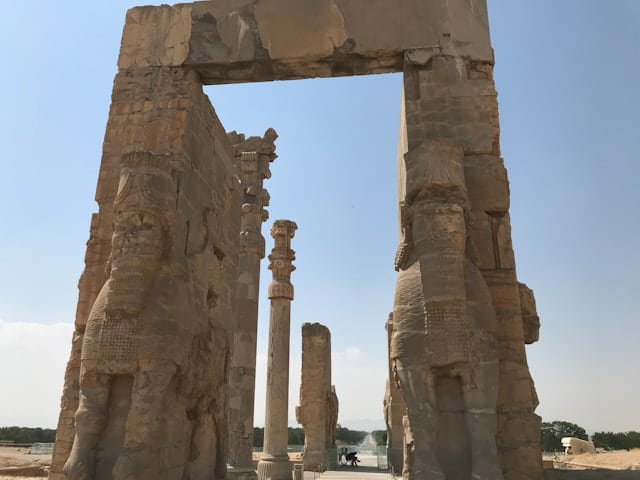
The colossal columns and sculptures that were cut with the utmost precision into blocks of great size that were decorated with paint, gold, and ornamental stones, show the art and construction technology of the Persian Empire. Another legacy that Achaemenid monarchs left us is the first Charter of Human Rights. When Cyrus the Great conquered Babylon, he freed the slaves, declared that all people had the right to choose their own religion, and established racial equality. then he ordered to carve these rights and a record of his acts on a clay cylinder with cuneiform script. This charter is now protected in the louver museum, but the rest of this legacy is open to visit in Shiraz. Here you can see a short piece of the charter’s content, where Cyrus reports the conquest of Babylon.
I am Cyrus, king of the universe, the great king, the powerful king, king of Babylon, king of Sumer and Akkad, king of the four quarters of the world, son of Cambyses, the great king, ki[ng of the ci]ty of Anshan, descendant of Teispes, the great king, king of Anshan, the perpetual seed of kingship, whose reign Bel and Nabu love, and with whose kingship, to their joy, they concern themselves. When I went as harbinger of peace i[nt]o Babylon I founded my sovereign residence within the palace amid celebration and rejoicing. Marduk, the great lord, bestowed on me as my destiny the great magnanimity of one who loves Babylon, and I every day sought him out in awe. My vast troops marched peaceably in Babylon, and the whole of [Sumer] and Akkad had nothing to fear. I sought the welfare of the city of Babylon and all its sanctuaries.

Naqsh-e Rostam
Right at the north of Parse, there is a set of tombs carved into the rock known as Naqsh-e Rostam. It’s where most of the Achaemenid kings were buried. Above each tomb, there’s a panel that depicts the kings and the royal family. This place is called Naqsh-e Rostam (“Picture of Rostam”), from the carvings below the tombs, which were thought to represent the mythical hero Rostam. These carvings represent figures of Sassanid monarchs, some praising god and others engaged in battle.

The most famous carving in this landmark depicts the Roman Emperor Valerian kneeling before Sassanian King Shapur I on horseback, with Philip the Arab, an earlier emperor who paid tribute to Shapur, holding Shapur’s horse. As Gordian III, who was killed in combat, lies beneath it, which honors the Battle of Edessa in 260 AD.
Once in Shiraz, you can spend the night in the peaceful ambiance of Toranjestan’s house and have dinner or a cup of coffee at this gorgeous, luxurious, traditional restaurant, Emmart Shapouri. The best place to shop in Shiraz is Vakil Bazaar, it’s an ancient bazaar that has still preserved its bustling atmosphere.
Gilan
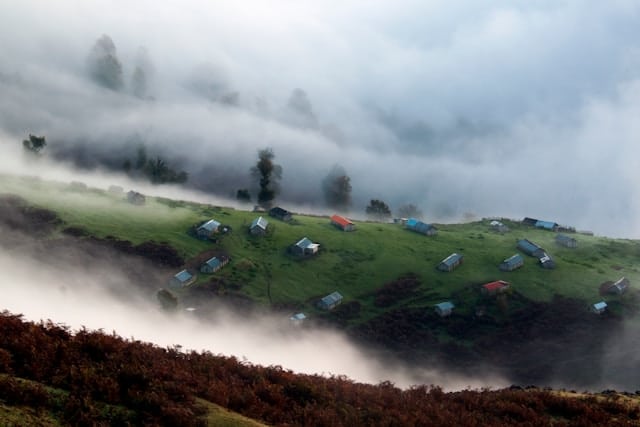
Gilan is not usually part of most Iran tours. But it’s the province most Iranians choose for vacation due to its wonderful nature and mild weather. Gilan has the whole package for those who love exploring nature. The jungle, the mountain, the Caspian Sea, and beautiful waterfalls and lakes. Here’s the list of some of the must-see destinations of Gilan.
Rudkhan Castle
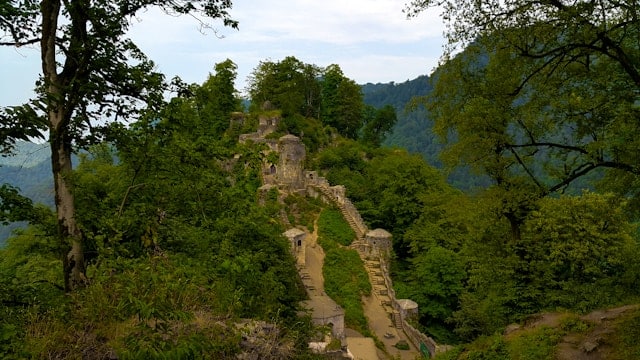
Rudkhan is a break-and-stone medieval fortress that belongs to the Sassanid era. It was built to defend the city against invaders. The castle sits at the pick of two green mountains. After two to three hours of hiking and climbing 1500 steps on the winding route at the heart of the charming forest, you’ll get to the big entrance gate. The chirping of the birds and the burble of the nearby river make this trip to the top of the mountain more charming. Here are two tips to make hiking easier and more memorable. First, buy a bamboo stick and a plastic rain cover if you haven’t checked the weather before you start climbing the steps. They will make hiking easier. Second, don’t forget to buy some snacks from the vendors on your way to help fuel your body.
Masuleh
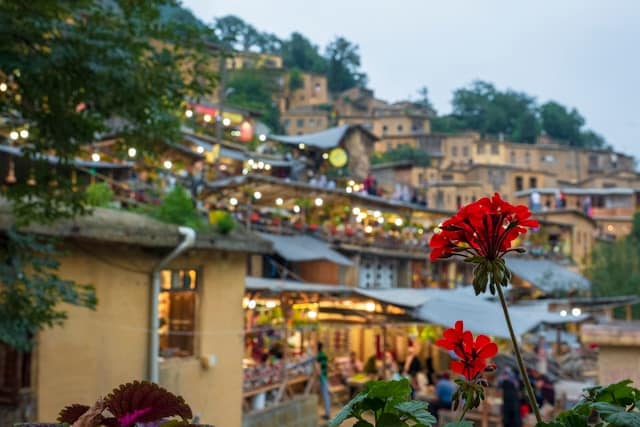
Masuleh is an old village that has been built into the mountain. The architecture of this village has made it unique in the world. It is constructed in the form of a staircase where the roof of each house is the courtyard and the pedestrian of the house above. Gilan province has a wet climate and gets heavy rains, which makes early autumn and late spring the best times for visiting it.
Laton waterfall
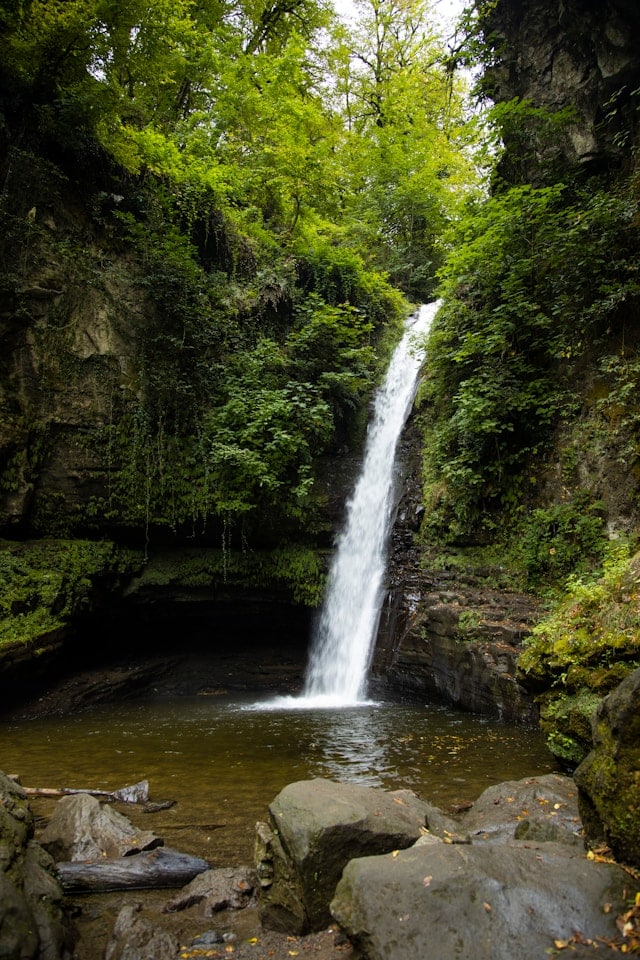
Laton is Iran’s highest waterfall, with a height of almost 100 meters. It’s located in the city of Astara and has 3 large natural pools and three waterfalls with 10 meters distance from each other. It originates from the eastern slopes of Spinas Mountain. It flows into the Lavandil River, which itself originates from Spinas Mountain. Then the waterfall moves along at a sharp slope towards the Kooah-Koomeh village and the town of Lavandil before finally flowing into the Caspian Sea. Being surrounded by picturesque jungles of plums, quince, pears, hazelnut, walnut, and meddler, this waterfall can captivate any visitor.
Gisoom
Gisoom is a forest region in Gilan that has dense, high trees. Where the jungles embrace the waves. This pristine forest is straight out of fairy tales where intertwined tall trees only let narrow lines of light in. The smell of trees and humid earth and the sound of birds and horses have made a fascinating atmosphere. Gisoom is a must-see destination if you love swimming as much as exploring in the jungle.
Where to stay, eat, and shop in Gilan?
Akbar Joojeh is a restaurant chain that is famous for its Joojeh Kebab (it’s made with grilled chunks of chicken marinated in a special sauce). Eating out at Akbar Joojeh is a must-do when you’re in Iran. You can spend the night at @lako_jaan’s residence. Its great atmosphere and kind staff make it worth seeing. To shop, head over to Rasht Grand Bazaar if you really want to experience Gilan fully and not touristy.
Must-See Sights in Iran
Still need more convincing. Read these 10 reasons why you should travel to Iran.
Also read: Iran Travel Advice: Essential Do’s and Don’ts You Must Know