Table of Contents
How to Spend Two Days in Palermo Sicily
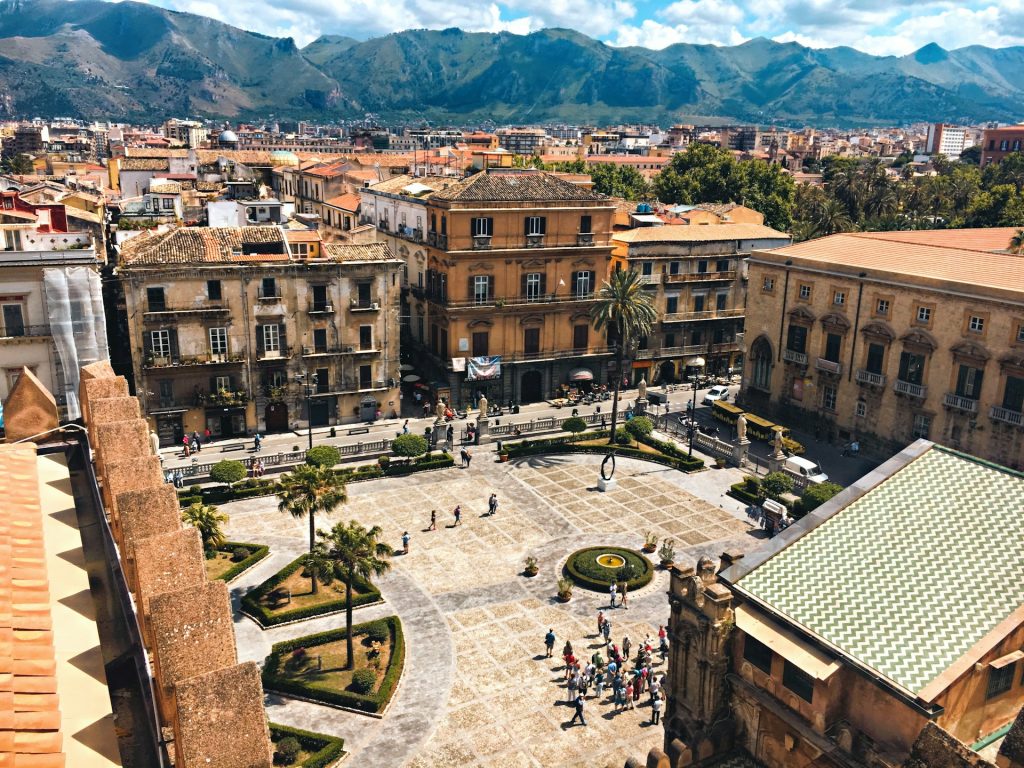
Palermo, the vibrant capital of Sicily, has it all: the city offers a unique blend of history, art, and culture – mixing Phoenician, Greek, Arab, Norman and Roman influences. On top of that, it features mouthwatering cuisine, ranging from hearty arancini to delicate cannoli, delighting every palate. Here’s how to spend two days in Palermo (Sicily, Italy).
The best way to capture Palermo’s intricate essence is by wandering around its streets, where majestic palaces and Byzantine mosaics rub shoulders with crumbling buildings and bustling markets. To be honest, two days may not be enough, but they will give you a taste of Palermo’s magic (and a perfect excuse to come back for more)!
A note to the reader: our stay in Palermo coincided with the annual cultural festival “Le vie dei tesori”, which provided us with exclusive access to normally closed-off historical sites and buildings as well as guided tours. If you are planning a trip to Sicily and are interested in discovering hidden treasures, consider timing your visit with the festival (the period of the festival changes each year, so consult the relevant website for further information).

Day one: Wander around the historical centre of Palermo
Start your day in Quattro Canti (officially named Piazza Vigliena), a magnificent octagonal square where the two main streets, Via Maqueda and Via Vittorio Emanuele, intersect. It is a true architectural gem: each facade is adorned with different statues, the lower tier depicts the four seasons, the middle tier portrays Spanish sovereigns, and the top tier honors four female saints associated with Palermo.
Take a moment to appreciate this stunning masterpiece while enjoying a traditional Sicilian breakfast of brioche and ice cream at the nearby bar “Ruvolo”!
Piazza Pretoria and the “Fountain of Shame”
Next, head south on Via Maqueda until you reach Piazza Pretoria. The centerpiece of the square is the Pretoria Fountain, which features numerous nude statues depicting mythological figures. When the monument arrived in Palermo (during the 16th century), locals were offended by the explicit nudity of the statues, renaming it the “Fountain of Shame.”
Beyond the fountain, Piazza Pretoria is surrounded by beautiful Baroque buildings. Unfortunately, at the time of our visit, the Palace of the Eagles (also named Praetorian Palace) was closed for reconstruction. However, if you are lucky enough, it is worth entering into the building, which now houses the mayor and the offices of the municipality of Palermo.
Piazza Bellini and La Martorana Church
Exit Piazza Pretoria via the southeast corner and make your way to Piazza Bellini, a square distinguished by its eclectic mix of architectural styles and periods. Prepare to be enchanted by the luminous 12th-century Church of St. Mary of the Admiral (also known as “La Martorana”) and the stunning Arabian-Norman architecture of the adjacent Church of San Cataldo.
Spend some time visiting the two churches, and immerse yourself in the beauty of the Martorana Church, marveling at its exquisite Byzantine gold mosaics (among the finest examples of Byzantine art in the Western world).

The Monastery of Santa Caterina d’Alessandria and the secret dolceria
Afterward, make sure to fuel up in one of the most famous bakeries of Palermo: I segreti del chiostro, a “secret” dolceria inside the Monastery of Santa Caterina d’Alessandria. Here, you will find a great variety of typical pastry desserts, created from ancient recipes of the nuns. Most likely you will have to queue, but the wait will pay off eventually.
Delight your taste buds with cannoli (a fried pastry wrap, filled with creamy ricotta, and decorated with chocolate chips, chopped pistachios or candied cherries) or the so-called minne di vergine (a shortcrust pastry, filled with ricotta cheese and topped with a candied cherry as a nip), along with delectable almond and pistachios sweets.

Ballarò Market
For lunch, make your way to the chaotic yet enchanting Ballarò market. Sicilian street markets are indeed a sensory feast, with their vibrant colors, enticing aromas, and lively atmosphere.
Taste some of the delicious street food such as arancine (golden and crispy rice balls), sfincione (focaccia-like crust topped with tomato sauce, onions, anchovies, and oregano), pane e panelle (fried chickpea flour fritters served in a sesame seed bun). You could also opt for sitting at a table in the market and being served fresh seafood.
The Cathedral and Norman Palace with the Palatine Chapel
On a full stomach, continue your tour of the historic center. Stop by the Palermo Cathedral, another stunning exemple of the Arab-Norman heritage. You can also climb the roof of the Cathedral for a view from the above.

Next, don’t miss the Norman Palace, an ancient fortress that was the seat of power for the Hauteville dynasty (the Norman kings of Sicily). Around 1130, King Ruger II initiated a significant reconstruction of the building, culminating in the addition of the magnificent Palatine Chapel. The chapel’s breathtaking mosaic decorations blend Byzantine, Islamic, and Roman styles, creating an exceptional and visually striking interior.
It comes as no surprise that it is the crown jewel of Palermo’s tourist attractions and, together with the Palace, is inscribed on UNESCO’s World Heritage List.
The full ticket for visiting the Norman Palace – which I recommend buying in advance to save time and avoid the crowd – includes admissions to Palatine Chapel, Royal Apartments and Royal Gardens.

To happily conclude your day, sit down in a bustling traditional trattoria, enjoying a plate of pasta alla norma (pasta dish of with eggplants, tomato sauce and topped with ricotta salata), some caponata (salad of crispy fried eggplants, onions, celery, capers, and olives) and a glass of local wine. If you have some more energy, discover the sparkling nightlife of Vucciria Street Market, where locals and tourists gather to drink and celebrate.

Day two: Exploring Palermo’s Kalsa District and Palazzo Butera
Spend the next morning exploring the Kalsa neighborhood, one of the oldest in the city. On Sunday mornings, visit the Piazza San Marina market for a unique shopping experience.

On the edge of Kalsa district, you will find Palazzo Butera, an extraordinary tribute to Baroque architecture. Following its recent restoration, it is open to the public and hosts cultural and art exhibitions.
The Palace’s entrance is characterized by a gorgeous red marble staircase, typical of fancy 18th-century buildings. Looking up, the ceiling is embellished with a magnificent fresco showcasing angels and children engaged in playful bubble-blowing.

During your visit, indulge in the beauty of the terrace, adorned with a delightful pattern of handmade white and green tiles, which offers the visitors uninterrupted views of Palermo’s seaside.

If you have more time, you could also make a stop at Orto Botanico, which is just a ten-minute walk away from Palazzo Butera. Otherwise, walk through the historic Porta Felice and stroll along the seaside promenade.

The architectural wonders of Palermo: Palazzo Costantino, Palazzo Oneto di Sperlinga e Teatro Massimo
Dedicate your last afternoon to the architectural wonders of Palermo. Given the event of Le vie del Tesoro, we decided to pay a visit to two eighteenth-century buildings.
The first one was Constantino Palace, located in the northeastern corner of Quattro Canti Square. Despite its current (sad) state of decay, the Palace remains a closeted marvel with its stunning frescoes and a privileged location overlooking the square and the main streets. If you have the opportunity, I highly recommend visiting it, taking in the view from the balcony, contemplating the flow of life in Palermo.

Secondly, we explored Palazzo Oneto di Sperlinga. Its grand halls, adorned with the original doors and paintings, transported us to a bygone era. In the early 1800s, this palace was home to the exclusive “Conversazioni del Fiore” club, hosting lavish parties and
Neapolitan mask performances (allegedly attended by King Ferdinand III). Later, it served as a textile warehouse before falling into disrepair. After years of neglect, the Palace was finally acquired, restored, and opened to the public.

Alternatively, you could go admiring the stunning neoclassical architecture of Teatro Massimo, one of the largest opera houses in Italy and Europe. It is the location of the final scene of the iconic film The Godfather (Part III). You can visit the theatre every
day (from 9:30 AM to 7:00 PM), with guided tours in different languages.
Palermo Municipal Archive and arancina
Lastly, for a plunge into the past, head to the Palermo Municipal Archive, a repository of the city’s historical, political, and administrative records. Indeed, the Archive preserves an extensive collection of documents of communal life beginning with the 13th century, as well as a collection of parchments from the beginning of the 14th century to the middle of the 19th century.

Before leaving Palermo, treat yourself to a memorable arancina at the famous arancineria “Ke Palle” on via Maqueda. With a wide range of flavors from traditional (such as norma or pistachio) to creative (like chicken curry or cacio e pepe), there’s something for everyone!