Tag Archive | "Egypt"

Alexandria library

Egypt in Photos

Tags: , , , ,


The library at Alexandria, Egypt

When I visited Egypt four years ago, I expected frustration and annoyance. I supposed I’d be hustled by street urchins and harassed by touts. I thought it’d be a junior India of sorts. I was wrong.

Granted, you’ll get annoyed if you follow every seemingly friendly Mohammed to his cousins souvenir shop. But if you travel smart and keep a positive and light-hearted attitude, you’ll love Egypt. Just like I did.

It wasn’t Pharonic Egypt that I fell in love with (but maybe it would have been if I made it to the Valley of the Kings or Abu Simbel) but modern Arab Egypt. I’m ashamed to admit that I didn’t even make it to the Egyptian museum. So what exactly was I doing in Egypt for almost a month?

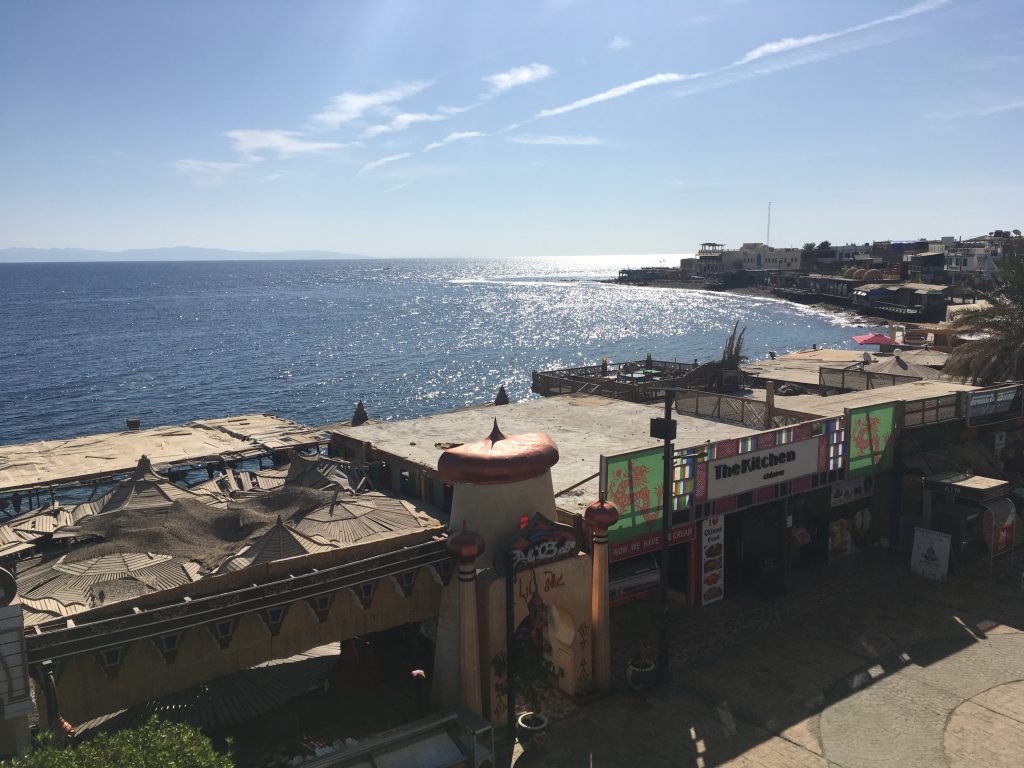
I spent time relaxing on the shore of the salty Red Sea in the Sinai, crossed the broad expanse of the Nile delta, peered across the Suez Canal, ambled along the Corniche in Alexandria, journeyed out to the Siwa Oasis, and waited out Ramadan in Cairo.

I tried to assemble some of my favorite photos from my time in Egypt, part of a longer 6-month overland Middle East trip, from Istanbul to Cairo. Unfortunately, I didn’t capture the nighttime bustle of Cairo’s Islamic quarter, or the near vacant streets that daylight hours of the Muslim holy month witnessed. Photos couldn’t recreate the innate hospitality I experienced one evening while walking through a Cairo neighborhood as fast was broken.

Hopefully I have given you a sense of the raw beauty of the Sinai, the peculiarity of the Siwa Oasis, a glimpse of the famed Suez canal, a peek at one of the ancient wonders of the world, and the vast emptiness that is the Sahara Desert.

Text and Photos by Stephen Bugno

This post brought to you in association with Holiday Inn Cairo. If you’ll be heading to Cairo on business anytime soon, consider holding your meeting at the Holiday Inn Cairo, one of the premier accommodations in the city, with consistently high levels of service and quality.

sanai sunset

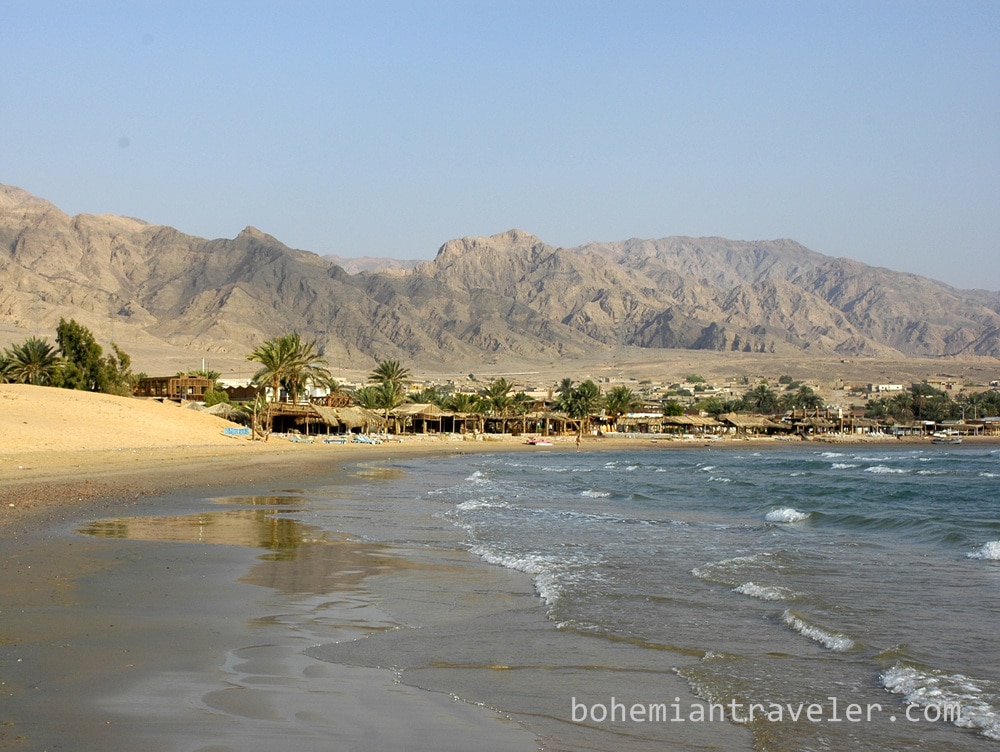
Soft Beach at Tarabin, Sinai

soft beach sinai

The beach in Tarabin, Sinai

the beach at Tarabin Sinai

Soft Beach, Sinai

sunrise from Mount Sinai

Sunrise from Mt Sinai

sunrise from Mt Sinai

Burning Bush

The Burning Bush, St. Catherine’s Monastery, Sinai

Pyramids at Giza

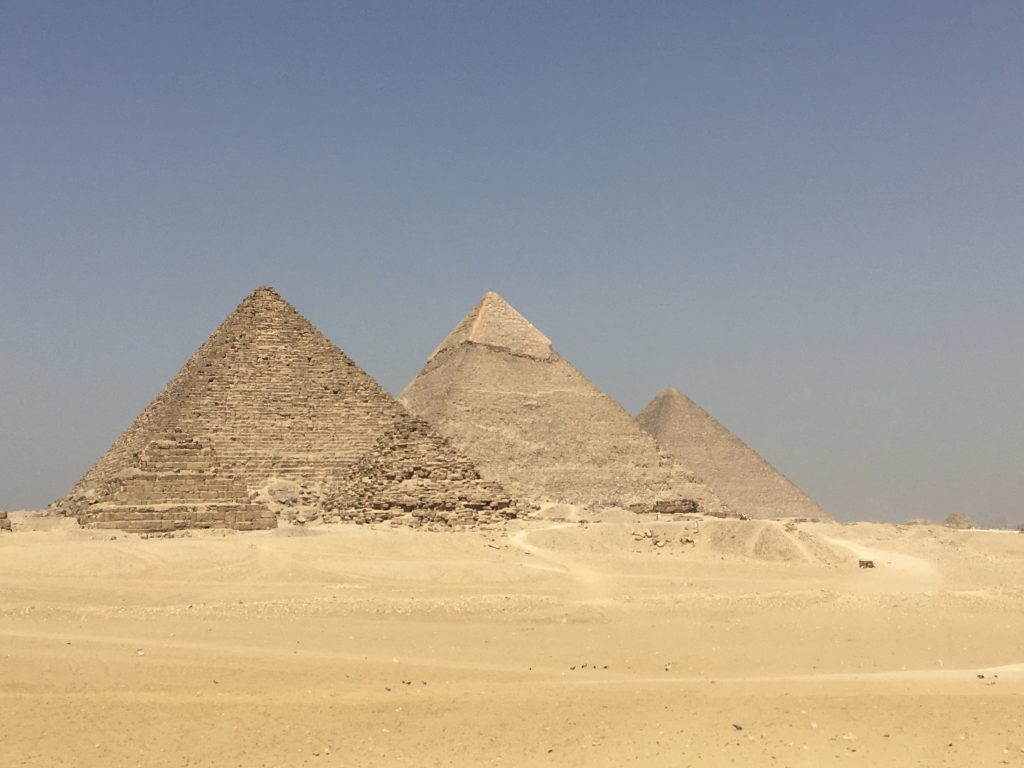
The Pyramids at Giza

Pyramid

the Great Sphinx of Giza

The Great Sphinx of Giza

Stephen at the Giza Pyramids

Stephen at the Pyramids

Camel and Cairo

Resting with camel, near the pyramids of Giza


Tourist Police at the pyramids

The tourist police at the pyramids

Cairo square at night

Cairo

Corniche of Alexandria

Alexandria’s Corniche

the Suez Canal at Said

The Suez Canal at Port Said

desert tire tracks outside Siwa Oasis

Tire tracks in the desert near the Siwa Oasis

tire tracks and setting sun near Siwa

sunset near Siwa

Sands dunes near the Siwa Oasis

mud brick buildings of Siwa Oasis

Mud brick buildings in the Siwa Oasis

Siwa Oasis

sail boats in the Nile delta

Sailboat in the Nile Delta

Click through to see more photos from Egypt.

Siwa Oasis photo credit stephen bugno

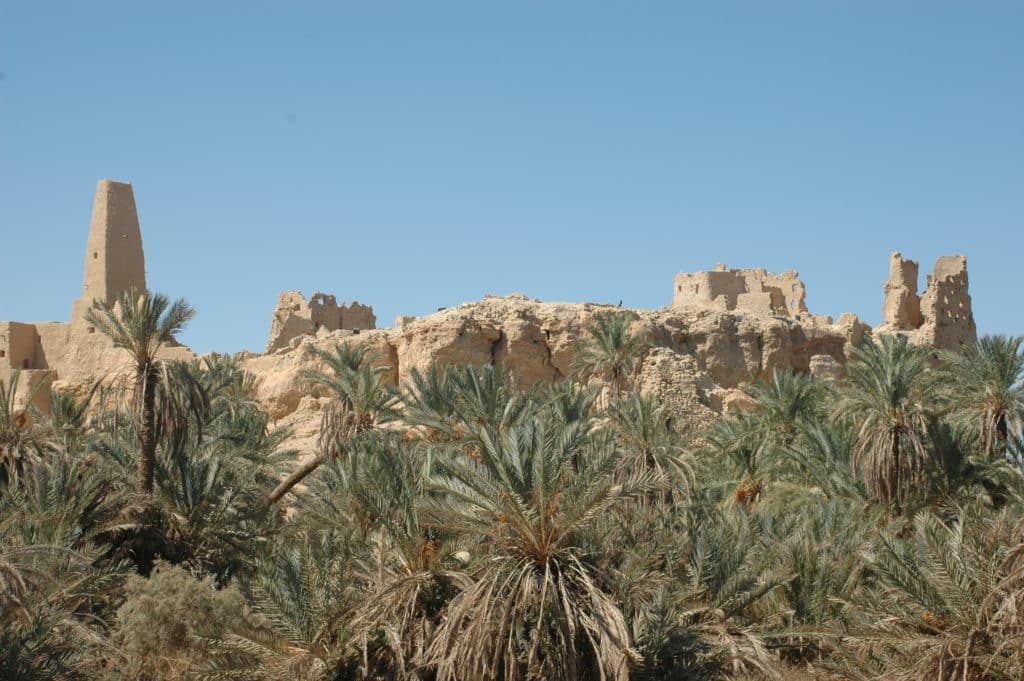
Siwa Oasis, Egypt

Tags:


Hundreds of kilometers through the flattest, most desolate landscape I’ve seen, we rode south from Mersa Matrouh, the last city on the Mediterranean coast. This was the final stage of a nine-hour bus ride from Alexandria to the Siwa Oasis. The remote oasis is a depression that stretches 82 x 28 km and contains 310,000 palm trees and 80,000 olive trees. Besides tourism, dates and olive production are the economic mainstays.

Siwa Oasis photo credit stephen bugno

Siwa Oasis

Siwa Oasis is different from Egypt’s other oases in the fact that it was never under Pharaonic control and Siwans speak their own language, Siwi, a Berber dialect related to those in Libya.

I had first learned about Siwa from this article in the New York Times and was determined to reach it while I was in Egypt. The Oasis sounds like the perfect escape from urban Alexandria or Cairo, and in some ways it is. But the reality of Siwa town is a dusty, trash-ridden village filled with flies and mosquitoes. The loud musical horns of boy’s bicycles circling on the dirt streets don’t give your ears much retreat either. And my $3 per night mosquito-infested hotel room with florescent light and click-clacking ceiling fan didn’t offer much refuge from the town. The locals, I learned as I wandered the back streets, gave me looks as if to tell me outsiders weren’t welcome in their oasis, or at least not in their neighborhood. But then again, the Siwans have never been regarded as a hospitable people.

I did, however, make the most out of my two days in the oasis by exploring the area by foot and bicycle. The first day I rented a rickety bike for $2 and peddled past the Oracle Temple and the salt lake on my way to Cleopatra’s Bath, a bubbling natural spring that has been enclosed by a stone circular wall. The next day I tried to walk out to the huge dunes at Bir Waheed, but only made it halfway until I ran out of daylight. Still, I saw a peaceful sunset over the endless dunes of the Great Sand Sea. The day before I had foolishly rejected an overnight safari, to sand surf (with a snowboard) at the steepest dunes and swim at two different sprigs, adamant that I could reach the spot on my own without transport, 13 kilometers out of town through soft sand.

Stephen Bugno, October 2007

sunrise from mt sinai 02

St. Catherine’s Monastery and Mt. Sinai, Egypt

Tags: ,


by Stephen Bugno

I see now why they’re called the “steps of repentance”. Some people learn the hard way why they’re so aptly named. Luckily our guide explained that there was a second way to the top of the mountain where Moses received the Ten Commandments, on the longer, more gradual, Camel Path.

Atop Mt. Sinai

Atop Mt. Sinai

It was 2 a.m. when we started from the base of the mountain near St. Catherine’s Monastery. We would spend the next 2½ hours climbing Mt. Sinai, or Jebel Musa (Mt. Moses) as the Arabs call it, the moonlight enough to steer us up the well-worn path to the summit.

At the summit I was shocked to see hundreds of others camped out in anticipation of the sunrise. We all waited patiently, chilly even under warm blankets, for the most dramatic and divine sunrise I’ve ever witnessed, the sun breaking over the pointed mountains in this incredibly barren landscape.

We descended down a steep ravine by way of the 3,750 “steps of repentance”, illuminated in a striking orange glow by the morning sun. The steps were so named by one of the monastery’s monks, and walked by those in need of penance. We certainly felt compassion for those few on their way up.

The Monastery

Most of the way down we could see our destination below: St. Catherine’s Monastery. Located at the foot of Mt. Sinai, it is said to be the oldest continuously functioning Christian monastery in the world and has been designated a UNESCO world heritage site.

St. Catherine's Monastery

St. Catherine's Monastery

Despite its remote desert location, the monastery and mountain hike are extremely popular, the hardest decision not being whether to go or not, but to go for sunrise or sunset. The morning I visited, I pushed through the narrow monastery doors with bus loads of Russian package pilgrims and European and American tourists.

We spilled inside through the massive fortifications that have preserved this monastery for more than fourteen centuries. We immediately moved towards the Basilica of the Holy Transfiguration, built in the sixth century by Eastern Emperor Justinian, where the liturgy is still observed today. A huge mosaic of Christ in his glorious transfiguration adorns the apse.

Nearby, the monastery library holds the second largest collection of early codices and manuscripts in the world, preserving more than any other place except the Vatican library. The monastery also holds a significant collection of religious treasures, including an important collection of icons.

As I exited the basilica I saw the Burning Bush. Reading Old Testament stories, especially as a child, I always imagined the events; the people, places, and things in the stories as ancient history. Before my Middle East trip I was excited to learn that some of these places actually do still exist today and from the outset of my journey to the Holy Lands, St. Catherine’s Monastery was on my must-see list.

Crowding around the bush, pilgrims cut pieces from the dangling branches, which hung over everyone’s head, just as it has for centuries. As tradition states, it is the original bush that Moses saw, which was “on fire, but was not consumed by the flames,” as we know from Exodus.

There is also a mosque inside the monastery which symbolizes the mutual religious tolerance surrounding St. Catherine’s. It is known to be the only mosque in the world inside of a sacred Christian site and is still used by the monks’ Bedouin groundskeepers.

Catherine of Alexandria

Although officially called The Sacred and Imperial Monastery of the God-Trodden Mount of Sinai, first dedicated to the prophets Moses and Elias, the monastery became associated with St. Catherine when her bones were said to have been transported here by angels and discovered by monks around 800.

Sunrise from atop Mt. Sinai

Sunrise from atop Mt. Sinai

As a young woman, Catherine devoted herself to the pursuit of knowledge, and in addition to being highly learned in philosophy and theology, she was very beautiful and sexually pure as well. However, it was her faith to which she was most dedicated, and because of her enduring love of Jesus Christ, she was tortured, starved, and finally sentenced to death.

Pleading with the Roman Emperor Maxentius to no longer persecute Christians, Catherine was unsuccessful. But she did well in converting his wife, the Empress, and many others. She was ultimately sentenced to death by the spiked wheel, which has since become known as the Catherine Wheel, but during the execution it miraculously broke down and she was then beheaded.

St. Catherine’s feast day is celebrated on the 25th of November and the monastery that takes her name survives today, as an important reserve of early Christian art, architecture and manuscripts.

Planning your visit

The oldest continuous and active Christian monastery is located in the heart of the Sinai Peninsula, in modern day Egypt. It’s easy to join one of the many group tours from any of the resorts in Sinai. For those who don’t wish to hike up to the summit, camels can be rented at the foot of the mountain.

Getting there

St. Catherine’s Monastery and Mt. Sinai can easily be included on trip to Egypt by way of Cairo, or while visiting the Holy Land, via Jerusalem. The Taba-Elat border crossing from Israel to Sinai, Egypt remains open for travelers in the region. Plan at least an eight hour trip by car or bus from either Cairo or Jerusalem.

photo credit: Suzanne Tenuto

Stephen Bugno visited the Sinai during a six-month overland journey from Istanbul to Cairo. His articles and essays have appeared in The San Francisco Chronicle, The Philadelphia Inquirer, The Seattle Times, and Transitions Abroad magazine. He edits the Gomad Nomad Travel Mag.


Related Posts with Thumbnails

Site Sponsors

Polls

What is the most romantic way to travel?

View Results

Loading ... Loading ...

Ferry to France | Ferries

Dover-Calais

A quick and enjoyable way to travel to the UK with up to 23 crossings each day.

Ferry to France | Ferries

Ferry to Amsterdam

Travel overnight every night in style from Holland or Belgium to the North of England

Ferry to Amsterdam

Troon ferry

The shortest, fastest crossings on the Irish Sea

Troon ferry

Ferry to Dublin

Daytime and overnight departures direct from Ireland to the heart of England.

Ferry to Dublin

Related sites

Shop BestofVegas.com for cheap Las Vegas vacation packages on Vegas shows, hotels and attractions.