
Table of Contents
Hiking the Abraão Loop
With 16 jungle trails and 100 beaches, Ilha Grande is a hiker’s paradise. This sparsely developed island off Brazil’s Costa Verde is divided into various reserves and a state park, ensuring that nearly 90% of its rare Atlantic Rainforest is protected. Many hikers arrive with ambitious multi-day plans (a complete circuit of the island is 43 miles), but Ilha Grande’s most historically interesting trail is just a short walk from the ferry dock. Known as T-1 or the Abraão Loop, the 1.25-mile route will take you past some beautiful coastal scenery, as well as a number of fascinating ruins. These are my tips for hiking the Abraão Loop on Ilha Grande.

Getting to Ilha Grande
Ilha Grande is about 8 miles offshore and is only accessible by boat. Public ferries leave from Mangaratiba, Conceição do Jacareí or Angra dos Reis. These ports are easily reached by bus from Rio de Janeiro (95 miles to the northeast). For more fun excursions from Rio read Easy Trips Around Rio de Janeiro.
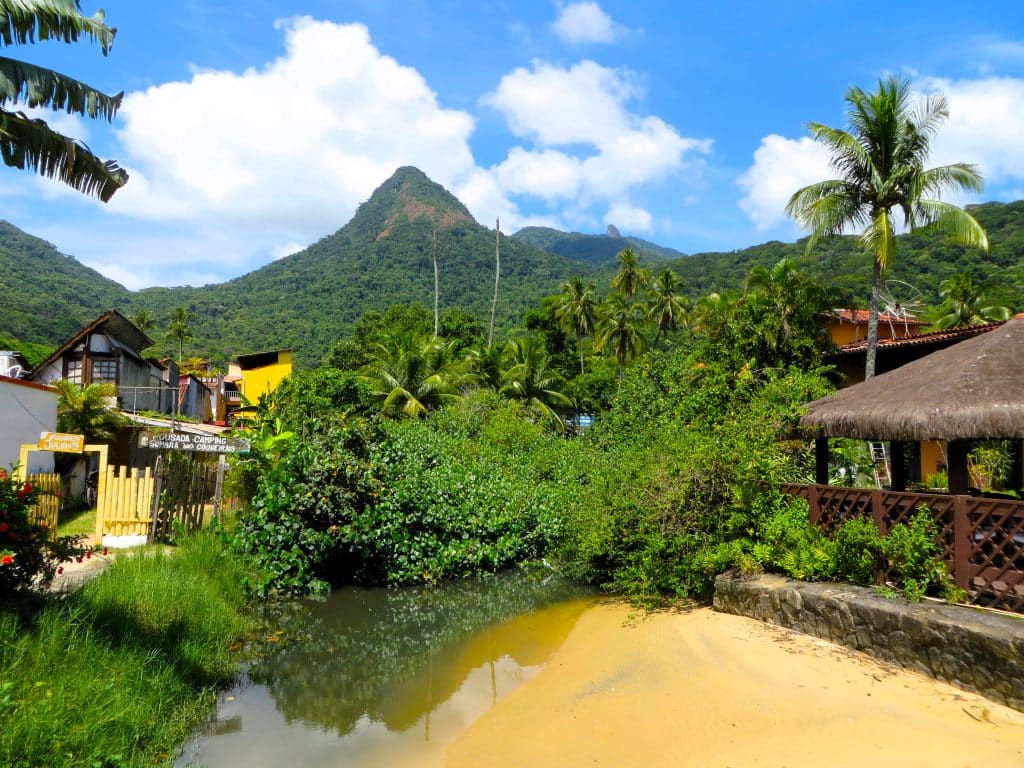
The ferries will drop you off at Vila do Abraão, Ilha Grande’s largest town. There are no motorized vehicles on the island, so your hike starts as soon as you exit the pier.
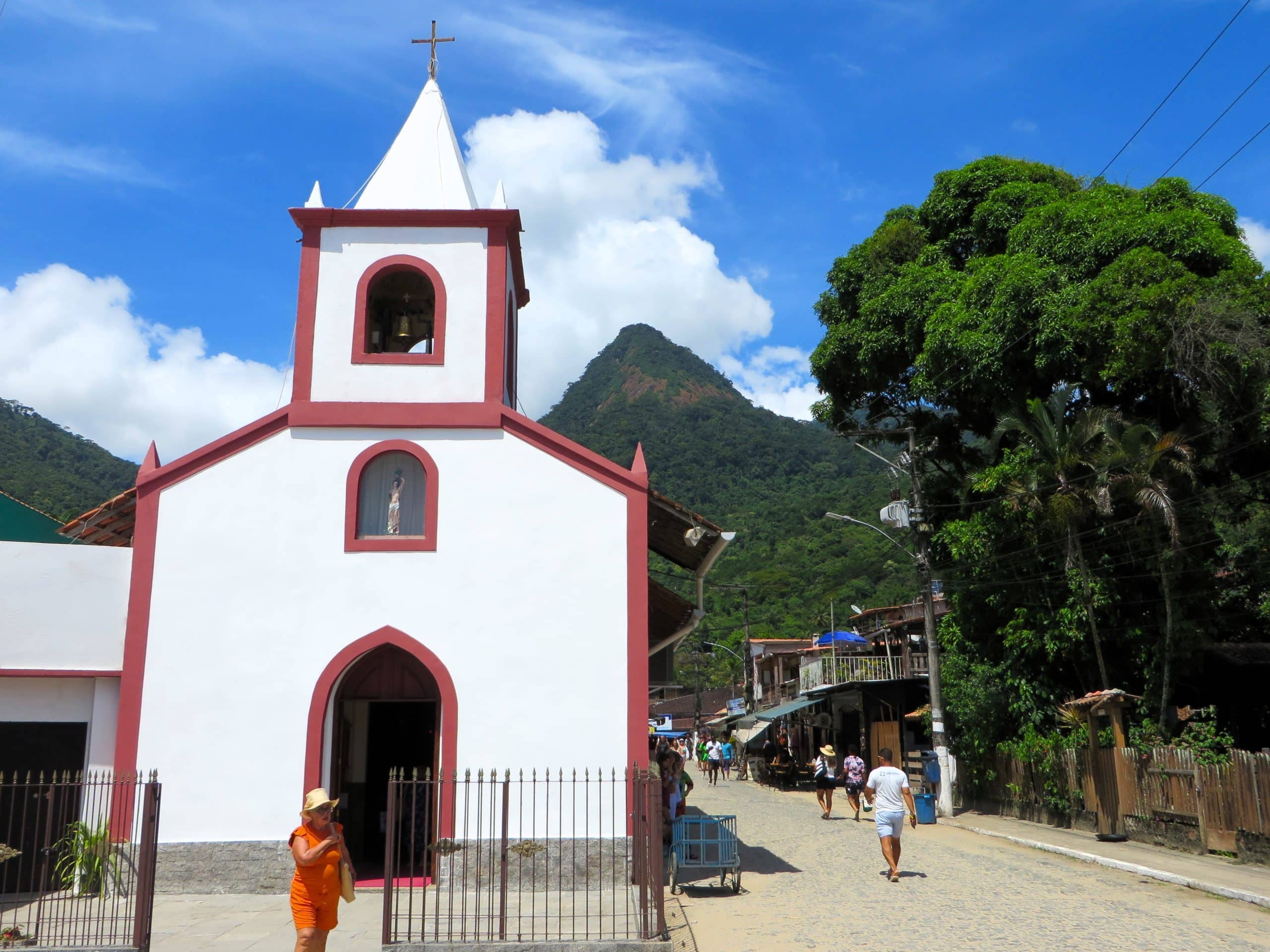
Vila do Abraão
Head north along the beach, past shops and restaurants, until you see the little church of San Sebastian to your left. When Dom Pedro II, emperor of Brazil, landed on Ilha Grande in 1863 to take refuge from a storm, the church didn’t even have a front door. Before leaving the next day, he donated enough money to construct one. Stop to see the humble altar and take in the vista from the bell tower. As you depart Abraão, look back across the bay for stunning views of the rocky shallows.

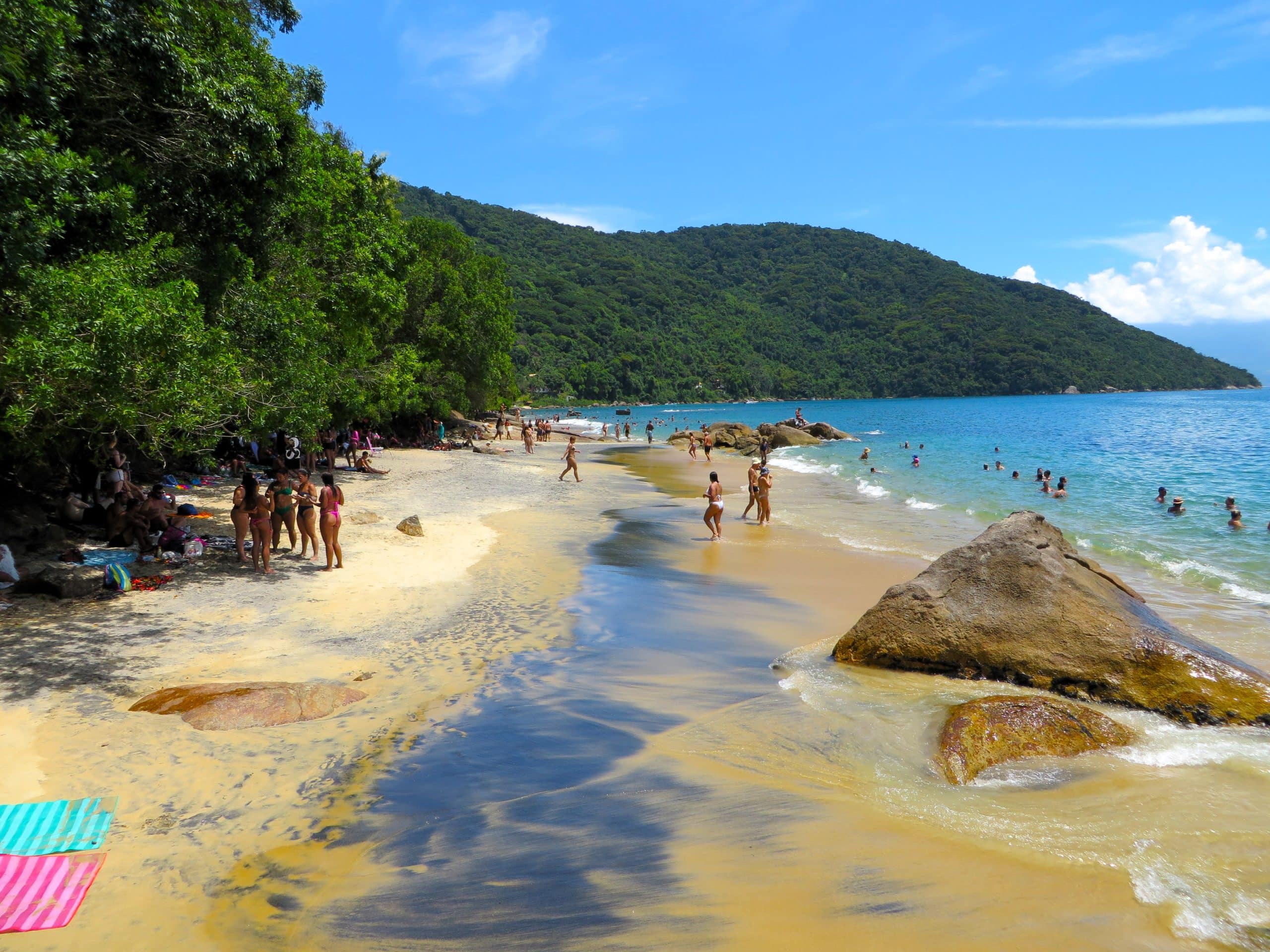
Praia Preta
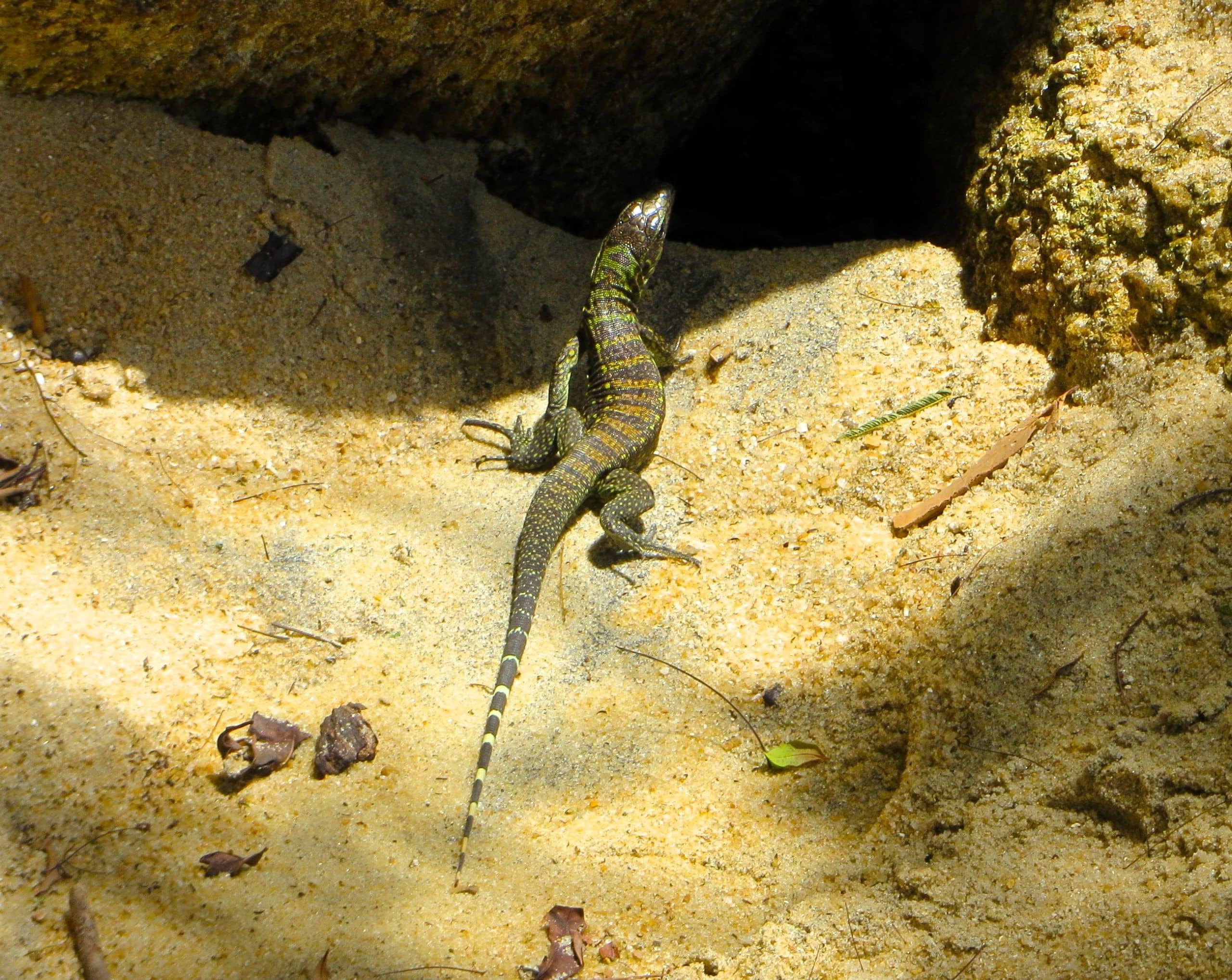
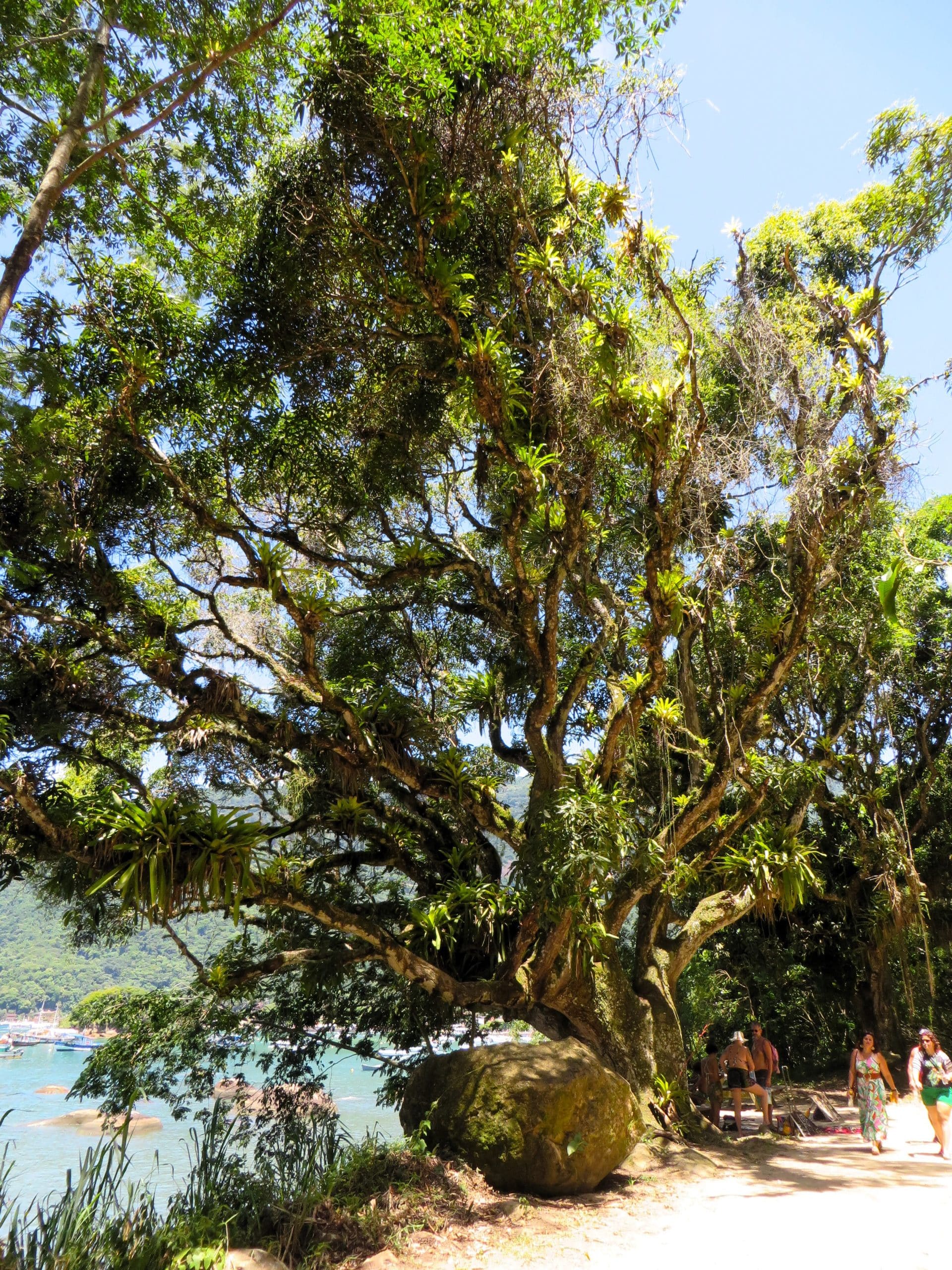
Walk the coast until you reach Ilha Grande State Park. There’s no fee to enter. When the trail forks you can climb the hill to your left or continue along the water. T-1 is a loop, so it doesn’t really matter. With temps in the 90s Fahrenheit, I stuck to the shoreline and jumped in the ocean at the first opportunity. This is Praia Preta, named for its streaks of black sand. Spend some time exploring the rocks after your swim. You might spot a lizard or two. Further on is the white sand Galego Beach, which is usually less populated.
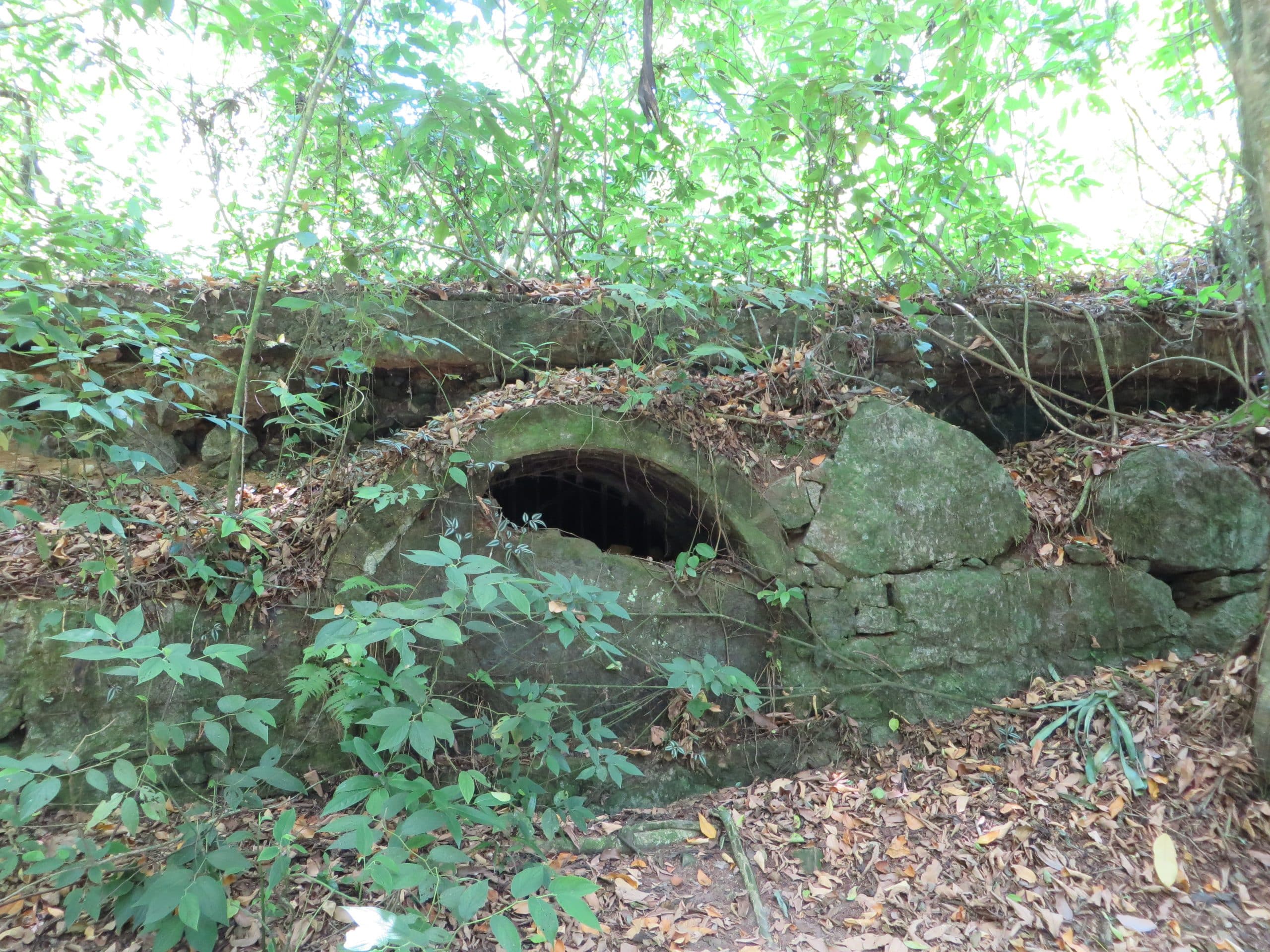
Lazaretto Ruins
The first ruins you’ll encounter on the coast path are the remains of the Lazaretto. Originally, there was a farmhouse on this spot, but a cholera epidemic in Europe necessitated a quarantine station for new arrivals to Brazil in 1884. The Lazaretto functioned in this capacity, off and on, until 1925 when it was converted to a military prison for political dissidents. In 1942 the prison was expanded into a penal colony where convicts worked at farming and road maintenance. Eventually, the prison closed, and the whole site was imploded in 1962, leaving only underground cells to tell the story of the Lazaretto. This was the darkest, dampest part of the penitentiary. Imagine spending years down there.

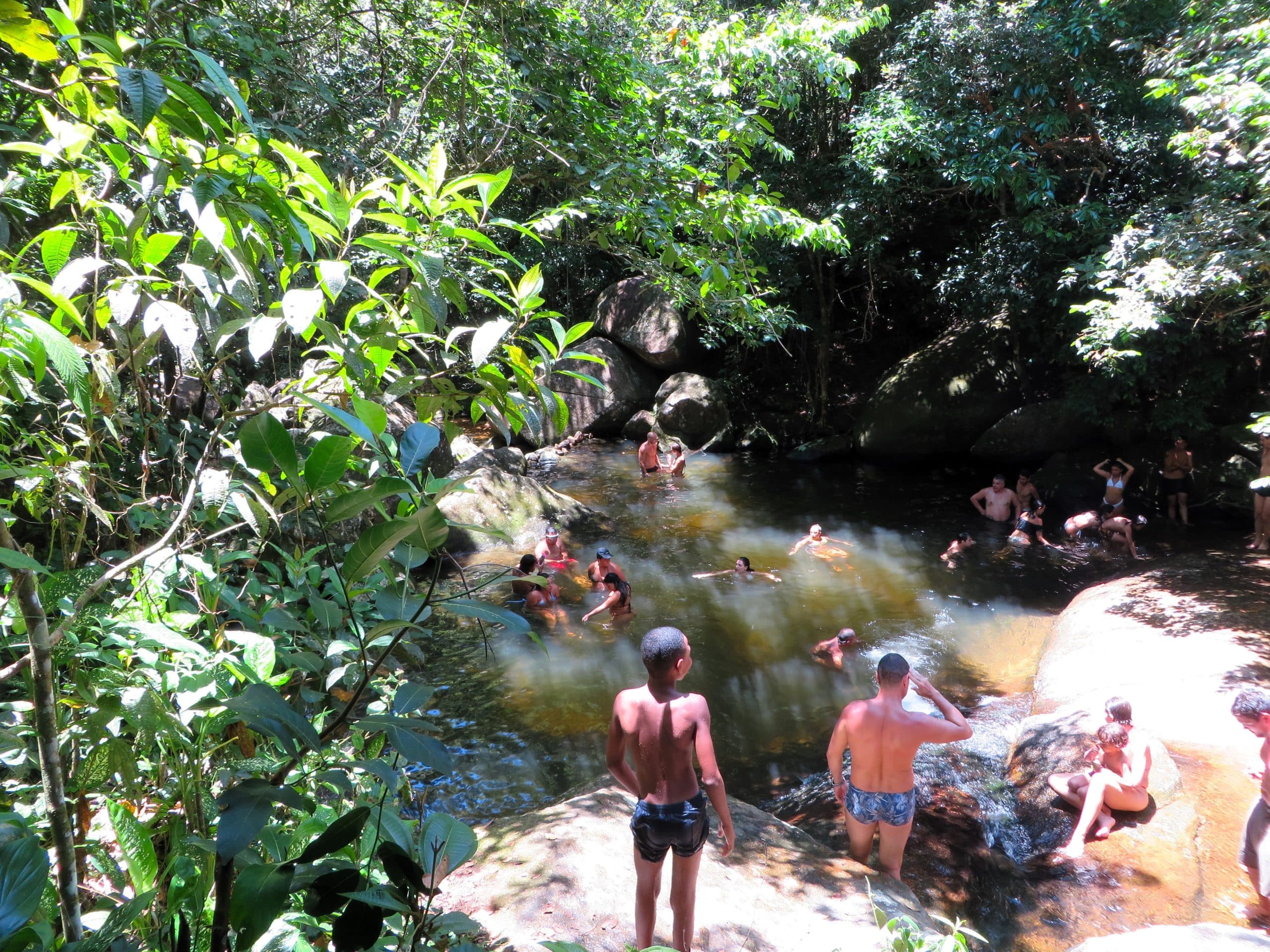
Natural Pool
T-1 goes uphill next, where you’ll find one of the island’s many natural pools. This is another great place to get in the water and cool off. Leap from the rock beside the small waterfall like the locals do, or climb down and slip in.

The Aqueduct
Just past the Natural Pool is a towering stone aqueduct dating to 1893. It was built to supply water to the Lazaretto. If you want to continue to the T-2 trail, pass under the arches. This will take you on a 4-mile one-way hike to Feiticeira Waterfall and Saco do Céu Beach. If you’re ready to return to Abraão, stick to the T-1—it will loop back downhill to the State Park entrance. Either way, you’ll be immersed in incredible Atlantic forest. There are over 500 species of trees on Ilha Grande, and 1,143 different plants, some critically endangered.
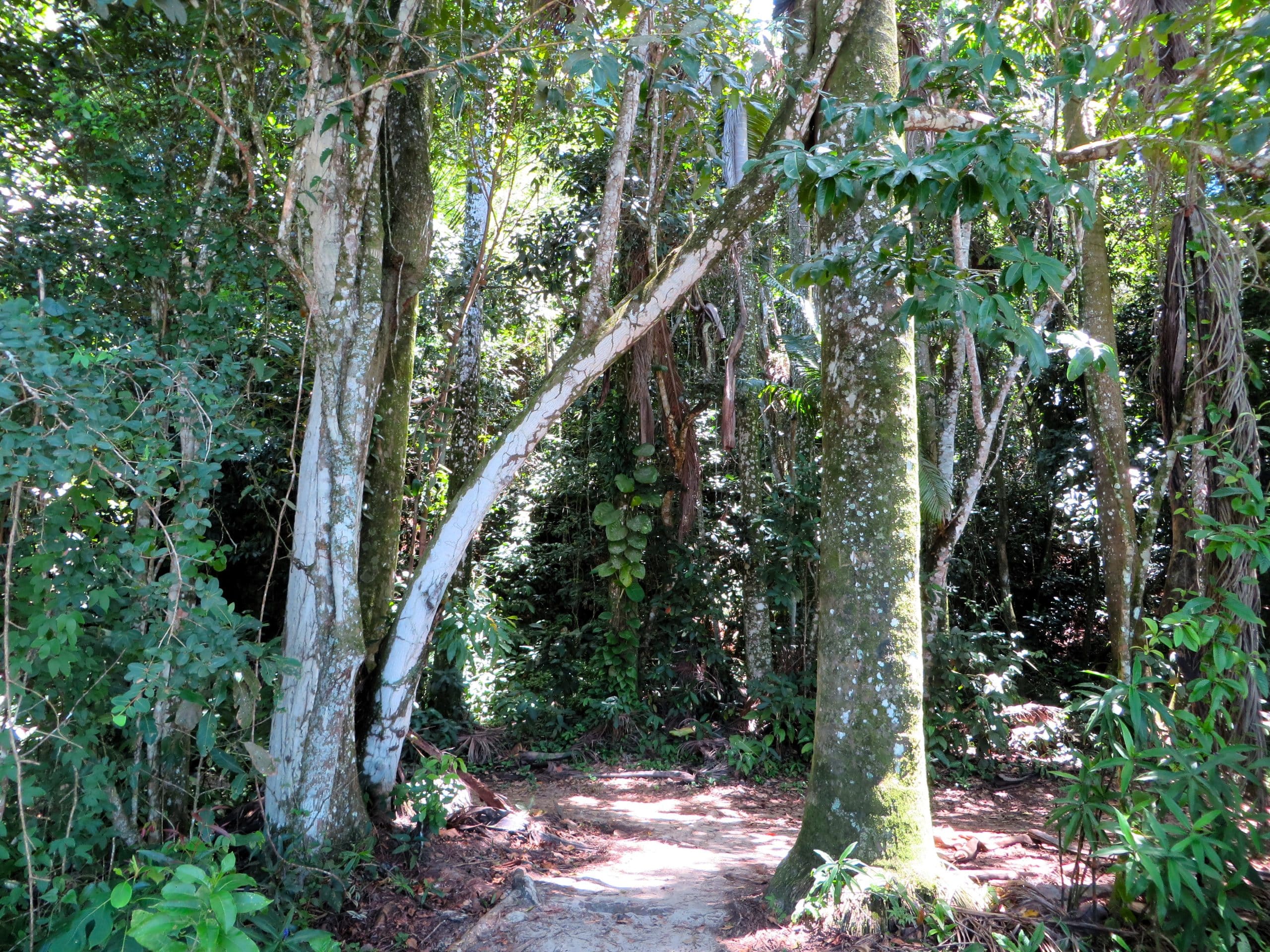

Wildlife on Ilha Grande
There’s plenty of wildlife, too. You could run into a capybara, marmoset, caiman, boa… even a Magellanic penguin! In 2011 João Pereira de Souza rescued one of these migratory birds on an Ilha Grande beach, where it had washed up after an oil spill. The penguin, which de Souza named Dindim, returned every year (swimming 5,000 miles!) until he reached the breeding age of 6. Their friendship became the subject of a book and later a movie.
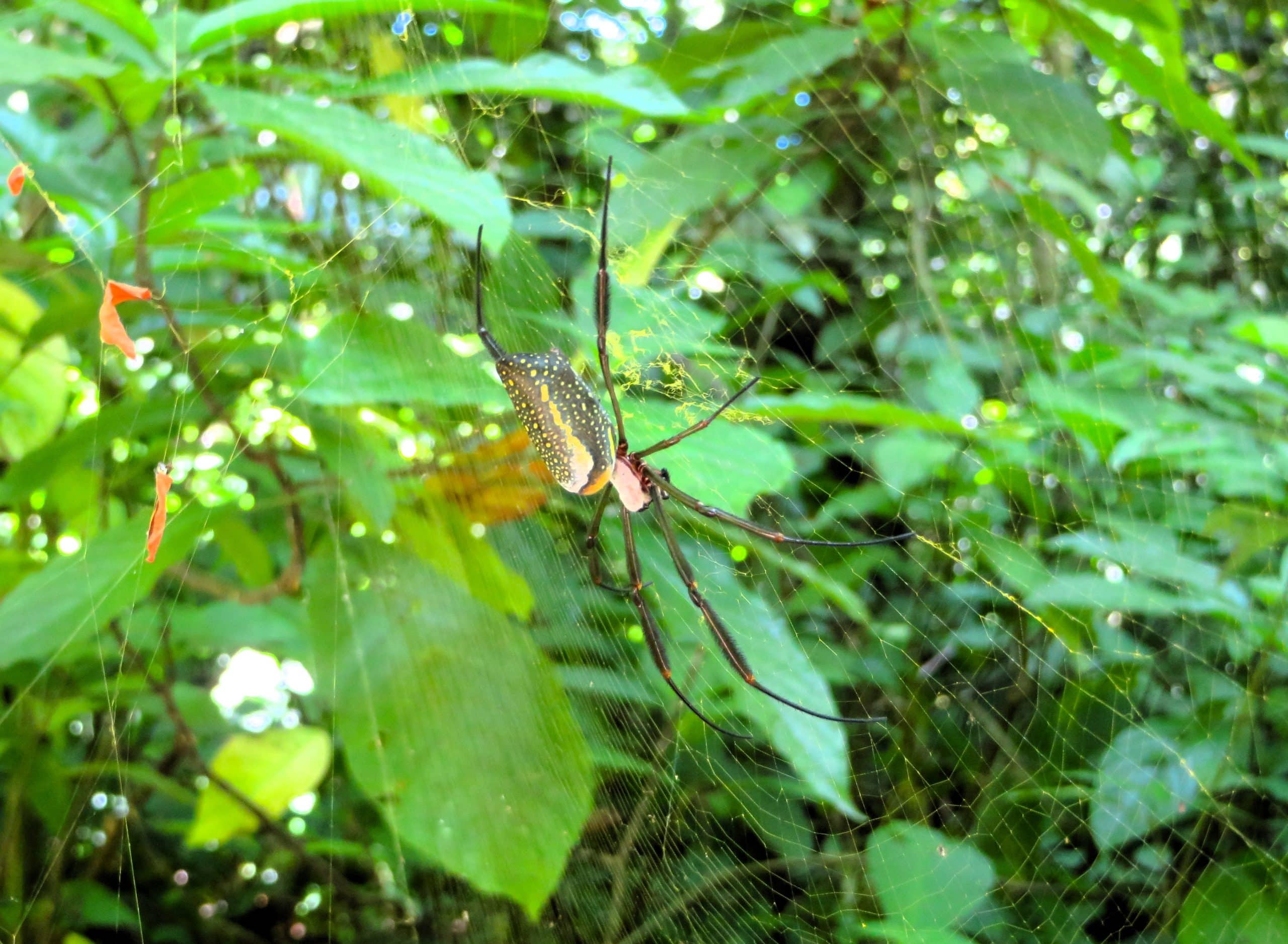
While I didn’t cross paths with any penguins on my hike, I did see numerous other birds and lizards, as well as a Golden Silk Spider as big as my hand.

Lodging on Ilha Grande
When you’re done hiking the Abraão Loop, Ilha Grande offers lots of other trails, some easy, some extremely difficult. You can scale mountains or explore caves. Surfing and snorkeling are popular, too. If you want to spend more time on the island, you can stay in Abraão or one of the smaller villages. Abraão, where you’ll disembark the ferry, is the most convenient and has the best selection of inns, stores, restaurants, and tour companies. The town’s backstreets are full of pousadas and hostels with varying levels of amenities. Portal dos Borbas offers AC, TV, and a private bathroom in every room, with a great breakfast buffet and a peaceful garden.
For the full nature experience, campsites are available. Taxi boats can get you to more remote locations around the coast.
To learn more about Ilha Grande and Rio check out What to Know Before Going to Rio de Janeiro.


Your experiences and the way you write them make me want to head over to Brazil pronto! Thank you for the amazing pictures as well (except the hand-sized spider!).
Thanks, Darcie! If you go, don’t pet the spiders.