Table of Contents
Best Places to Visit in Salvador
Founded by Portuguese colonists in 1549, Salvador, Brazil is one of the oldest cities in the Americas. Visitors come from all over the world to experience this well-preserved history. They also come to party. Many of Brazil’s Carnival traditions originated in Salvador, and the massive celebration continues to grow, attracting some 2 million revelers every year. A tropical climate and miles of beaches draw surfers and sun-worshippers, while foodies flock to enjoy the city’s unique Afro-Brazilian cuisine. Here are my top 12 places to visit in Salvador.
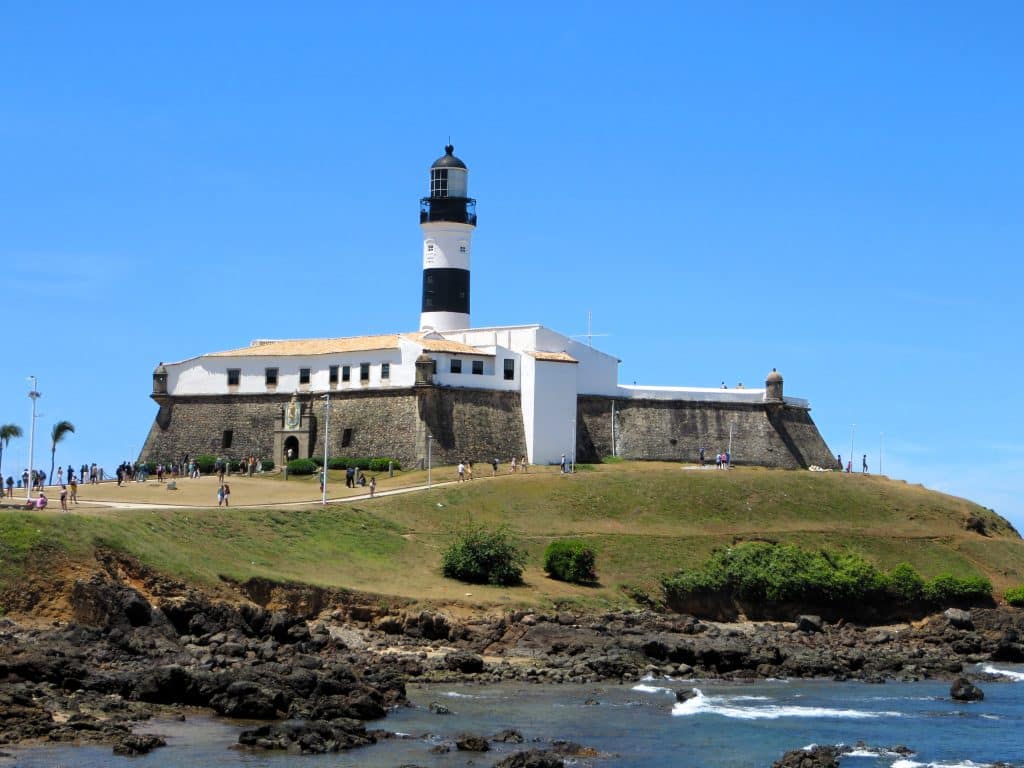
Barra Fort
When the Portuguese made Salvador the first capital of Brazil it became a target for competing colonial powers and pirates. Settlers built a number of protective forts along the shore, including this one at the entrance to All Saint’s Bay. They later added a lighthouse to guide ships safely into port.
Today, the fort houses a maritime museum, and is the go-to spot for sunset viewing. I like walking the path around the fort’s walls, watching waves crash on the rocks below. Surfers slide on curling waves and seabirds wheel overhead.
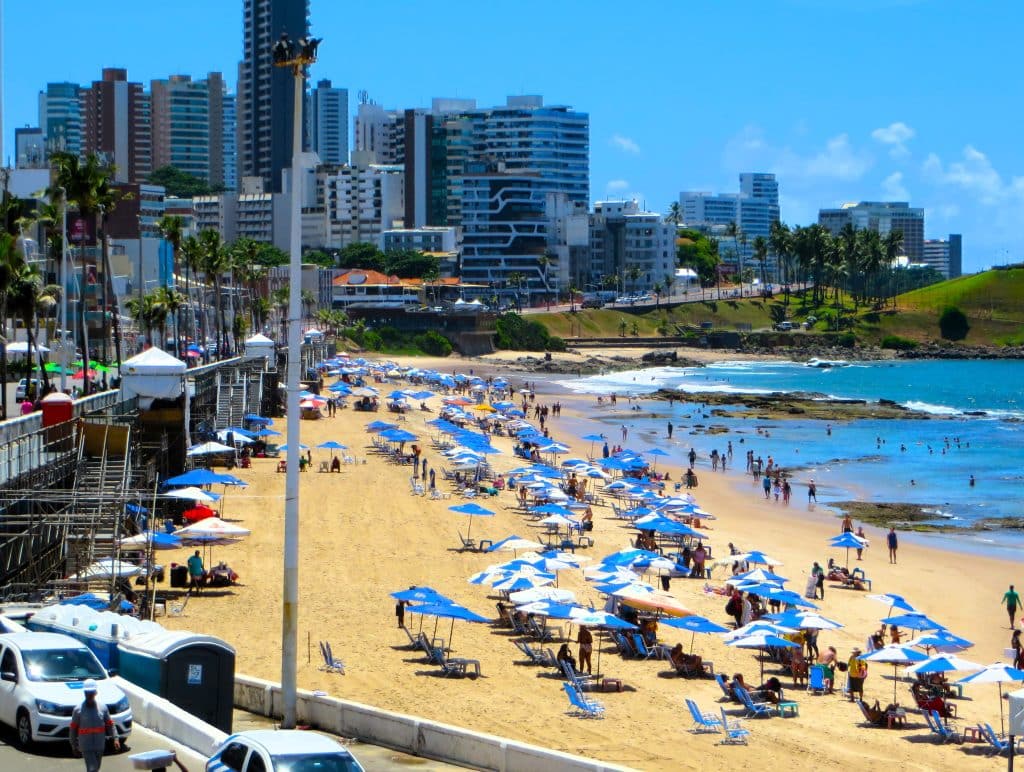
Beaches in Salvador
There’s a beach for everyone in Salvador. Calm, bayside strands are great for families, and surfers can seek out big waves on the Atlantic shore. Right next to Barra Fort is sandy Farol da Barra Beach. Offshore rocks provide a buffering reef for swimmers, and tide pools form around the point at low tide. These pools bake in the sun, becoming natural hot tubs!
There’s a small beach in the picturesque seaside neighborhood of Gamboa, but people who go there to eat at the famous Bar da Monica can leap into the water right from the restaurant’s deck.
For a taste of tropical paradise, adventurous travelers head for Ilha dos Frades, an island in the middle of All Saint’s Bay with isolated beaches and challenging hikes.
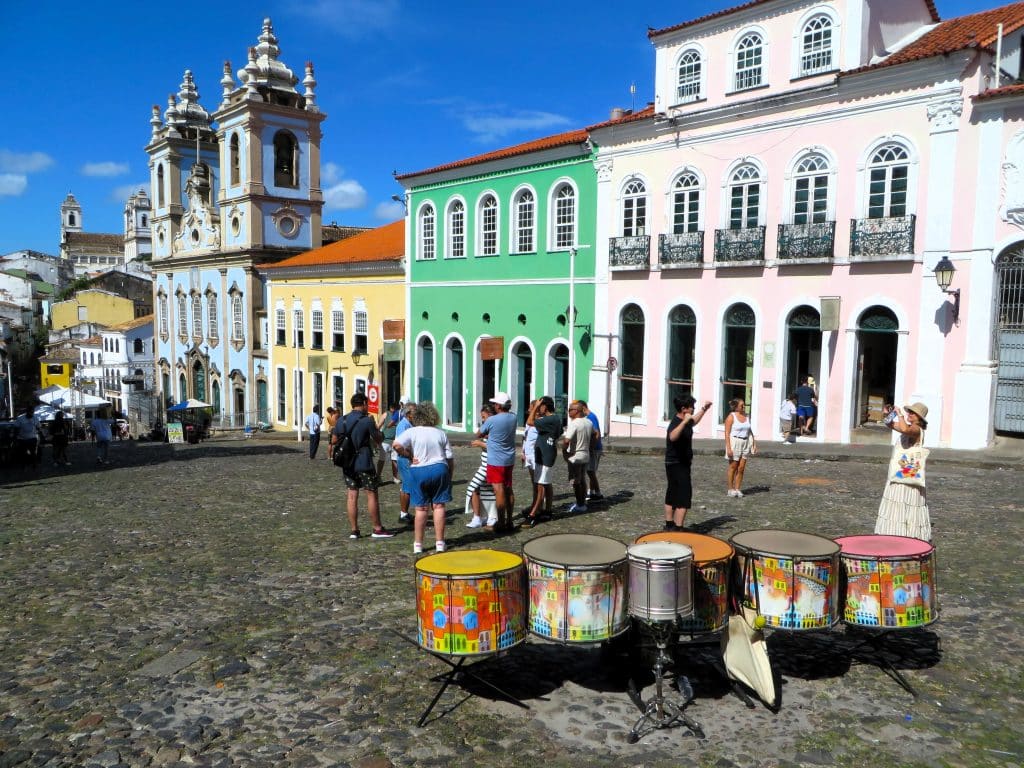
Pelourinho Square
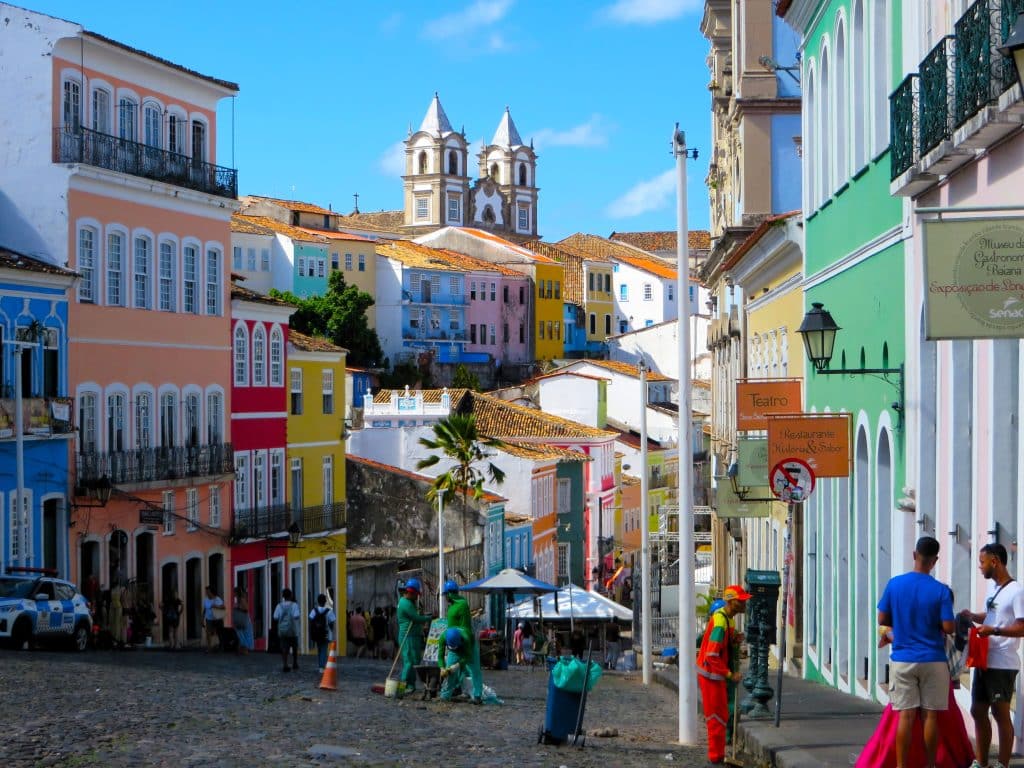
Salvador was once a major port for slave ships from West Africa. Though Brazil abolished slavery in 1888, reminders of that cruel practice are still evident today. The city’s historic center, Pelourinho, is named for the pillory in Pelourinho Square, where slaves were publicly whipped. The pillory is now gone and African culture thrives in its place, with drums, dance, art and religion.
In 1995, Michael Jackson shot scenes for his video “They Don’t Care About Us” in Pelourinho Square. It featured 200 drummers from Olodum, a neighborhood Carnival group. Olodum has recorded with Paul Simon, Herbie Hancock and many others, and they have a cultural center near the square with CDs, branded merch and clothing for sale.
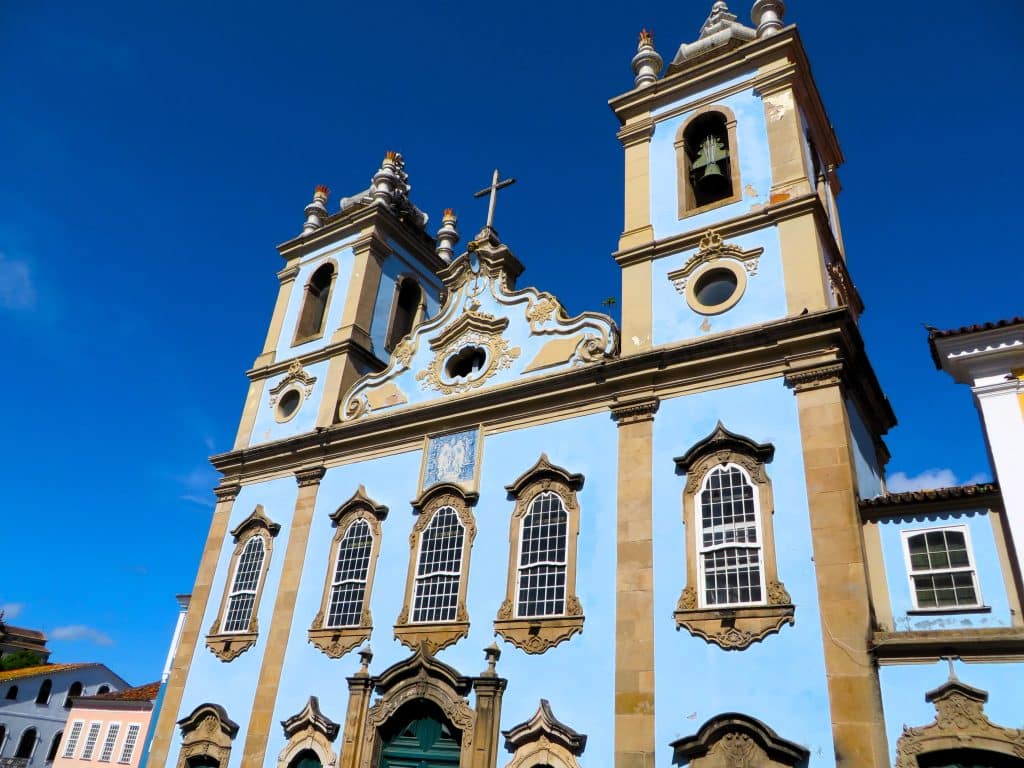
Church of Our Lady of the Rosary of the Black People
A brotherhood of slaves and black freemen financed this church in Pelourinho Square, which took most of the 18th century to build. Every Tuesday at 7:00 PM the church holds a syncretic mass that blends African music and dance with a traditional Catholic service. It’s very popular, so arrive early.
A street festival is centered here on December 4th to celebrate the Christian Saint Barbara and her counterpart in African religions, Lansã. Around 10,000 people typically attend.
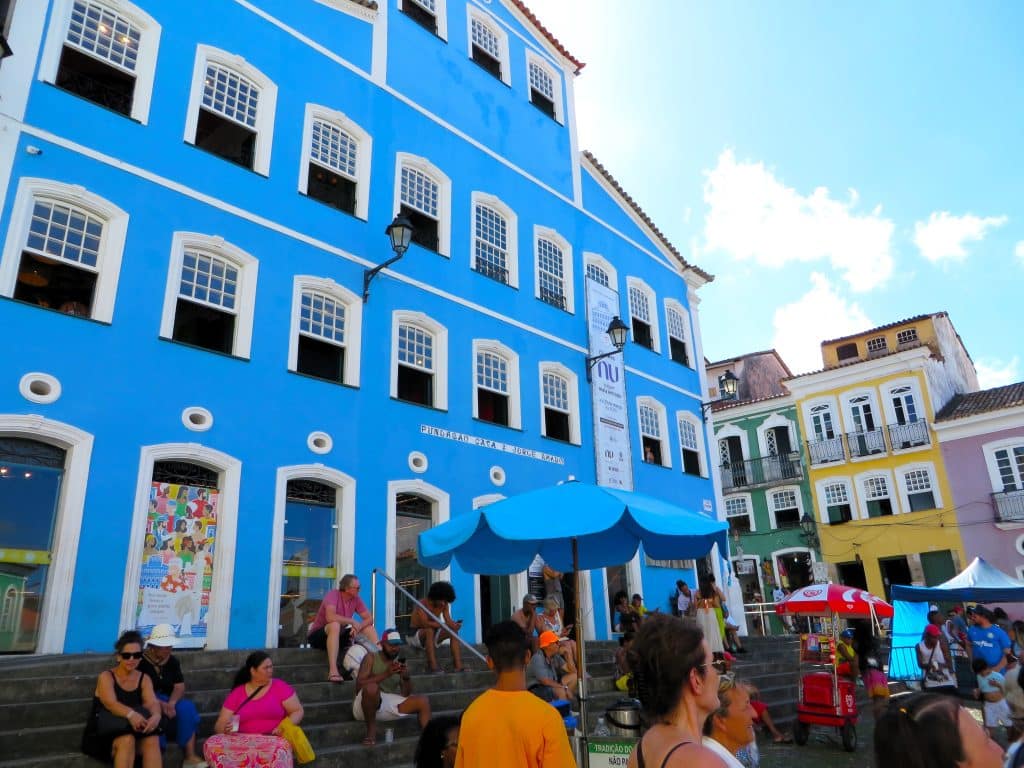
Jorge Amado Foundation
Brazil’s most famous writer, Jorge Amado, was born in the state of Bahia and lived in its capital, Salvador, for many years. His house on Pelourinho Square is now a museum dedicated to his life and work. Covers of Amado’s novels, which were published in 49 languages, are on display.
A theater-café is attached to the museum and is named for Amado’s wife of 60 years, writer/photographer Zélia Gattai. The café serves excellent Bahian food and coffee.
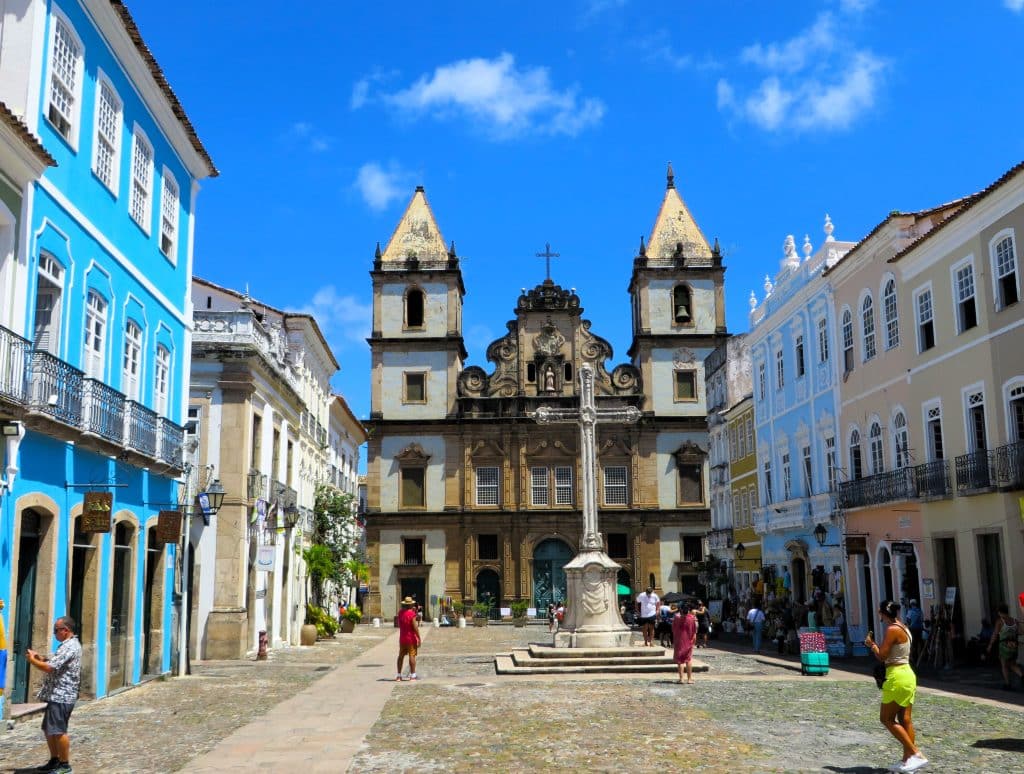
São Francisco Church and Convent
This incredibly ornate church was built by Franciscan friars in the 18th century. Nearly every surface of the interior is covered with gilded woodwork and there are more Portuguese azulejo (blue and white) tiles here than anywhere else in the New World. The majority of these azulejos can be found in the convent’s cloister, where scenes from Roman mythology are depicted.
On February 5, 2025 the church’s roof tragically collapsed, killing a young woman from São Paulo. I don’t know when the interior will reopen to the public, but the exterior, with its baroque scrolling, statue of St. Francis and coat of arms, is well worth a look.

Church of the 3rd Order of São Francisco
This baroque church was built in the early 1700s as an annex to São Francisco. Around 1830 the friars remodeled it in an understated neoclassical style. A century later, during another renovation, workers discovered that the original façade was still intact beneath the neoclassical one. This is the exterior on view today, and it’s spectacular. In fact, there’s nothing else like it in all of Brazil. Every inch of stone is elaborately carved in a style known as Plateresque (like a silversmith’s work). Even the outer gate is jaw-dropping.
The church’s interior features master woodcarvings, paintings by Franco Velasco and more azulejos. The pricey Lioz limestone flooring was imported from Portugal.
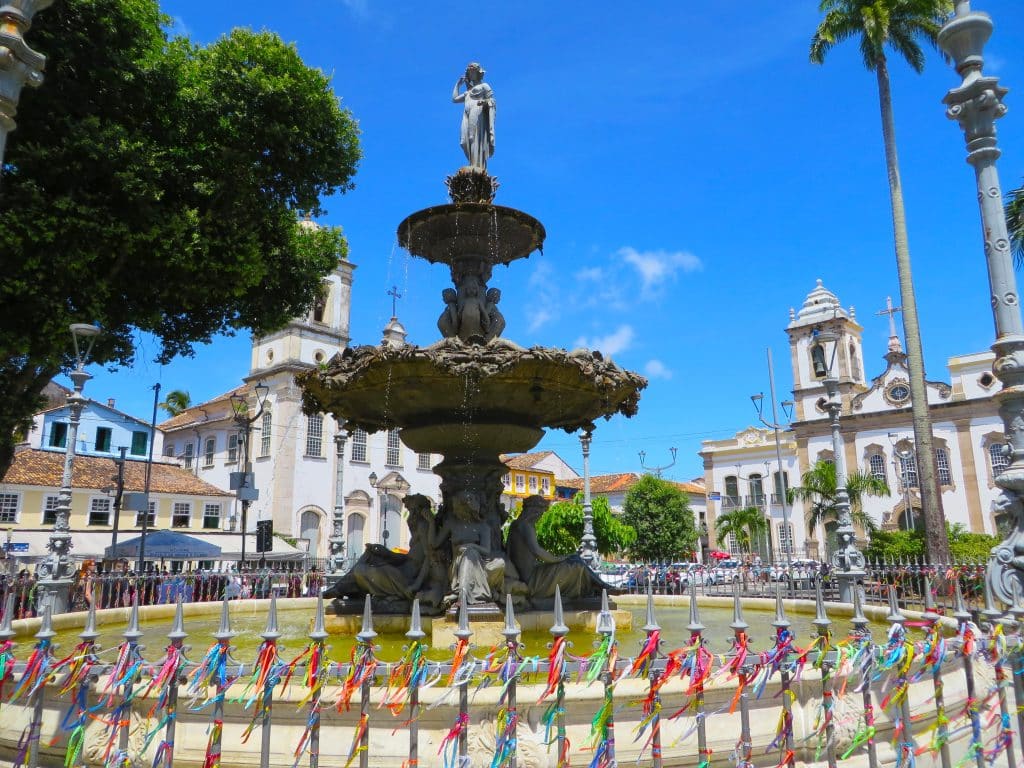
Jesus Square
This plaza is a short walk from São Francisco and contains even more colonial churches, including the Cathedral Basilica of Salvador. Jesuits built the cathedral and adjacent school, so the plaza became known as Terreiro de Jesus (Jesus Square).
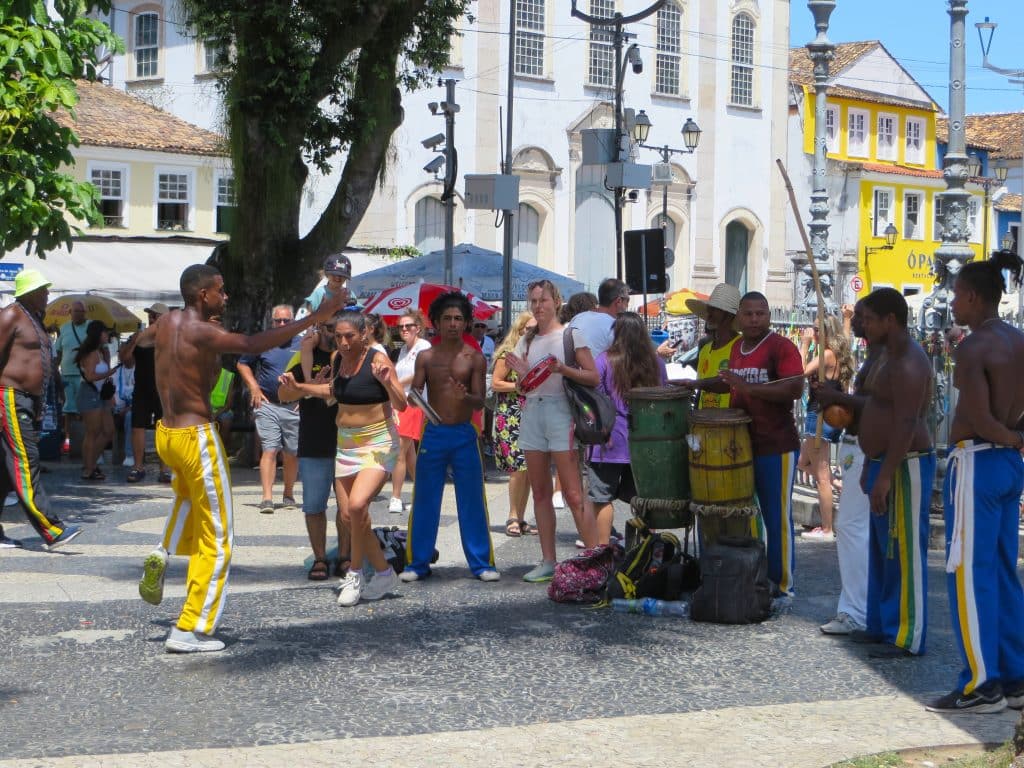
This is a great place to watch (or participate in!) capoeira, the mesmerizing Afro-Brazilian martial art. The flowing form incorporates acrobatics, dance and spirituality, and is usually accompanied by music. Practitioners are happy to coach onlookers for a small contribution.
There are also a couple really good acarajé stands here. Like capoeira, this classic Salvadoran street food came from Africa. Ladies in colorful Bahian garb boil black-eyed pea fritters in dende (palm) oil, split them open, and fill them with different ingredients. I love the shrimp stew, which comes in spicy or mild.
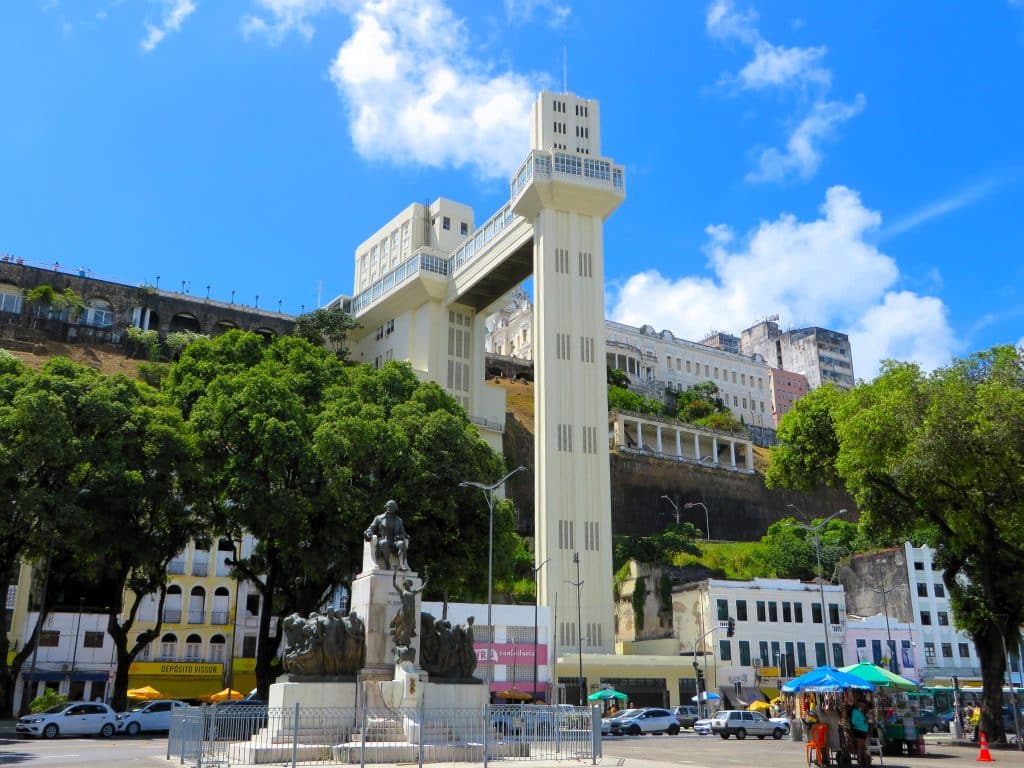
Lacerda Elevator
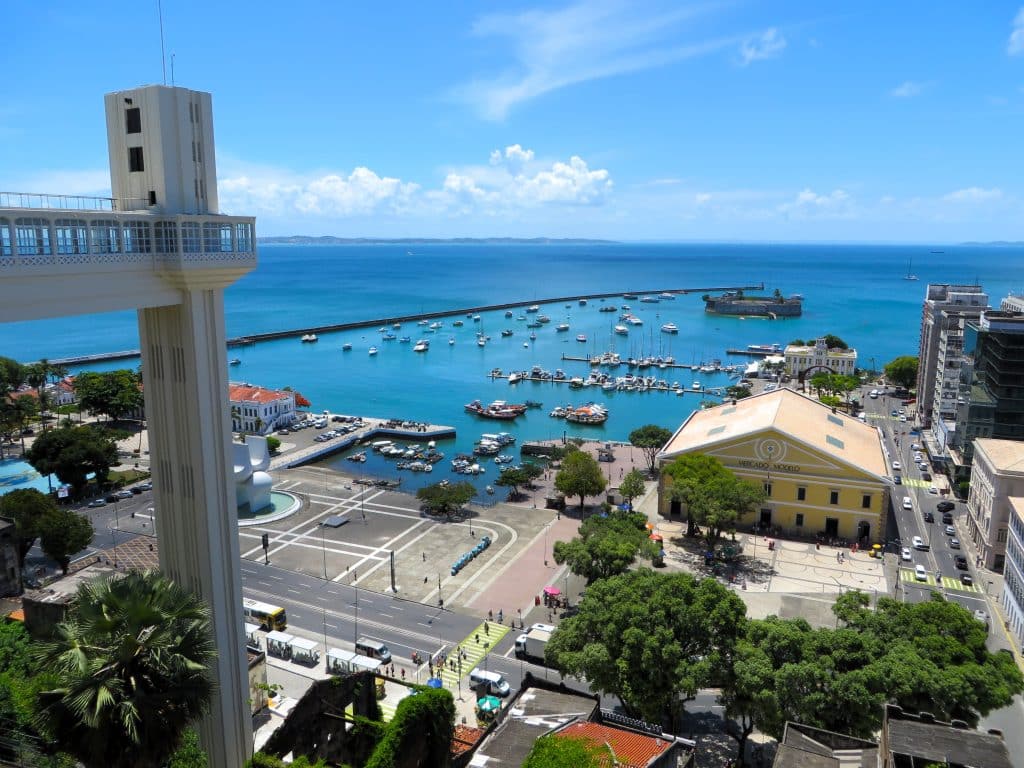
Portuguese settlers divided Salvador into two cities: the upper and the lower. To move people and commodities between the low port area and the settlement above, Jesuits installed a primitive pulley elevator in 1610. The city upgraded the elevator over the centuries until it arrived at its current Art Deco design in 1930. A recent restoration has really brought out its sleek beauty.
The ride up is cheap and quick (half a minute), though not great for sightseeing, as there are no windows. On emerging, however, it’s evident why the elevator is so popular with tourists. Dead ahead is the historic, arched City Hall of Salvador and off to the right Rio Branco Palace, from which the Portuguese ruled Brazil for two centuries. Views over the port and All Saint’s Bay are unparalleled.
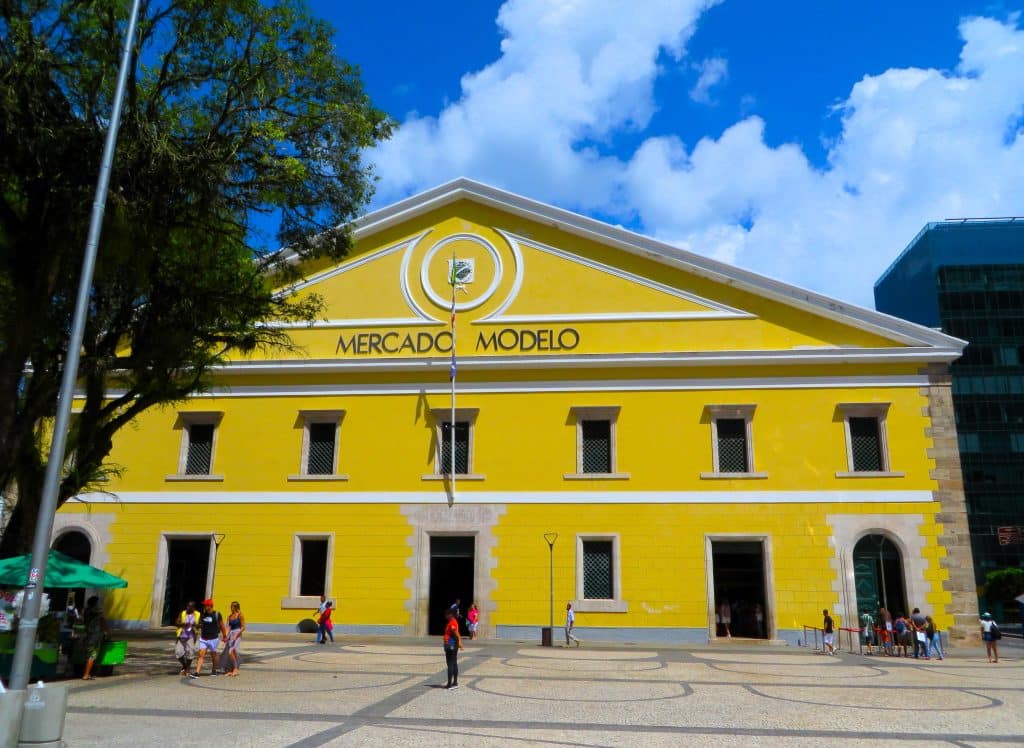
Mercado Modelo
This two-story marketplace was once Salvador’s Customs House. It’s located in the old harbor, right across from the Lacerda Elevator, and has over 250 shops. Handmade arts and crafts from many areas of Brazil are available here, but most sellers specialize in African-influenced Bahian creations. Jewelry, clothing, lace, musical instruments, and religious objects are particularly in demand. There are, of course, stalls offering tourist trinkets like fridge magnets and shot glasses.
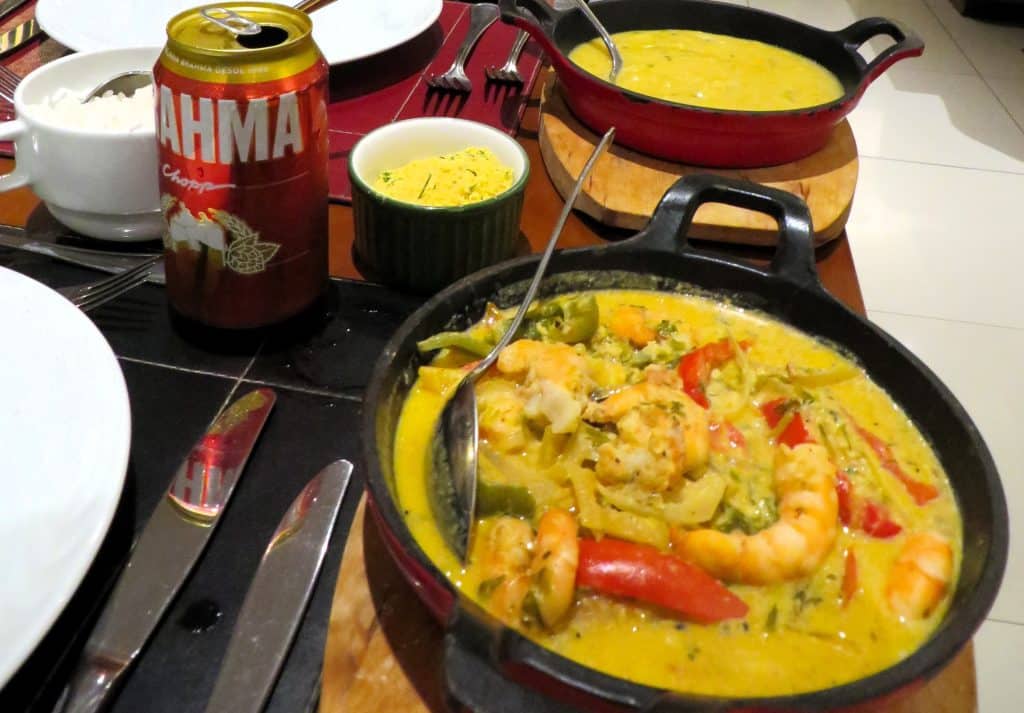
Two restaurants serve Bahian food in the market. Camafeu de Oxossi has a fantastic view of All Saint’s Bay and is the perfect place to try moqueca, a seafood stew with coconut milk and dende oil. Oxossi was a musician and capoeira master, who opened the restaurant in 1972.
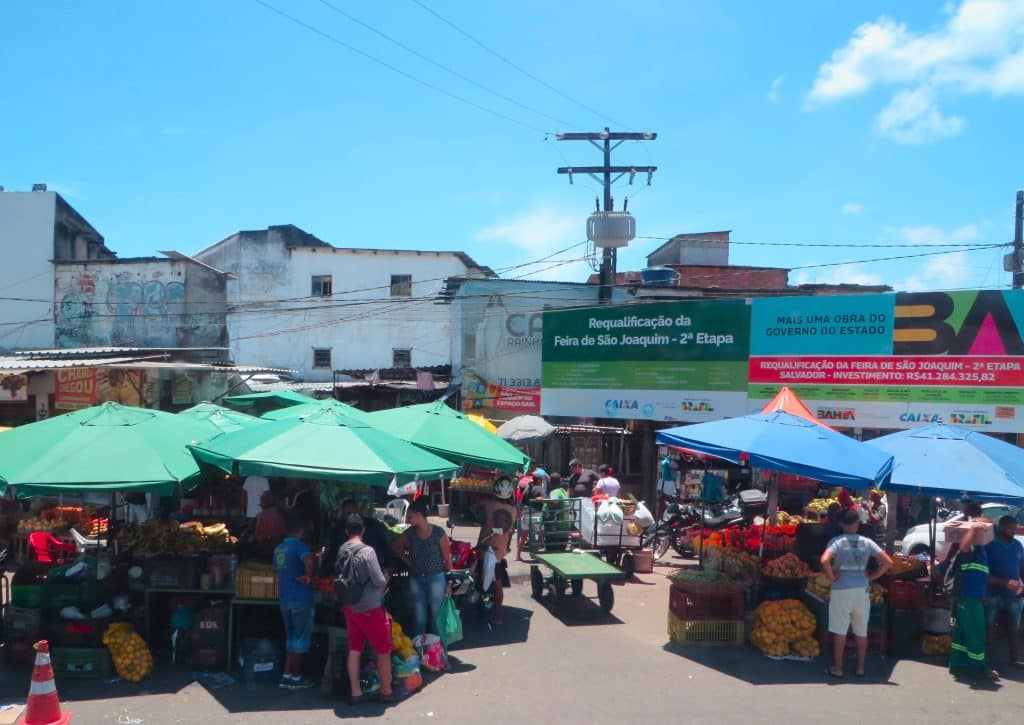
Feira São Joaquim
This sprawling indoor/outdoor market in the lower city is where Salvadorans shop for meat, fish, fresh fruits and vegetables, spices, and just about any other food item you can imagine, including live animals. From medicinal elixirs to religious figurines, Bahian culture is on full colorful display, making Feira São Joaquim one of the best places to visit in Salvador for an authentic local experience.
Prices are excellent, but shoppers who are sensitive to strong smells might want to skip the meat and fish departments. Baskets, clay pots, charms, bead necklaces, and other local handicrafts are available for souvenir hunters.
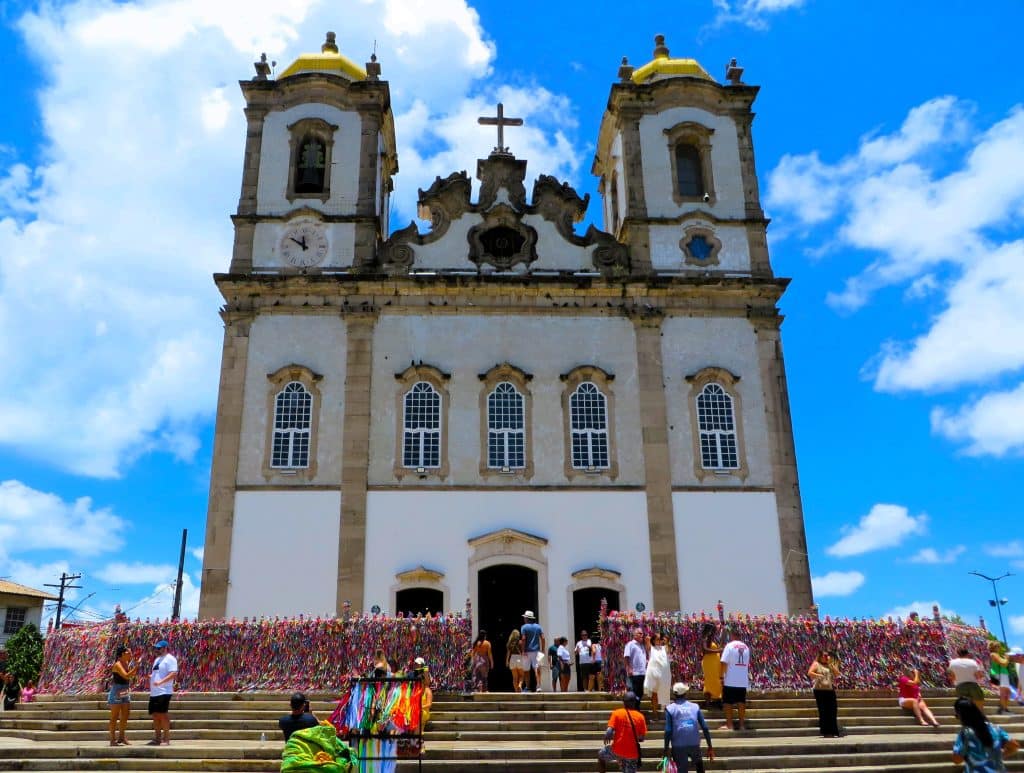
Church of Our Lord of Bonfim
No visit to Salvador would be complete without a stop at Bonfim Church. The multicolored ribbons tied all over town are called Bonfim Ribbons, and they originated here. The fence around the church is covered with them. They can be purchased from hawkers or at stands across the street, but wearing one is a commitment. To receive good luck it must be secured on the wrist with three knots and worn until it falls off on its own.
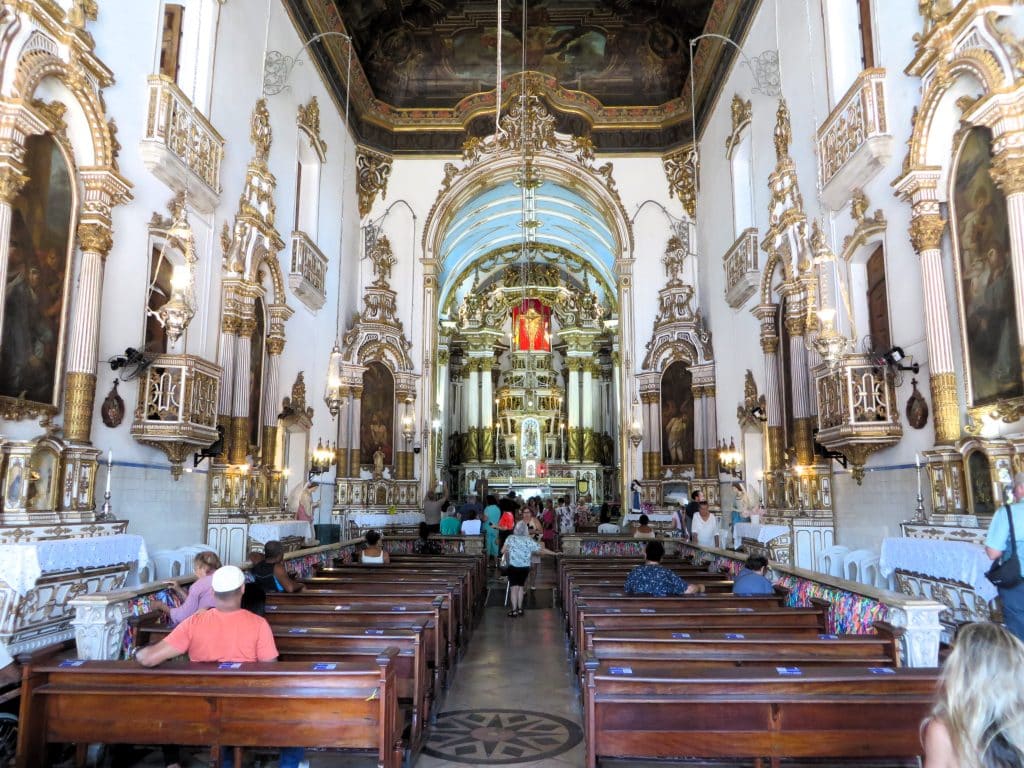
Bonfim Church holds a huge festival in January with rituals relating to Catholicism and Candomblé, an Afro-Brazilian religion. Bahianas—the ladies in wide hoop dresses and turbans—wash the church steps while singing in the African Yoruba language. These women are an important part of Bahian culture, and often greet visitors in tourist areas. They’re happy to pose for pictures, but will expect a donation.
Lodging in Salvador
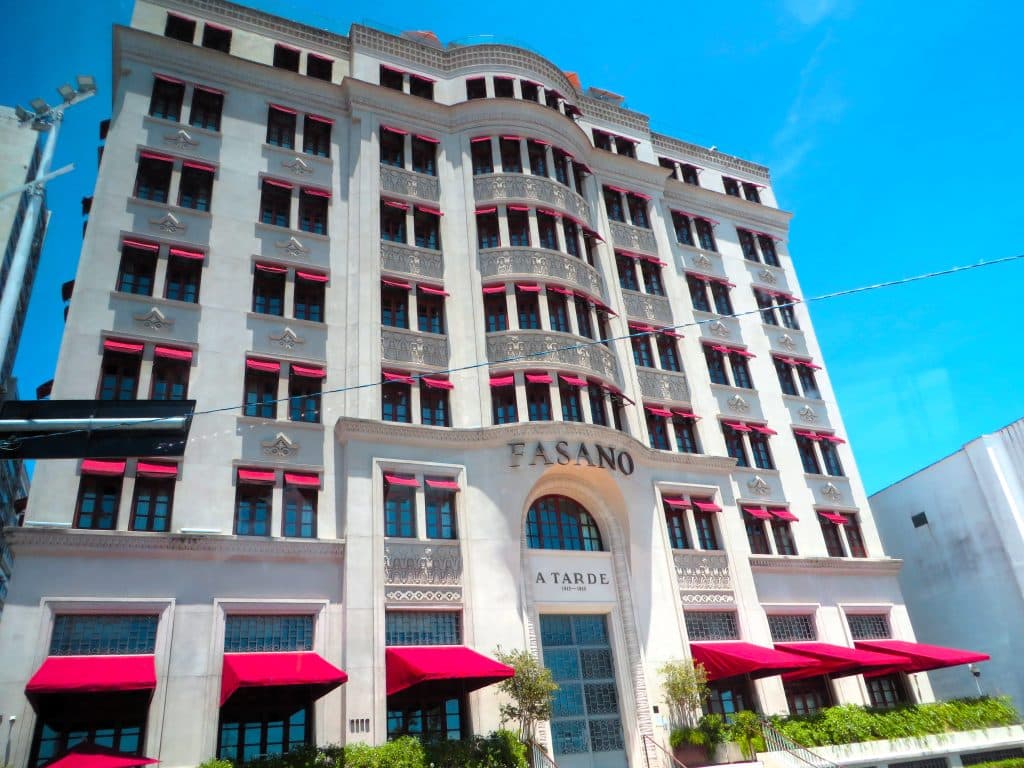
Hotel Fasano occupies a heritage Art Deco building in the historic center that was the headquarters of A Tarde newspaper for 45 years. The rooms, restaurants and rooftop pool overlooking All Saint’s Bay are first-class, and guests can book curated cultural experiences like Bahian cooking lessons or music workshops.
For an inexpensive beach break, Hostel Barra offers dormitory accommodations as well as suites with private bathrooms. Bright, cheerful colors predominate, and the walk to Farol da Barra Beach is only a couple minutes.
For more adventures in Brazil, head south to enjoy Hiking the Abraão Loop on Ilha Grande.